Super Visa vs Visitor Visa: The Right Way to Bring Parents and Grandparents to Canada in 2026
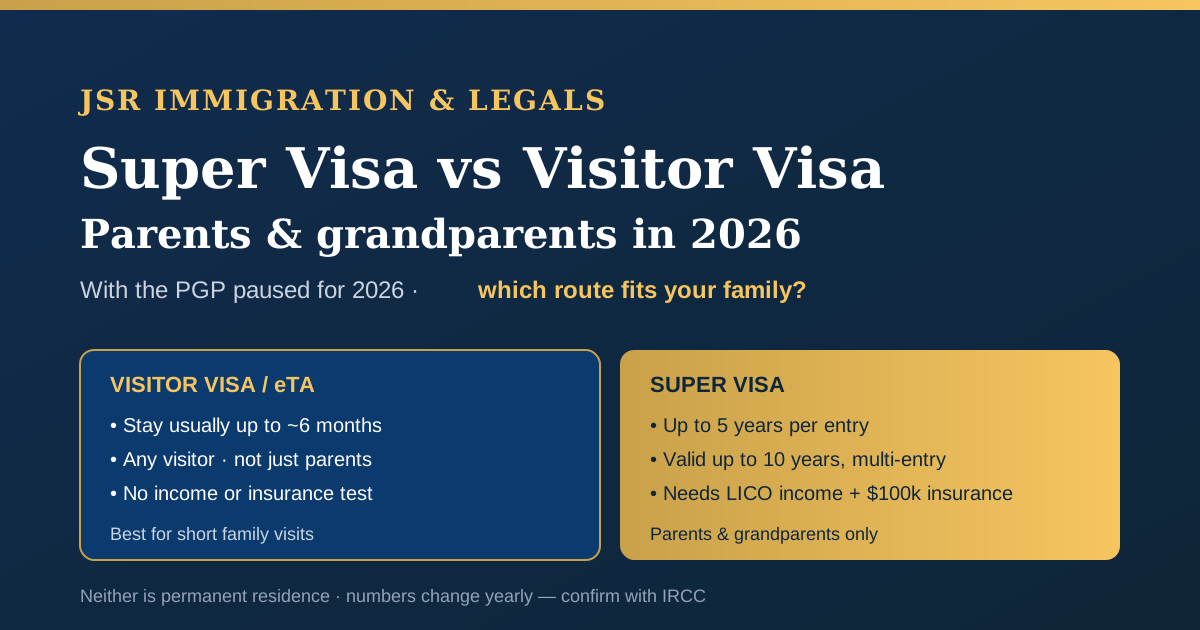
If you want your parents or grandparents to spend real time with you in Canada, 2026 is a confusing year to plan it. New applications to the Parents and Grandparents Program (PGP) — the route to permanent residence — are not being accepted in 2026, following Ministerial Instructions that took effect on January 1. Only files from the 2025 invitation round are being processed. So for most families right now, the question isn't "PR or not" — it's Super Visa or a regular visitor visa?
These two options look similar at a glance (both let your parents visit), but they're built for very different lengths of stay. Here's a plain-language comparison to help you choose.
What each one actually is
A visitor visa (a temporary resident visa, or the eTA for visa-exempt travellers) is the standard way anyone visits Canada. On arrival, a visitor is usually allowed to stay for up to six months at a time, at the officer's discretion. It's general-purpose: tourism, a short family visit, a wedding.
A Super Visa is a special multiple-entry visa only for parents and grandparents of Canadian citizens and permanent residents. Its whole point is longer stays: a Super Visa holder can be admitted for up to five years per entry, and the visa itself can be valid for up to 10 years of multiple entries. If they're already in Canada, they can even apply to extend their stay for up to two more years, for a total of up to seven years without leaving.
That difference — six months versus five years per visit — is the heart of the decision.
The three things a Super Visa requires that a visitor visa doesn't
A visitor visa mostly asks the applicant to show they'll leave at the end of an authorized stay. A Super Visa adds three specific conditions:
- A qualifying relationship. The applicant must be the **parent or
grandparent of a Canadian citizen or permanent resident**. (In-laws, siblings and other relatives don't qualify — they'd use a regular visitor visa.)
- An income (LICO) commitment from the child/grandchild in Canada. You, the
host, must show your household meets a minimum income — based on the Low Income Cut-Off (LICO) plus an additional amount — sized to your family plus the visiting parents. As of 2026, the rules also let many hosts combine income with a spouse and use a recent tax year; the exact thresholds change each year, so confirm the current LICO table before you apply.
- Private medical insurance. The parent or grandparent must have **emergency
medical coverage of at least $100,000, valid for at least one year** from the date of entry. This is the single biggest cost most families don't budget for, and it's mandatory — no insurance, no Super Visa.
A regular visitor visa has none of these three requirements. That's exactly why it's the better fit for shorter trips.
Cost and effort: be honest with yourself
The Super Visa's long stay is genuinely valuable, but it isn't free. The mandatory year of medical insurance can run anywhere from roughly $1,000 to several thousand dollars depending on the applicant's age, health and the deductible — and you generally have to show it's paid (or on an approved payment plan) at the time of application. You also need to gather income proof, tax documents and a letter of invitation.
A visitor visa is lighter to assemble. If your parents only plan to come for a few months — say, to help with a new baby over the summer, or attend a wedding — the extra cost and paperwork of a Super Visa may simply not be worth it.
How to choose
A simple way to think about it:
- Choose a visitor visa when the visit is short (weeks to a few months),
when the relative isn't a parent or grandparent, or when you can't meet the income or insurance requirements right now.
- Choose a Super Visa when your parent or grandparent wants to stay for
many months or years at a time, you can meet the LICO income level, and you can arrange the required medical insurance.
Either way, a temporary visa is not permanent residence. Both the Super Visa and the visitor visa require your relatives to satisfy an officer that they will leave Canada at the end of each authorized stay. Neither one creates a path to staying permanently on its own. If PR is the real goal, watch for IRCC to announce the next PGP intake — details will be posted on the official IRCC website when available — and plan around it.
A few practical reminders
- Approval is never guaranteed. Both visas are discretionary; strong ties to
the home country and a credible plan to return matter.
- Numbers change yearly. LICO thresholds, insurance minimums and processing
times are updated regularly — confirm the current figures on the official IRCC pages before you rely on them.
- Apply early. Processing times vary by visa office and season, so don't leave
it to the last minute before a planned visit.
Get in touch
Choosing between a Super Visa and a visitor visa — and getting the income and insurance pieces right the first time — can make the difference between a smooth visit and a refusal. If you're trying to bring your parents or grandparents to Canada in 2026 and aren't sure which route fits, the team at JSR Immigration & Legals is happy to help you weigh the options.
This article is general information about Canadian immigration and is current as of its publication date — it is not legal advice for your specific situation. Confirm current requirements with official sources or a licensed professional before you act.

Immigration & paralegal practitioner at JSR Immigration & Legals, helping newcomers and Ontario residents with their cases.
This post is general information about Canadian immigration and Ontario paralegal matters and is not legal advice. Rules change and every case is different — confirm current requirements for your own situation.