Express Entry's Proposed CRS Overhaul: Which Points IRCC Wants to Remove
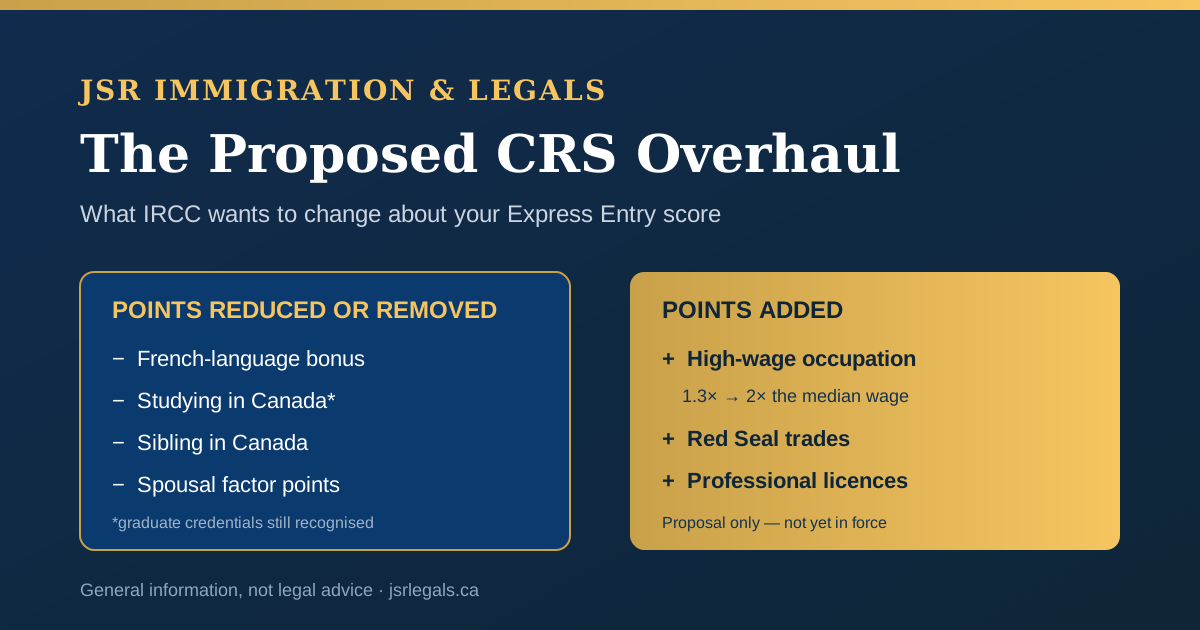
If you're building an Express Entry profile in 2026, it's worth understanding where the system is heading. Following a spring consultation, Immigration, Refugees and Citizenship Canada (IRCC) has laid out a proposed redesign of the Comprehensive Ranking System (CRS) and the underlying programs. Some points many candidates have relied on for years could shrink or disappear, and a new factor built around wages would take their place.
This is general information about a proposal, not a rule in force. Nothing below has taken effect yet — but the direction is clear enough that it's worth factoring into your plans now.
What IRCC is proposing
Two big ideas run through the consultation.
1. Merge the three federal programs into one. Today, Express Entry manages the Canadian Experience Class, the Federal Skilled Worker Program, and the Federal Skilled Trades Program separately. IRCC proposes folding them into a single Federal High Skilled Program with one unified set of minimum requirements — broadly, a high-school-equivalent education, language ability around CLB 6 across all four abilities, and at least one year of skilled (TEER 0–3) work experience.
2. Rebuild the CRS around economic outcomes. IRCC's research points to earnings and occupation as strong predictors of how newcomers do after they arrive. So the department wants to reward those signals more — and de-emphasise factors it now considers weaker predictors.
The points that could be removed or reduced
This is the part most candidates will feel. Under the proposal, several familiar CRS boosts are on the chopping block:
- French-language bonus points (currently up to roughly 50 extra points).
IRCC suggests category-based draws are a better tool for supporting French-speaking immigration than a blanket CRS bonus.
- Points for studying in Canada — except for graduate-level Canadian
credentials, which would still be recognised.
- The sibling-in-Canada bonus (15 points).
- Spousal factor points (the adjusted grid for an accompanying partner's
education, language, and experience).
The 600 points for a provincial nomination are also being examined as part of the wider review, though a nomination remains the single most powerful CRS lever available today.
The new "high-wage occupation" factor
In place of some of those points, IRCC proposes rewarding candidates whose Canadian work experience or job offer sits in an occupation that pays above the national median wage. Points would scale with the occupation's typical earnings, in tiers such as:
- around 1.3× the median wage,
- around 1.5×, and
- around 2× for the highest-paid occupations.
Crucially, the design ties points to the occupation's typical wage, not your personal salary — an approach meant to reduce the integrity problems that once plagued job-offer points. Red Seal trade certification and Canadian professional licences in regulated fields would also be recognised.
Where this stands — and what's still unknown
The consultation itself has closed, but the government has not announced a firm implementation date. Reforms of this scale require regulatory amendments and updated program instructions before they can take effect, and IRCC has described a multi-month implementation window. In other words: the shape of the change is visible, but the exact point values, cut-off treatment, and start date are not final. Treat any specific number you see online as an estimate.
What to do now
You can't control the final rules, but you can control your readiness.
- Strengthen language scores. A strong CLB result helps under both the
current and the proposed systems — this is rarely wasted effort.
- Value Canadian work experience in higher-wage roles. The clearest through-
line in every 2026 signal is that IRCC wants candidates with a real, well-paid foothold in the Canadian labour market.
- Don't overlook Provincial Nominee Programs. A nomination still adds 600
points today and remains a decisive path for many candidates.
- If French is your edge, keep at it. Category-based French draws continue,
so the language can still get you an invitation — even if the flat bonus changes.
- Keep documents current so you can act quickly when official rules land.
You can read the government's own summary on the 2026 consultation on Express Entry reforms page and check current scoring on the official CRS criteria page.
If you'd like a clear read on how these proposed changes could affect your CRS score — and the most realistic way to strengthen your profile right now — reach out to JSR Immigration & Legals and we'll review your file together.
This article is general information, not legal advice. These reforms are proposals and the details are not final, so confirm current requirements with IRCC or a licensed representative before you act.

Immigration & paralegal practitioner at JSR Immigration & Legals, helping newcomers and Ontario residents with their cases.
This post is general information about Canadian immigration and Ontario paralegal matters and is not legal advice. Rules change and every case is different — confirm current requirements for your own situation.