Canada's New DRC Travel Restriction: Who Cannot Enter and Who Must Quarantine
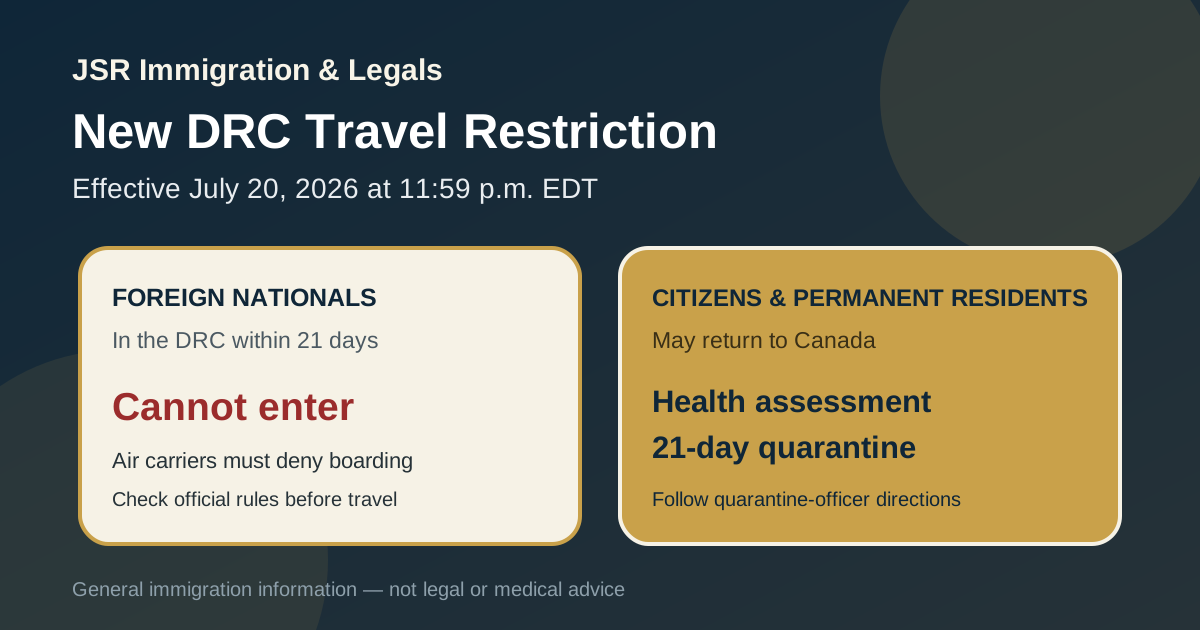
Canada introduced an additional temporary border restriction in response to the Ebola disease outbreak in the Democratic Republic of the Congo (DRC). Effective July 20, 2026, at 11:59 p.m. EDT, a foreign national who was in the DRC during the previous 21 days is temporarily prohibited from entering Canada.
The federal government says the health risk to people in Canada remains low. The new measure is intended to reduce the risk of the disease entering and spreading in Canada, and it sits alongside earlier measures affecting residents of the DRC, South Sudan and Uganda.
The new July 20 entry restriction
The new rule is based on recent travel, not citizenship. A foreign national who has been in the DRC within the previous 21 days cannot currently travel to Canada. An interim order also directs commercial and private air carriers not to allow an affected foreign national to board a flight to Canada.
This restriction can therefore affect a person even if they normally live in another country and hold an otherwise valid Canadian visa, permit or electronic travel authorization (eTA).
Who can still enter Canada
The July 20 announcement does not change the right of entry for:
- Canadian citizens;
- permanent residents; and
- people registered under the Indian Act.
If one of these travellers has been in the DRC, Uganda or South Sudan during the previous 21 days, they can return to Canada but will receive a health assessment on arrival. A traveller without symptoms must generally quarantine for 21 days after entering Canada, follow the instructions of a quarantine officer and report on their health. Anyone with symptoms will be medically examined and placed in isolation and care.
For the health measures, even transit through one of the affected countries counts. An eligible traveller should have a suitable quarantine plan before arrival, including a place to remain without direct contact with others and access to food, medication and public-health services.
Earlier document suspensions remain in place
Separate measures have been in effect since May 27, 2026 for foreign nationals whose immigration applications listed the DRC, South Sudan or Uganda as their last country of residence. Canada temporarily suspended certain immigration documents for these residents, including approved temporary resident visas, permanent resident visas and eTAs.
IRCC says it will continue processing affected new and existing applications, but will not finalize them while the measure is active. Affected applicants who receive a passport request should not send their passport to a visa application centre until the measure ends.
The residence-based document suspensions are scheduled to end at 11:59:59 p.m. ET on August 28, 2026, unless the government changes or repeals them earlier. The related public-health border measures run until August 29.
What about Uganda and South Sudan travel
The new blanket entry prohibition announced July 20 is specific to recent travel in the DRC. A foreign national who has been in Uganda or South Sudan during the previous 21 days may still be able to return with valid travel documents if they are not otherwise caught by the residence-based document suspension. They remain subject to medical screening and the applicable public-health measures.
Before booking or travelling
These are temporary, fast-changing public-health measures. Travellers should check IRCC's Ebola temporary immigration measures and the Public Health Agency of Canada's border-measures page immediately before booking, boarding or returning to Canada. People who believe a document was suspended incorrectly can use IRCC's crisis web form to request an exemption and provide supporting evidence.
Get in touch
If a temporary immigration measure affects your document or travel plans, contact JSR Immigration & Legals through our consultation page to discuss the available next steps.
This article provides general information current to July 21, 2026. It is not legal, immigration or medical advice. Government measures can change without notice; always confirm the current official requirements before travelling.

Immigration & paralegal practitioner at JSR Immigration & Legals, helping newcomers and Ontario residents with their cases.
This post is general information about Canadian immigration and Ontario paralegal matters and is not legal advice. Rules change and every case is different — confirm current requirements for your own situation.