Cracking Down or Cracking Under Pressure? Inside Canada's Controversial New Immigration Bill
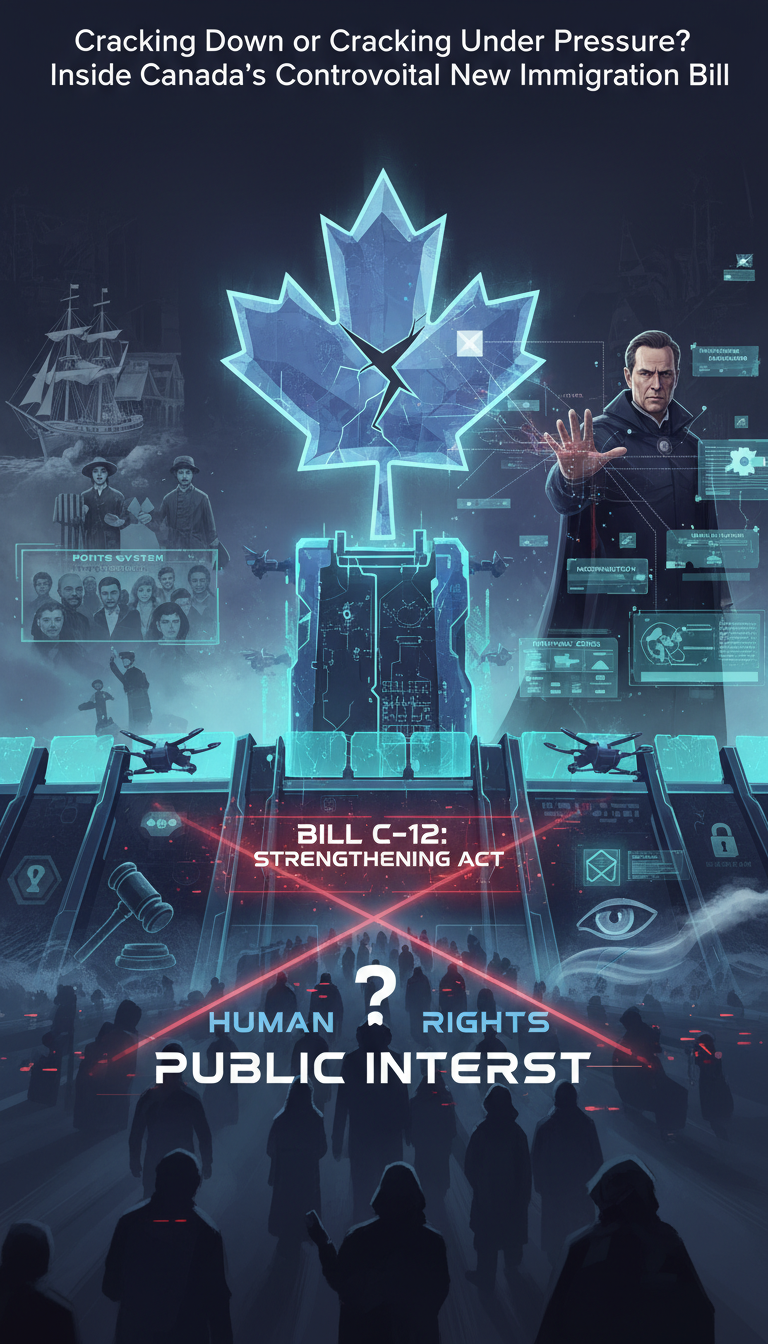
Cracking Down or Cracking Under Pressure? Canada's New Immigration Bill
- @layer base { body { @apply font-body antialiased; } h1, h2, h3 { @apply font-display; } } tailwind.config = { theme: { extend: { colors: { 'primary-dark': '#354000', 'primary-light': '#f5ffc3', 'secondary-dark': '#393e25', 'secondary-light': '#f0f4d0', 'background': '#e1e6c3', 'error': '#de3730', 'neutral-dark': '#3c3c36', 'neutral-light': '#fcf9f1', }, fontFamily: { display: ['Outfit', 'sans-serif'], body: ['Inter', 'sans-serif'], }, }, }, } ## Cracking Down or Cracking Under Pressure? Inside Canada's Controversial New Immigration Bill JUGRAJ SINGH RANDHAWA Decmber 05, 2025 Visualizing the complex interplay of borders, policy, and human movement. ### Introduction Is Canada, that perennial beacon of hope for immigrants and refugees, poised for a dramatic shift? A new bill, Bill C-12, is rumbling through Parliament, threatening to redefine our borders and shake the very foundations of our immigration system. The air crackles with anticipation, or perhaps, trepidation. What's the buzz all about? Officially, it's the "Strengthening Canada's Immigration System and Borders Act." Sounds reassuring, doesn't it? The promise is a bolstering of border security, a crackdown on organized crime, a frontal assault on the fentanyl crisis, a cleansing of money laundering activities, and a general "modernization" of immigration processes. A noble endeavor, on the face of it. But the central question lingers, casting a long shadow: Is this bill truly about strengthening the system, or is it a Faustian bargain, sacrificing core Canadian values on the altar of perceived security? ### A Look Back: Canada's Immigration Journey Our immigration story is a long and winding road, paved with both progress and prejudice. It begins in the mists of time, with French and British colonial ambitions driving efforts to populate this vast land. The Immigration Act of 1869, a relatively open affair, primarily concerned itself with ensuring the safety of immigrants and preventing their exploitation. A far cry from today's anxieties, wouldn't you say? Let's not romanticize the past. The late 19th and early 20th centuries were marred by overtly discriminatory legislation. The Chinese Immigration Act, a stain on our history, and policies designed to effectively exclude South Asians – remember the insidious "continuous journey" rule? – stand as stark reminders of our darker impulses. These were policies born of fear and prejudice, not the open-armed embrace we now like to imagine. The post-World War II era witnessed a gradual, albeit hesitant, shift towards a more inclusive ethos. Discriminatory policies were slowly dismantled in the 1960s, replaced by a "points system" designed to prioritize skills over race, a supposedly more objective measure. Refugee protection, too, began to emerge as a core commitment, a reflection of our growing awareness of global suffering. Today, Canada's immigration system largely revolves around three pillars: economic immigrants, family reunification, and refugees. A complex system, managed jointly by federal and provincial governments, it reflects our evolving needs and aspirations as a nation. But is it robust enough to withstand the pressures of the 21st century? ### Bill C-12: The Nitty-Gritty The government, under the leadership of Prime Minister Mark Carney, presents Bill C-12 as a necessary measure to safeguard Canadians and uphold the integrity of our immigration system. It's about equipping law enforcement with the tools they need to confront modern threats, they argue. A pragmatic response to a changing world. So, what does it actually do? In essence: Border Patrol Gets a Boost: The Canada Border Services Agency (CBSA) is granted expanded powers to inspect goods at warehouses and transport hubs, casting a wider net. The Coast Guard, too, gets a new role, patrolling our waters for security threats and gathering intelligence. The watchful eye grows ever more vigilant.
- Fighting the Bad Guys: The bill seeks to tighten the noose around drug trafficking (especially fentanyl precursors), weapons smuggling, auto theft, and money laundering. Enhanced information sharing on sex offenders is also on the table. A laudable goal, to be sure.
- Immigration System Overhaul: Here lies the heart of the controversy. The bill introduces rules that could deem certain asylum claims ineligible if they are deemed "late or irregular." Moreover, the government gains expanded authority to cancel or suspend immigration documents, or even halt new applications altogether, in "exceptional circumstances" or when deemed to be in the "public interest." That last phrase, "public interest," is where the real trouble begins.
- Information Sharing: The bill proposes a greater flow of personal information between federal and provincial departments. A seemingly innocuous measure, but one that raises serious questions about privacy and the potential for abuse.
The Storm of Controversy: Who's Saying What?
The government's position is clear: "We're protecting Canadians and modernizing our borders!" Security, efficiency, and the relentless pursuit of the "bad guys" are the watchwords.
However, Bill C-12 has unleashed a veritable tempest of opposition. Former ministers, legal experts, immigration lawyers, civil liberties groups like the CCLA, refugee advocates, and even women's rights organizations have all voiced their concerns, creating a chorus of dissent.
Why the outcry?
- "Public Interest" - The Vague Villain: This phrase is the primary source of anxiety. Critics denounce it as "completely arbitrary," granting the government unchecked, open-ended power to cancel documents without clear criteria or due process. Imagine the precarity of having your permit revoked at a whim, with no recourse.
- Refugee Rights Under Fire: The proposed one-year limit for asylum claims is seen as a grave threat, potentially denying vulnerable individuals, especially those traumatized or fleeing complex situations, access to fair hearings. It's viewed as a betrayal of Canada's international obligations.
- Déjà Vu with Bill C-2? Many perceive C-12 as a "repackaged" or "fast-tracked" reincarnation of the much-maligned (and ultimately shelved) Bill C-2, resurrecting its most problematic elements. A legislative zombie, perhaps?
- Privacy Concerns: The sweeping information-sharing provisions, without adequate safeguards, could expose migrants and refugees to undue risk.
- Canada's Reputation at Stake: Former Immigration Minister Lloyd Axworthy has warned that the bill could "tarnish Canada's reputation as a safe haven." A heavy price to pay, indeed.
- Efficiency? Or More Backlogs? Some experts predict that the changes could actually increase litigation and merely shift backlogs to federal courts, undermining the stated goal of streamlining the system. An exercise in futility?
- "Trump-like" Policies? Some critics have gone so far as to suggest that the bill echoes the restrictive immigration policies of the previous U.S. administration, a stark departure from Canada's traditional humanitarian approach.
What's Next for Bill C-12?
The bill currently finds itself at the report stage in the House of Commons, having already navigated the committee process, where some amendments were, in fact, incorporated.
Encouragingly, some of the more expansive powers to cancel documents have been scaled back, now requiring specific grounds (fraud, national security, etc.) and a report to Parliament explaining their application. A small victory for oversight and accountability, perhaps signaling a willingness to listen to concerns.
However, the road ahead remains uncertain. The bill must still pass a third reading in the House, then proceed to the Senate, and ultimately receive Royal Assent to become law. Expect continued debate and resistance.
The fundamental questions remain unanswered. Will the final version strike a genuine balance between security and human rights? Or will it fundamentally reshape Canada's identity on the global stage? Only time will reveal whether Bill C-12 lives up to its name or becomes a chapter of regret in our nation's immigration story.
© JSR IMMIGRATION AND LEGALS. All rights reserved.

Immigration & paralegal practitioner at JSR Immigration & Legals, helping newcomers and Ontario residents with their cases.
This post is general information about Canadian immigration and Ontario paralegal matters and is not legal advice. Rules change and every case is different — confirm current requirements for your own situation.