Seriously Ill and Worried About Your Job? Ontario's 27-Week Leave
A serious illness is hard enough without also fearing for your job. One of the most useful — and least known — protections in Ontario employment law is designed for exactly that situation: long-term illness leave. It came into effect on June 19, 2025, so as of this month it has been in place for a full year, yet many workers still don't know it exists. Here's a plain-language guide to what it gives you and how to use it.
What the leave is
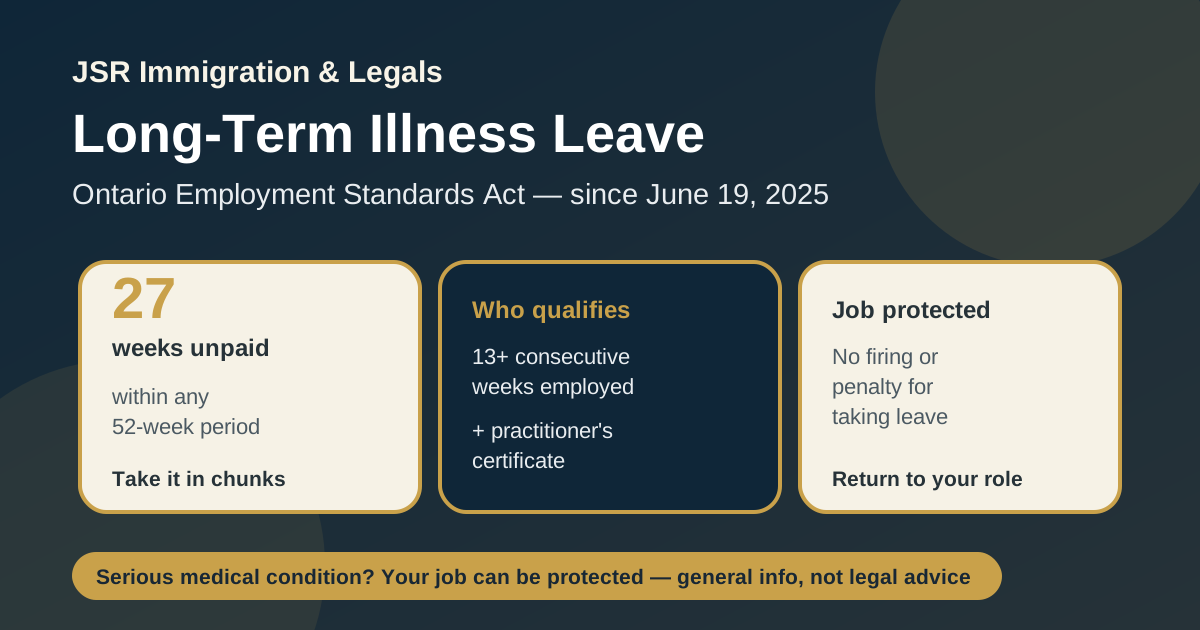
Long-term illness leave is an unpaid, job-protected leave under Ontario's Employment Standards Act, 2000 (ESA). It lets an eligible employee take up to 27 weeks off in a 52-week period because of a serious medical condition, without losing their job.
Two features make it especially practical:
- You don't have to take it all at once. The 27 weeks can be used in
separate chunks across the 52-week window — for example, a few weeks for treatment, back to work, then more weeks later if needed.
- It's separate from your other leaves. Long-term illness leave sits on top
of other ESA leaves, including the paid and unpaid sick days many employees already have. It does not replace them.
The trade-off is that the leave is unpaid under the ESA. Your employer is not required to pay your wages while you're on it. You may, however, be able to draw on other supports during that time — such as EI sickness benefits, a private short- or long-term disability plan through work, or your own savings.
Who qualifies
To be entitled to long-term illness leave, you generally need to meet two conditions:
- You're covered by the ESA — most employees in Ontario are, whether
full-time, part-time, permanent, or on a term contract.
- You've worked for the same employer for at least 13 consecutive weeks
before the leave begins.
You then need a certificate from a qualified health practitioner — for example, a physician, registered nurse, psychologist, psychiatrist, or nurse practitioner. The certificate must confirm that you have a serious medical condition and set out the period you'll be unable to work. Importantly, it does not have to name your specific diagnosis — only confirm that the condition is serious and give the expected timeframe. That helps protect your medical privacy.
consecutive weeks?} B -- No --> C[Not yet eligible for
this specific ESA leave] B -- Yes --> D[Get a certificate from a
qualified health practitioner] D --> E[Notify your employer
in writing if you can] E --> F[Take up to 27 weeks unpaid
within a 52-week period] F --> G[Job is protected;
return to your old role or
a comparable one]
Your job is protected
The point of the leave is security. While you're on it — and because you're entitled to take it — your employer cannot fire you, threaten you, or penalize you for using or planning to use the leave. When you're ready to return, you're generally entitled to come back to the same job, or a comparable position if your old role no longer exists, at a wage that's at least what you were earning before.
These protections mirror the long-standing rules around pregnancy and parental leave. Punishing someone for taking, or being eligible for, a protected leave is a reprisal under the ESA. A worker who is dismissed in connection with the leave may have grounds for a complaint to the Ministry of Labour or a wrongful dismissal claim.
How it fits with other protections
Long-term illness leave is one tool among several, and they can overlap:
- Sick leave under the ESA covers shorter absences; this leave is built for
longer, serious conditions.
- The Ontario Human Rights Code separately requires employers to
accommodate a disability to the point of undue hardship — which can mean modified duties or a gradual return, not just time off.
- Federal EI sickness benefits may provide some income replacement during an
unpaid leave.
Because these pieces interact, two people with similar illnesses can have very different options depending on their workplace, their plan coverage, and how long they've been employed.
Practical steps if you may need it
- Talk to your health practitioner early about the certificate and the
expected timeframe — you'll need it to trigger the leave.
- Give written notice if you can. Tell your employer in writing that you'll
be taking the leave; if illness makes advance notice impossible, notify them as soon as you reasonably can.
- Keep records. Save your certificate, your notice, and any responses from
your employer.
- Check the official source. Ontario publishes the rules in its ESA guide:
Long-term illness leave (Ontario.ca). Confirm the current details there, as ESA entitlements can change.
Get in touch
If you're facing a serious illness and aren't sure what leave or protections apply to your situation — or you think you were penalized for taking time off — JSR Legals can help you understand your options. Reach us at info@jsrlegals.ca.
This article is general information about Ontario law, current as of June 2026, and is not legal advice for any specific situation. Entitlements and deadlines can change — confirm the current rules, or get advice, before you act.

Immigration & paralegal practitioner at JSR Immigration & Legals, helping newcomers and Ontario residents with their cases.
This post is general information about Canadian immigration and Ontario paralegal matters and is not legal advice. Rules change and every case is different — confirm current requirements for your own situation.