Faster Rent-Arrears Evictions Are Coming to Ontario in September 2026: What Renters and Landlords Should Do Now
Back in the spring, the most talked-about parts of Ontario's Bill 60 — the ones that speed up evictions for unpaid rent — had been passed but were not yet in force. That has now changed. The first wave of Bill 60's rental rules took effect on July 1, 2026, and Tribunals Ontario has confirmed that the rest, including the non-payment (rent-arrears) eviction changes, are set to take effect in September 2026. Many legal sources report the specific date as September 21, 2026 — but because the government's own notice says only "September 2026," you should confirm the exact date and the updated forms directly with the Landlord and Tenant Board (LTB) before you rely on it.
Here is a plain-language look at what is coming, and what tenants and landlords can do in the weeks beforehand.
What is already in force (as of July 1, 2026)
Several Bill 60 changes are now live. In short: the deadline to ask the LTB to review an order dropped from 30 days to 15 days; tenants may install their own window or portable air conditioner if certain conditions are met; and using the LTB's Payment Agreement form is now mandatory for a repayment plan. Those are settled — the September changes are the ones to prepare for next.
What changes in September 2026
The September wave is aimed squarely at non-payment of rent — the most common type of LTB application. Two changes stand out:
- A shorter N4 notice. The N4 is the notice a landlord serves when rent is
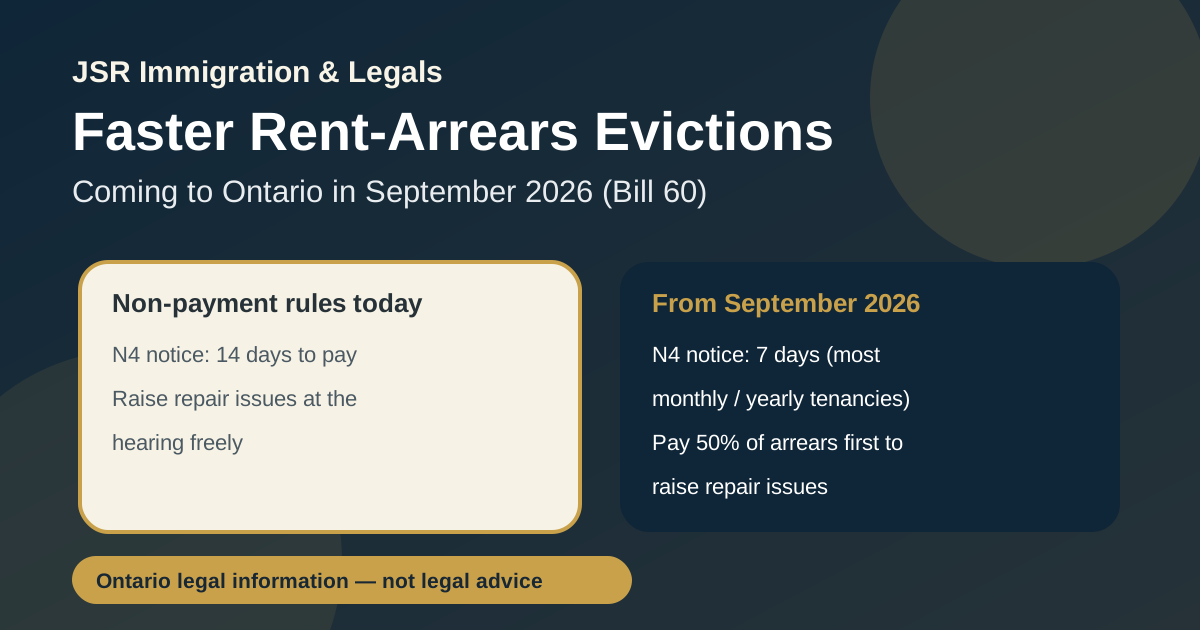
unpaid. Today it gives the tenant 14 days to pay the arrears (or move out) before the landlord can file an application with the LTB. Under the September changes, for most monthly and yearly tenancies that period is expected to be cut to 7 days. In practice, a landlord could get a non-payment case into the system a full week sooner.
- A 50% pay-in to raise repair issues. At a rent-arrears hearing, tenants have
long been able to argue that maintenance or repair problems should reduce what they owe. Under the new rules, an adjudicator may require a tenant to first pay 50% of the claimed arrears into the Board before those repair arguments are heard. The stated goal is to keep non-payment hearings focused on the rent — but it also makes it harder for a tenant to raise a maintenance defence without cash in hand.
Some sources also describe a change to landlord's-own-use (N12) evictions, under which a landlord who gives a longer notice period (reported as around 120 days) may avoid the usual one-month compensation. Treat the fine print here as still-settling and confirm it with the LTB.
the September 2026 change?} C -- "Before" --> D[14-day pay-or-quit period] C -- "After" --> E[Shorter 7-day period
for most tenancies] D --> F[Landlord may file with the LTB] E --> F F --> G[Rent-arrears hearing] G --> H{Tenant raises
repair/maintenance issues?} H -- "Yes, after change" --> I[Board may require 50% of
arrears paid in first] H -- "No" --> J[Hearing proceeds on the rent owed] I --> J
Why this matters for everyday renters
For a tenant living close to the edge of a paycheque, seven days is not much time. If the change lands as reported, the moment rent is missed the countdown is faster, and the room to fix a short-term cash crunch — a delayed pay deposit, a benefit that arrives mid-month — shrinks. The safest habits are the simple ones: keep proof of every rent payment, read any N4 the day you receive it, and if you genuinely owe the money, know that paying the full arrears before the deadline generally stops the process ("paying to void" the notice). Do not ignore a notice hoping it goes away — the timelines are moving the other direction.
If your real dispute is about repairs — heat that does not work, a leak the landlord will not fix — the 50% pay-in rule means you should document the problem early (photos, dates, written requests, and, where appropriate, a separate tenant application) rather than waiting to raise it for the first time at a non-payment hearing.
Why this matters for small landlords
For a landlord carrying a mortgage on a unit with unpaid rent, faster timelines are the point — but only if the paperwork is right. A notice on the wrong form, with the wrong number of days, or served before the new rules are actually in force can be thrown out, sending you back to the start. Around a transition date especially, use the current LTB-approved form, count the days carefully, and do not serve a 7-day N4 until you have confirmed the change is live.
Where to confirm the current rules
Because in-force dates and forms can shift right up to the last minute, rely on official sources, not social media or older articles:
- Tribunals Ontario — Landlord and Tenant Board (current forms, rules and the
operational updates on Bill 60): tribunalsontario.ca/ltb.
- The LTB's own operational update on the legislative changes:
tribunalsontario.ca — LTB legislative changes.
- Bill 60, Fighting Delays, Building Faster Act, 2025 — full text and status:
- The Residential Tenancies Act, 2006 on Ontario's e-Laws:
ontario.ca/laws/statute/06r17.
Get in touch
Non-payment cases are won and lost on timing and paperwork — a notice served too early, a deadline counted wrong, or a repair issue raised too late can decide the whole thing. If you have received an N4 or N12, or you are a landlord unsure which timeline applies as the rules change, JSR Legals can help you understand your options and act in time. Reach us at info@jsrlegals.ca.
This article is general information about Ontario law, current as of July 2026, and is not legal advice for any specific situation. Effective dates, forms and rules can change — confirm the current requirements with the LTB or a licensed professional before you act.

Immigration & paralegal practitioner at JSR Immigration & Legals, helping newcomers and Ontario residents with their cases.
This post is general information about Canadian immigration and Ontario paralegal matters and is not legal advice. Rules change and every case is different — confirm current requirements for your own situation.