June 30, 2026: 155,800 New Permanent Residents Versus a 380,000 Target
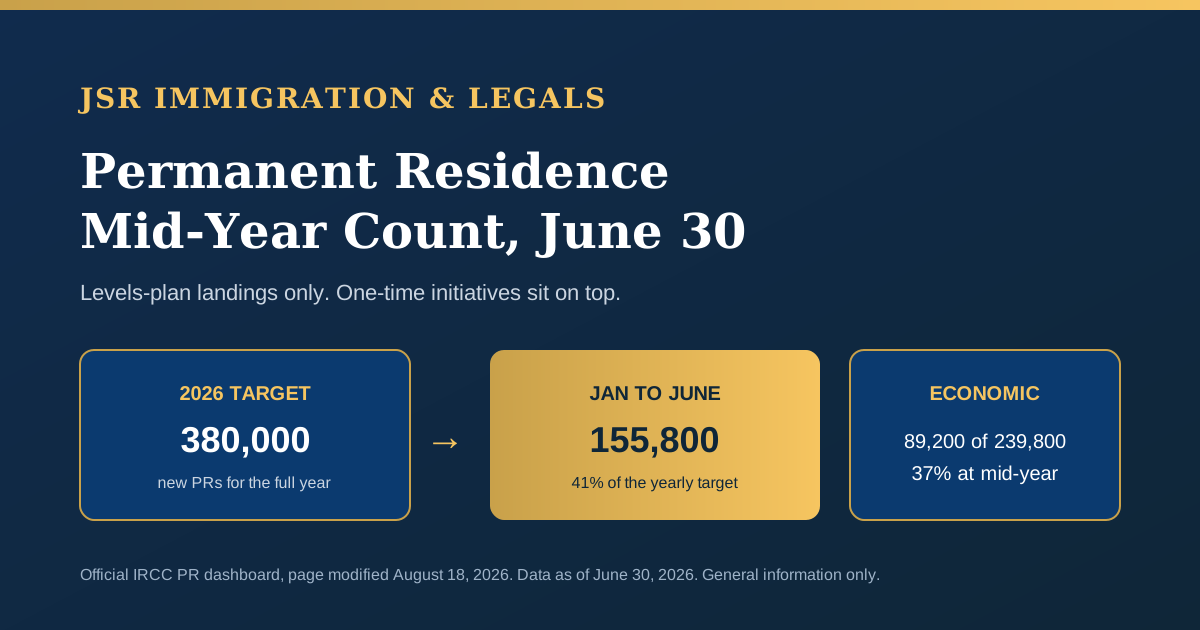
IRCC’s dashboard on permanent residence numbers, last modified August 18, 2026, now publishes a mid-year count. Data is as of June 30, 2026. New permanent residents from January to June 2026 total 155,800. The 2026 levels-plan target is 380,000.
That is about 41% of the annual target after six months. IRCC states that the figures are approximate and subject to change, and that values are rounded. The page also says about half of new permanent residents were already living in Canada as non-permanent residents.
This is not a new program. It is the first half-year scorecard against the 2026-2028 Immigration Levels Plan. The change that matters for you is the gap between the target and actual landings, and which category you sit in.
What the official tables say
IRCC’s category table under the levels plan:
| Category | 2026 target | New PRs, January to June 2026 |
|---|---|---|
| All levels-plan admissions | 380,000 | 155,800 |
| Economic | 239,800 | 89,200 |
| Family | 84,000 | 45,100 |
| Refugees and protected persons | 49,300 | 17,900 |
| Humanitarian and compassionate and other | 6,900 | 3,600 |
Family class is more than halfway to its yearly target. Economic class is not. 89,200 economic landings are about 37% of the 239,800 economic target.
Monthly levels-plan admissions in 2026 were 21,665 in January, 26,065 in February, 25,715 in March, 26,975 in April, 28,415 in May, and 27,005 in June.
French-speaking permanent residents outside Quebec are a separate line. The 2026 aim is 9% of new permanent residents outside Quebec, or 30,150 people. IRCC counted 12,400 in the first half of the year.
One-time initiatives sit outside the 380,000
The same page lists two one-time initiatives that run in 2026 and 2027. IRCC says these permanent residents are in addition to, not part of, the levels-plan targets.
The In-Canada Workers Initiative is meant to accelerate permanent residence for 33,000 workers already contributing in in-demand sectors, including people who have lived in smaller communities for at least two years. The 2026 line is 20,000. IRCC counted 11,300 landings from January to June, 57% of that yearly line.
The protected-person initiative is meant to process applications from up to 115,000 eligible protected persons and their in-Canada dependants, and to grant permanent residence to 46,000 of them in 2026. IRCC counted 15,000 in the first half of the year, 33% of the 2026 line. Applicants who will live in Quebec are not eligible for processing in that initiative.
Monthly add-ons in June 2026 were 5,730 protected-person OTI admissions and 2,010 skilled-worker OTI admissions.
What this means if you are waiting for PR
A 380,000 target for the full year is already lower than 2025. After six months, 155,800 levels-plan landings leave most of that target unused on paper. That does not mean an Express Entry profile filed now is easy. Category draws, CRS cutoffs, and provincial nomination rules still control who is invited. We covered the September 4 healthcare round and the September 1 CEC round separately.
If you already work in Canada, use the in-Canada share. IRCC’s own line is that about half of new permanent residents were already here. The worker initiative is a separate, limited count. It is not a general CEC substitute.
If you are sponsoring a spouse, partner, or child, family class is the one levels-plan line that is ahead of the halfway mark. Processing still follows the live IRCC tool, not the landing target. Parents and grandparents remain constrained by available spaces. The super visa is the official alternative IRCC points to while PGP intake stays paused.
If your goal is French-language selection, 12,400 francophone landings outside Quebec in six months is the official mid-year count against a 30,150 yearly aim. French category draws remain a separate Express Entry track.
What to do with the mid-year gap
If you hold an Invitation to Apply, file a complete application inside the 60-day window. A target gap is not extra time on your ITA.
If you are in the Express Entry pool, keep language tests, work history, and settlement funds current. A provincial nomination still adds 600 CRS points when the nomination is valid.
If you are already in Canada on a work permit, treat expiry dates as hard. An extension is not a permanent-residence landing on this dashboard.
If you need a structured review of an Express Entry file, a work permit, or a family sponsorship, contact JSR Immigration & Legals through our consultation page, the Express Entry service page, the work permit service page, or the spousal sponsorship service page.
This article is general information current to September 6, 2026, and is not legal or immigration advice. Confirm the live tables on Canada.ca before you file.

Immigration & paralegal practitioner at JSR Immigration & Legals, helping newcomers and Ontario residents with their cases.
This post is general information about Canadian immigration and Ontario paralegal matters and is not legal advice. Rules change and every case is different — confirm current requirements for your own situation.