Canada Moves to Lock In Earlier Work Permits for Asylum Claimants: What the June 19 Draft Rules Say
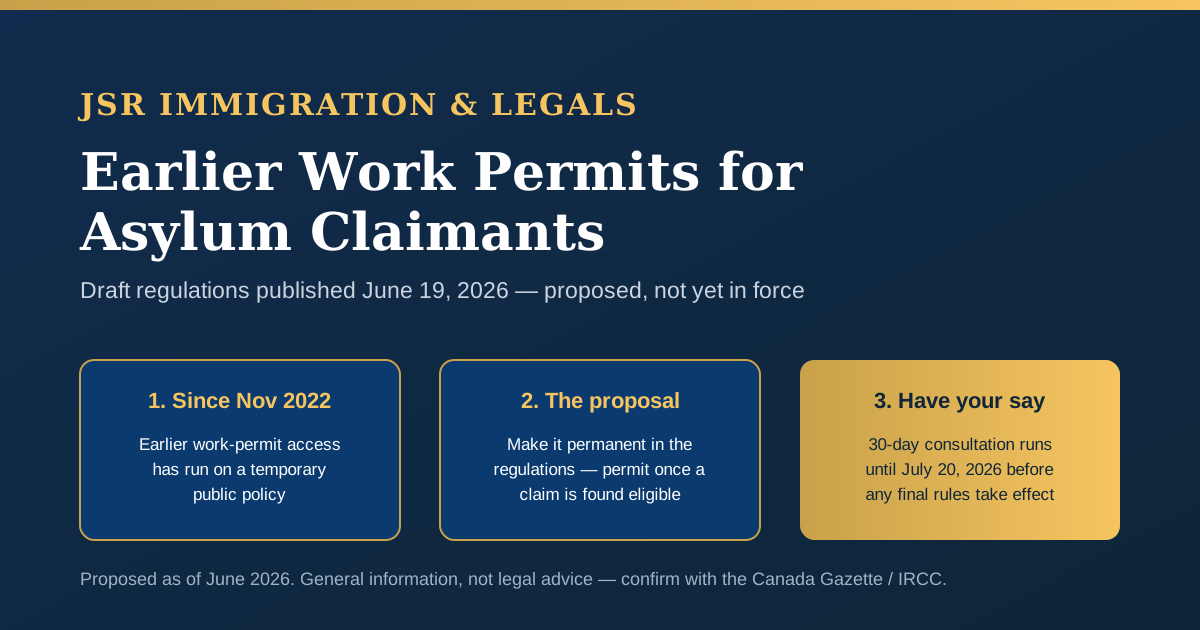
On June 19, 2026, the Government of Canada published a set of proposed regulations in the Canada Gazette, Part I aimed at modernizing how asylum claims are processed. One change stands out for people already in the system: Ottawa wants to make permanent the ability for asylum claimants to get a work permit earlier in the process — something that has been running on a temporary basis since November 2022.
Because these are draft rules open for public feedback, nothing has changed in law yet. But the direction is clear, and if you or a family member has a refugee claim in progress, it's worth understanding what's on the table.
The headline change: work permits sooner
Today, many asylum claimants can already apply for an open work permit while they wait for their hearing — but that ability has rested on a temporary public policy first introduced in November 2022, not on the regulations themselves. Temporary policies can be changed or allowed to lapse.
The proposal published on June 19 would write this into the Immigration and Refugee Protection Regulations, so the early access becomes a permanent, predictable feature rather than a policy that has to be renewed. As described in the government's announcement, open work permits could be issued to claimants once their claim has been found eligible to be referred to the Refugee Protection Division (RPD) — that is, before the claim is formally referred to the tribunal for a decision.
In plain terms: instead of waiting until later steps are complete, eligible claimants could be cleared to work sooner — which matters enormously for families trying to pay rent and support themselves while their case is decided.
to be referred to the RPD?} B -->|Yes| C[Under the draft rule:
open work permit can be issued here] C --> D[Claim referred to the
Refugee Protection Division] D --> E[RPD hearing and decision] B -->|No| F[Claim is ineligible —
different process applies]
This is part of a bigger asylum overhaul
The work-permit change doesn't stand alone. It's one piece of a broader package of proposed regulations flowing from **Bill C-12, the Strengthening Canada's Immigration System and Borders Act**, which became law earlier in 2026. The June 19 publication touches several parts of the asylum system, including measures reported to:
- Simplify and streamline how a claim is made, including moving toward a single online application process.
- Protect unaccompanied minors, such as exempting them from certain one-year claim restrictions.
- Adjust deadlines for submitting documents and evidence.
- Clarify the role of designated representatives for claimants who need them (for example, minors or vulnerable adults).
- Confirm earlier work-permit access for eligible claimants, as described above.
Taken together, the government frames these as efforts to speed up decisions and reduce backlogs while keeping the system fair. Reasonable people will debate the details — which is exactly what the consultation period is for.
Timeline: nothing is final yet
This is the part to underline. The proposal was published for a 30-day public consultation period that runs until July 20, 2026. During that window, individuals, lawyers, settlement agencies, and other stakeholders can submit feedback. Only after that — and after the government finalizes the text — would the rules take effect, which the announcement anticipates later in 2026.
What this means for you right now
A few practical takeaways while these rules are still in draft:
- If you already have a refugee claim in progress, your current eligibility for a work permit still depends on the existing rules and the temporary policy, not the draft regulation. Don't assume the new wording applies yet.
- Don't stop applying or renewing based on headlines. If you're eligible for an open work permit under today's framework, the usual application process still governs your situation.
- Watch the official sources. The authoritative details are in the Canada Gazette notice and on Canada.ca — not in social-media summaries, which often blur "proposed" with "in force."
- Be cautious of anyone promising guaranteed faster permits because of this announcement. Until the regulation is finalized, no one can promise it will apply to your file.
Why timing on a claim matters so much
For many claimants, the gap between arriving and being able to work legally is the hardest stretch — it affects housing, food, and a family's stability. Rules that move the work-permit step earlier can make a real difference, but the eligibility conditions, supporting documents, and exact stage of your claim all decide whether and when you qualify. Getting that sequence right is where good advice pays off.
Talk to us
If you or someone in your family has an asylum claim underway and you're trying to understand your work-permit options — under both the current rules and what's coming — the team at JSR Immigration & Legals can help you map out the right next step. Get in touch and we'll walk through your situation.
This post is general information only and reflects what was publicly known as of June 20, 2026. It is not legal advice. The regulations described here are proposed and not yet in force — confirm current rules with the Canada Gazette, Canada.ca / IRCC, or a qualified professional before acting.

Immigration & paralegal practitioner at JSR Immigration & Legals, helping newcomers and Ontario residents with their cases.
This post is general information about Canadian immigration and Ontario paralegal matters and is not legal advice. Rules change and every case is different — confirm current requirements for your own situation.