A New 30-Day Document Clock for Refugee Claimants: What the Proposed RPD Rules Would Change
On June 20, 2026, the Immigration and Refugee Board (IRB) published proposed Rules Amending the Refugee Protection Division Rules in the Canada Gazette, Part I. If you or a family member has a refugee claim in progress — or is thinking about making one — these changes are worth understanding, because they would move the deadline for filing your evidence much earlier in the process.
Two important things to keep in mind up front. First, these are draft rules open for public comment — nothing has changed in law yet. Second, this is a separate proposal from the June 19 draft regulations about earlier work permits for claimants, which we covered in an earlier post. This one is about paperwork deadlines and how hearings get scheduled.
The headline change: personal documents within 30 days
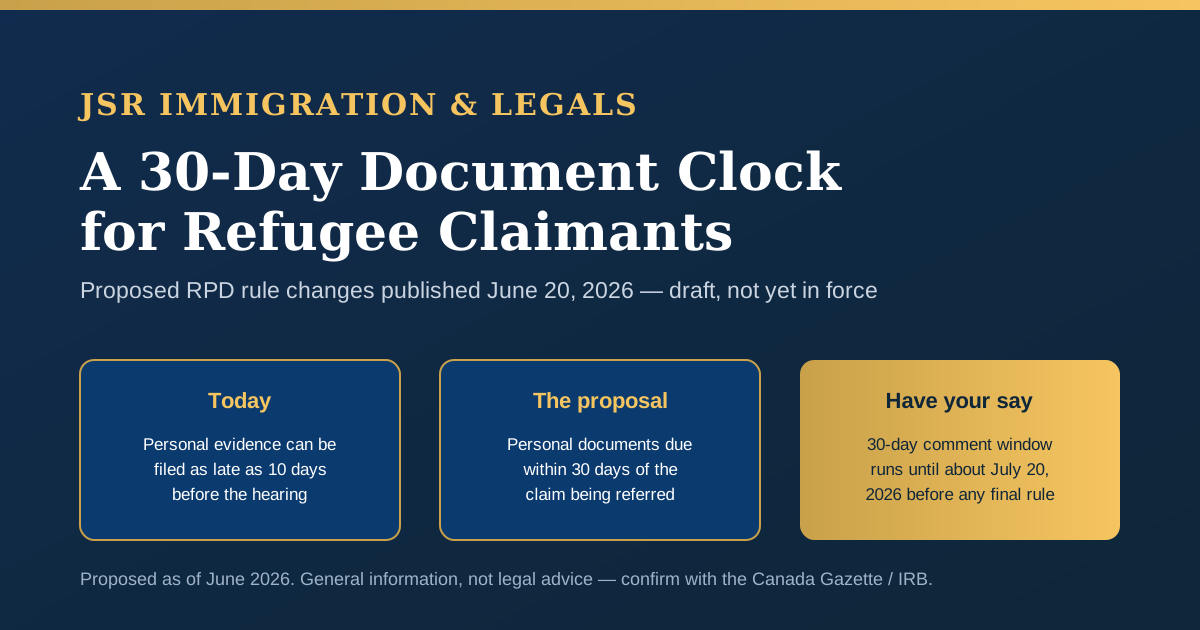
Under the current RPD Rules, a claimant can generally file the personal documents they intend to rely on at their hearing as late as 10 days before the hearing date. That timing worked when hearings were often scheduled far in the future.
The proposal would replace that with a front-loaded deadline: you would have to provide any personal documents you intend to rely on no later than 30 days after your claim is referred to the RPD. General "country condition" documents (the reports about conditions in your home country) would keep the existing 10-days-before-hearing timing.
In plain terms: the clock to gather your identity documents, personal evidence, and supporting records would start the moment your claim is referred, not weeks before a hearing that might be months away.
What else is in the draft
The proposed package does more than move one deadline:
- A single, online intake. Claimants would provide their basis-of-claim
information to the Minister up front, through a digital channel, rather than filing a separate form later.
- Scheduling moves back to the IRB. Authority to schedule the first hearing
would return to the Division itself, instead of being set by an officer.
- Earlier notice to you. The Minister would have to give claimants key
procedural information without delay once a claim is referred.
- Fax is on the way out, replaced by digital tools like the online portal.
These changes are designed to work alongside the Strengthening Canada's Immigration System and Borders Act (Bill C-12) and would take effect once that framework is in force.
How the timeline would work
What it could mean for you
If these rules are finalized as written, the practical message is simple: start gathering your evidence immediately. Identity documents, proof of the events behind your claim, medical or police records, translations, and sworn statements can take time to obtain — and a 30-day window from referral is tight. Waiting until a hearing is scheduled would no longer be an option for personal evidence.
The upside the government points to is faster, more predictable processing. The trade-off is that the burden of being organized shifts earlier onto claimants, which makes early, careful preparation more important than ever.
This is your window to comment
Because the rules were published on June 20, 2026, the public comment period runs for about 30 days — closing on or around July 20, 2026. Interested people and organizations can send representations to the IRB during that window. After that, the government reviews the feedback before deciding whether and how to bring final rules into force, which is anticipated later in 2026.
You can read the proposal yourself in the Canada Gazette, Part I (June 20, 2026).
Get in touch
Refugee claims are time-sensitive and highly document-driven, and proposed rules like these can change how you should prepare from day one. If you or a loved one has a claim in progress or is considering one, contact JSR Immigration & Legals and we can talk through where things stand.
This article is general information only, current to July 2026, and is not legal advice. Proposed rules are not yet in force and details may change — always confirm current requirements with the Canada Gazette, the IRB, or a qualified professional before acting.

Immigration & paralegal practitioner at JSR Immigration & Legals, helping newcomers and Ontario residents with their cases.
This post is general information about Canadian immigration and Ontario paralegal matters and is not legal advice. Rules change and every case is different — confirm current requirements for your own situation.