Canada to Fast-Track Work Permits for AI Professionals: What the New Stream Could Mean
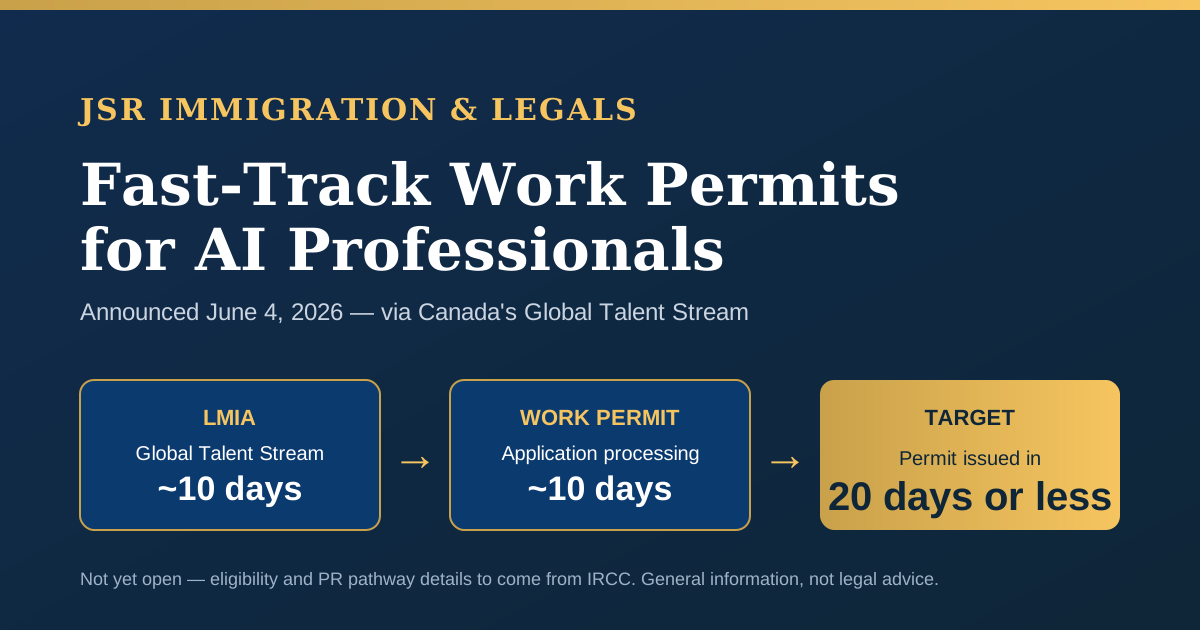
On June 4, 2026, the federal government announced that it plans to fast-track work permits for artificial intelligence (AI) professionals, with a target of issuing them in 20 days or less. The move is part of the Carney government's new national AI strategy, AI for All, and it would run through Canada's existing Global Talent Stream (GTS).
If you work in AI — or you're an employer trying to hire AI talent — this is worth understanding early, even though the stream is not open yet. Below is a plain-language summary of what was announced, what's still missing, and how the GTS already works today.
What was actually announced
According to the government's announcement, reported by CIC News and tied to the national AI strategy, the key points are:
- A new AI worker stream would be created under the Global Talent Stream, which is part of Canada's Temporary Foreign Worker Program.
- The target is start-to-finish work permit issuance in 20 days or less.
- The government says the stream will be paired with measures to support the transition of AI workers to permanent residence — but no details have been released.
- There is no launch date yet, and the government has not said how employers or workers will qualify.
In other words: this is a stated plan and a direction of travel, not an open program. Treat any "how to apply" guidance you see online with caution until Immigration, Refugees and Citizenship Canada (IRCC) publishes official eligibility rules.
How the Global Talent Stream already works
The reason 20 days is realistic is that the GTS is already built for speed. Today, the Global Skills Strategy and GTS offer:
- Roughly 10 business days to process a Labour Market Impact Assessment (LMIA) for eligible employers, and
- Roughly 10 business days to process the work permit application for many qualifying applicants.
By comparison, a standard Temporary Foreign Worker Program hire can take two to six months. So a dedicated AI lane within the GTS isn't inventing a new machine — it's pointing the existing fast machine at a priority occupation.
Who this could help
If it launches as described, the stream would mainly benefit:
- AI specialists abroad — machine-learning engineers, data scientists, AI researchers and similar roles — who have a Canadian job offer.
- Canadian employers, especially tech firms and research-heavy organizations, that compete globally for scarce AI talent and can't wait months for a permit.
- People already in Canada in AI roles who may eventually benefit from the promised permanent residence measures, depending on how they're designed.
The broader AI for All strategy sets ambitious targets — roughly $200 billion in added economic growth and about 250,000 new AI-related jobs over five years, with AI adoption rising from just over 12% to 60% by 2034. The work permit stream is one lever meant to supply the people behind those numbers.
What's still unknown — and why it matters
Because the details aren't out, several important questions remain open:
- Eligibility: Which occupations or NOC codes count as "AI"? Will there be wage or credential thresholds?
- Employer requirements: Will employers still need an LMIA, or could parts be exempt?
- The PR pathway: Will it run through Express Entry category-based draws, a Provincial Nominee Program, or a new dedicated route?
- Timing: When does it actually open?
Until IRCC publishes official program criteria, the safest approach is to plan around current rules — a GTS-backed work permit today — rather than waiting for a stream that has no confirmed start date.
Practical takeaways
- If you're an AI professional with a Canadian offer, look at whether you already qualify under the existing Global Talent Stream rather than waiting.
- If you're an employer, confirm whether your role and the position meet current GTS criteria now, so you're ready if a dedicated AI lane opens.
- Watch the official IRCC and canada.ca pages for the program criteria before relying on third-party "AI work permit" guides.
Talk to us
Work permits, the Global Talent Stream, and the move from a temporary permit to permanent residence can be complex, and the right path depends on your specific situation. If you'd like help understanding your options, the team at JSR Immigration & Legals is happy to talk it through — get in touch.
This post is general information only and reflects what was publicly announced as of June 8, 2026. It is not legal advice. Program details may change, so confirm current requirements with IRCC or a qualified professional before acting.

Immigration & paralegal practitioner at JSR Immigration & Legals, helping newcomers and Ontario residents with their cases.
This post is general information about Canadian immigration and Ontario paralegal matters and is not legal advice. Rules change and every case is different — confirm current requirements for your own situation.