IRCC Processing Times Are Easing: In-Canada Work Permits Drop to 186 Days
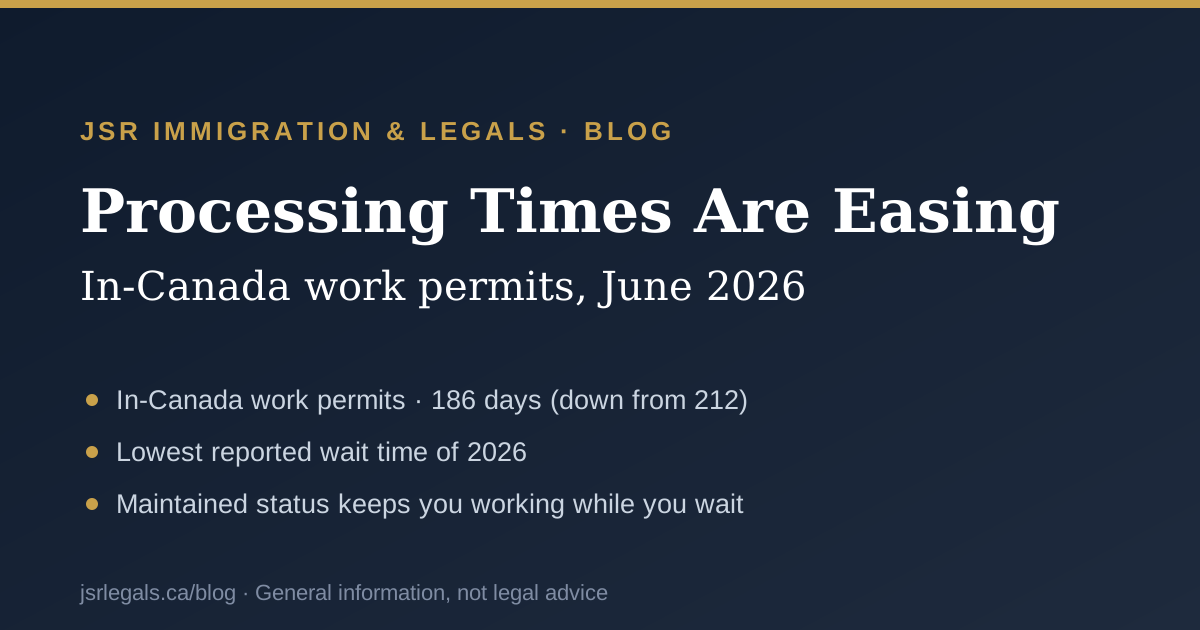
For most of the past year, the story on IRCC processing times has been about delays. The latest numbers tell a more encouraging one. In its June 2026 updates, Immigration, Refugees and Citizenship Canada (IRCC) reported that the wait for work permit applications and extensions filed from inside Canada has dropped to roughly 186 days — down from about 212 days a month earlier, and the lowest figure reported so far in 2026.
That's nearly a month shaved off a category that affects a very large number of newcomers: students moving to a post-graduation work permit, workers renewing or changing employers, and spouses applying for open work permits. Here's what changed, the numbers behind it, and what it practically means if you're waiting on a decision.
What the June 2026 update shows
IRCC refreshes its published processing-time estimates regularly, and several temporary-residence categories moved in applicants' favour this month:
- In-Canada work permits: about 186 days as of the June 10 update, down
from roughly 212 days in early May. That's the lowest reported in 2026.
- Work permits from outside Canada: several countries saw small
improvements — for example, estimates for applicants in India and the United States each eased by about a week in early June.
- Super visas: timelines for parents and grandparents fell across most
countries, with some of the largest drops of the year.
Not everything improved. Citizenship certificate waits climbed sharply, and a few categories ticked up slightly. Processing times also bounce around from one update to the next, so a single good month is a trend to watch, not a guarantee.
before your status expires] --> B[Maintained status begins] B --> C{Decision made} C -- Approved --> D[New permit issued · keep working] C -- Refused --> E[Maintained status ends · get advice quickly] B --> F[You may keep working
under the same conditions while you wait]
Why this matters for work permit holders
The headline number is encouraging, but the more important thing to understand is maintained status (what used to be called "implied status"). If you apply to extend or change your work permit before your current one expires, and you stay in Canada, you can generally keep working under the same conditions while IRCC processes the new application — even if that takes months.
That's why the timing of your application matters far more than the headline wait. A 186-day estimate is manageable if you applied early and have maintained status. The same wait is a crisis if you let your permit lapse first, because maintained status only protects people who applied before expiry. The single most valuable habit is to start your renewal early — many people aim for around 90 days before their permit ends.
A few important cautions
Processing times are estimates, not promises. IRCC bases them on how long it took to finish a share of past applications, so your file could be faster or slower depending on its complexity, completeness, and whether IRCC asks for more information.
A few things genuinely speed your file up:
- Apply complete. Missing documents, unsigned forms, or unpaid fees are among
the most common reasons a file stalls or gets returned.
- Use the right category. An in-Canada application and an outside-Canada
application follow different queues and timelines.
- Keep your contact and account details current so you don't miss a request
for documents, which pauses your clock.
You can always check the current estimate for your exact situation on IRCC's official Check processing times tool, which lets you select your application type and country. Because the numbers change with each update, treat the figures in this post as a snapshot of June 2026 rather than a fixed rule.
What to do while you wait
If you've already applied:
- Confirm you have maintained status if you applied from inside Canada before
your permit expired — and avoid leaving Canada if you're relying on it, since travel can complicate it.
- Don't change jobs in a way your permit doesn't allow while you wait. If you
need to switch employers and you hold an employer-specific permit, get advice before you start — the rules on this are strict.
- Keep proof of your application (your submission confirmation) in case an
employer or border officer asks.
If you haven't applied yet and your permit is approaching its expiry, the falling timelines are good news — but they don't change the golden rule: file before you expire.
The bigger picture
Faster temporary-residence processing fits a broader theme in 2026 — IRCC working to bring its system back into balance after several heavy years. For people already in Canada on a permit, shorter waits mean less uncertainty and fewer gaps. But categories move in different directions month to month, so the safest plan is still to apply early, apply complete, and check the official estimate for your own situation rather than relying on a single headline.
If you're renewing a work permit, moving from a study permit to a PGWP, or applying for a spousal open work permit and you want to be sure your application is complete and filed at the right time, that's exactly the kind of review we do. Reach out to JSR Immigration & Legals and we'll go through your timeline together.
This article is general information, not legal advice. Processing times and rules change, and your situation depends on your own facts — confirm current requirements with IRCC or a licensed representative before you act.

Immigration & paralegal practitioner at JSR Immigration & Legals, helping newcomers and Ontario residents with their cases.
This post is general information about Canadian immigration and Ontario paralegal matters and is not legal advice. Rules change and every case is different — confirm current requirements for your own situation.