You Won in Small Claims Court. How Do You Actually Collect in Ontario?
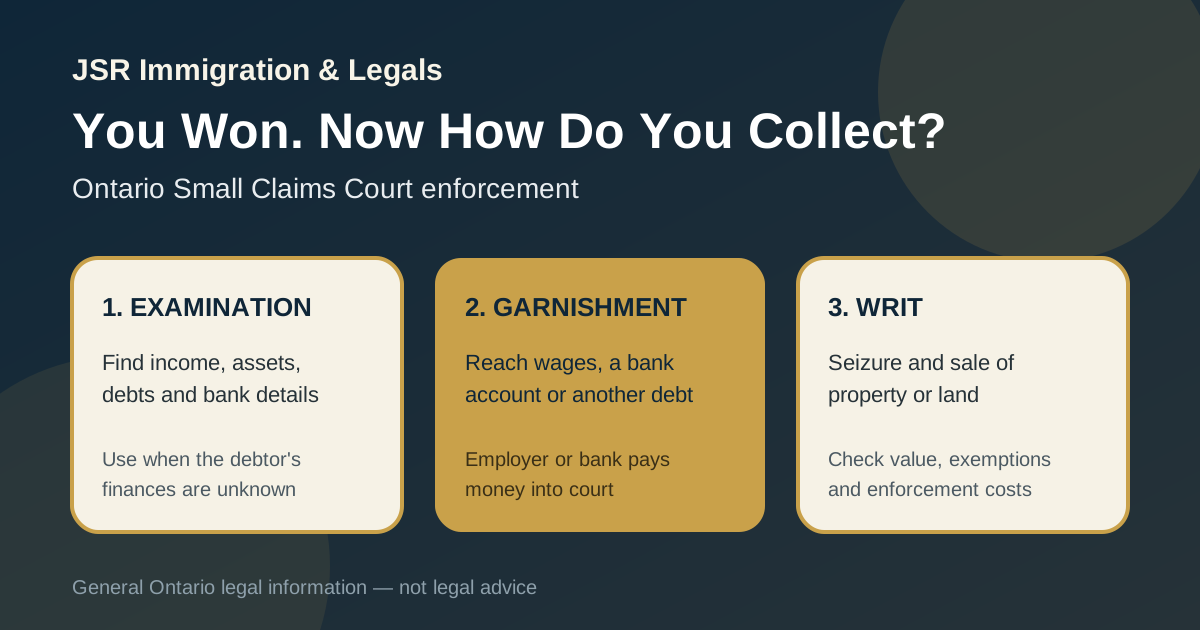
Winning a Small Claims Court case does not guarantee that the money will arrive. The court issues a judgment, but the successful party—the creditor—usually has to choose and start the appropriate enforcement process if the losing party—the debtor—does not pay voluntarily.
Ontario provides several enforcement tools. The right one depends less on how the original dispute happened and more on what reliable information you have about the debtor's income, bank accounts, property and ability to pay.
Start with a written payment request
Send the debtor a clear written request identifying the judgment, the current amount owing, any applicable post-judgment interest, and a reasonable payment deadline. Keep proof of delivery and records of every payment. A realistic instalment agreement can be faster and cheaper than formal enforcement, but put its terms in writing.
If the debtor cannot pay immediately, waiting may sometimes be practical. A judgment remains enforceable, and a debtor who has no reachable income or assets today may have them later. However, enforcement documents have deadlines, so do not simply leave the file unattended.
1. Examination hearing: find out what exists
If you do not know where the debtor works, banks or owns property, you can ask for an examination hearing. The debtor is ordered to attend court and answer questions about income, debts, assets and ability to pay. They may also be required to bring financial documents.
An examination can reveal whether garnishment or a writ is worthwhile. The court may make a payment order. The hearing is not itself a guarantee of collection, but it can prevent a creditor from spending fees on an enforcement method aimed at an asset that does not exist.
2. Garnishment: wages, bank accounts or other debts
Garnishment directs a third party—the garnishee—to pay money owed to the debtor into court. The garnishee might be an employer or bank.
The creditor generally files an Affidavit for Enforcement Request (Form 20P) and Notice of Garnishment (Form 20E), pays the filing fee, and has the notice issued by the clerk. The garnishee is usually served first. The debtor must then be served within five days, and affidavits of service are filed with the court.
A notice of garnishment must generally be issued within six years after the order, unless the creditor obtains permission by motion to issue it later. Accurate employer or bank details matter; the court does not investigate them for the creditor.
3. Writ of seizure and sale
A writ can target personal property or land. For personal property, enforcement staff may seize specified non-exempt assets and sell them at public auction. This route can be expensive because the creditor may need to pay enforcement fees and deposits for expenses such as storage, transport and advertising. Ontario's guide warns that the creditor risks paying those costs without recovery if the debtor has no worthwhile non-exempt property.
A writ of seizure and sale of land can be filed in a county or district where the debtor owns land. It encumbers land the debtor owns now or acquires later in that location, making a future sale or mortgage difficult until the debt is addressed. Separate filings are needed for different locations.
Both types of writ generally must be issued within six years after the order unless the court permits a later issue. Writs also require renewal, and statutory exemptions protect certain essential personal property.
Choose enforcement proportionately
Before paying fees, compare the judgment with the likely recovery and cost. Confirm names and addresses, calculate the balance carefully, and use the official Ontario guide to procedures after judgment and current Small Claims Court fee schedule. If the judgment is paid in full, notify the court and any enforcement office so unnecessary enforcement stops.
Get in touch
Enforcement is document-heavy, and a mistake in the debtor, garnishee or service information can cost time. For help reviewing an Ontario Small Claims enforcement strategy, contact JSR Immigration & Legals through our consultation page.
This article provides general information about Ontario Small Claims Court current to July 2026. It is not legal advice. Rules, fees, exemptions and deadlines can change; obtain advice for your specific judgment before acting.

Immigration & paralegal practitioner at JSR Immigration & Legals, helping newcomers and Ontario residents with their cases.
This post is general information about Canadian immigration and Ontario paralegal matters and is not legal advice. Rules change and every case is different — confirm current requirements for your own situation.