French-Language Express Entry Draws: Are They Worth the Effort in 2026?
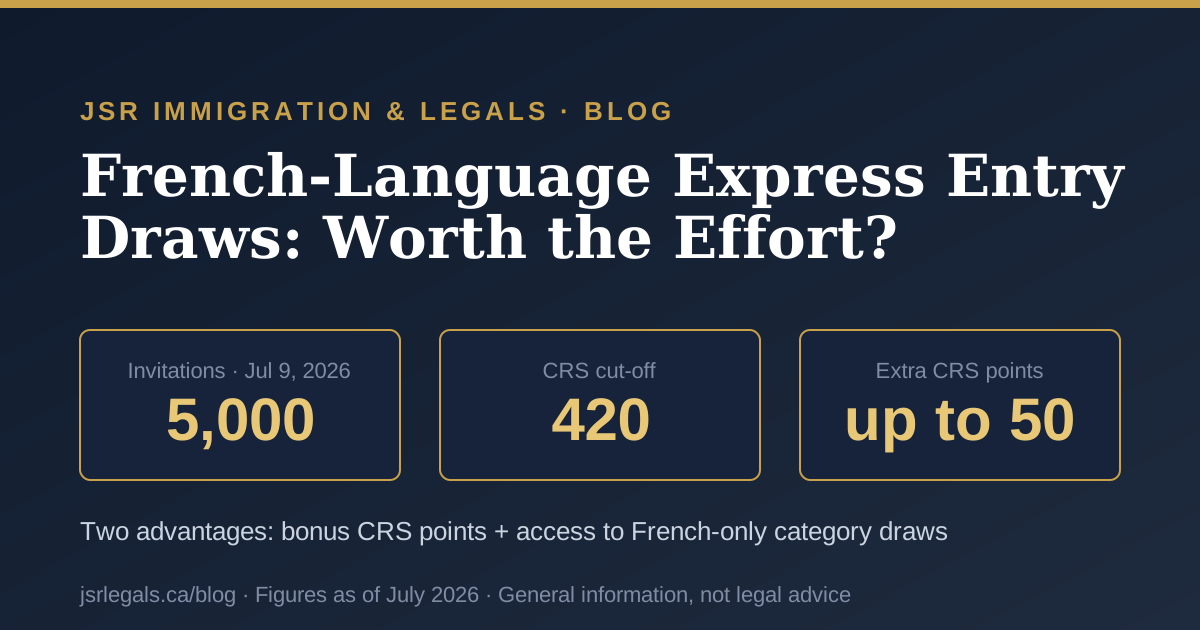
On July 9, 2026, Immigration, Refugees and Citizenship Canada (IRCC) issued 5,000 invitations to apply for permanent residence in a French-language proficiency category draw, with a Comprehensive Ranking System (CRS) cutoff of 420 — the highest threshold IRCC has recorded for a French draw so far this year. It was the largest round of the early-July draw cluster, and it continues a pattern that has held all through 2026: French-language draws are big, they happen often, and they frequently invite people at scores that would never see an invitation in a general round.
That naturally raises a question we hear constantly from clients: should I invest months learning French to boost my Express Entry chances? Here is a plain-language look at how these draws work and how to think about whether the effort is worth it for you.
Two separate French advantages
It helps to understand that French can help your Express Entry profile in two different ways, and people often mix them up.
1. Extra CRS points. Under the CRS, strong French ability can add additional points on top of your core score — up to 50 points in the best case. In general terms, you earn these points when you reach a set French benchmark (measured in NCLC levels through an approved test like TEF Canada or TCF Canada), with the larger bonus available when you also have a modest level of English. The exact thresholds matter, so confirm the current rules on IRCC's site before counting on a specific number.
2. Access to French-only draws. Separately, IRCC runs category-based draws for candidates with strong French. If you meet the category benchmark — generally NCLC 7 or higher in all four French abilities (listening, speaking, reading, writing) — you can be invited in a French draw even if your overall CRS is well below what a general round demands. The July 9 cutoff of 420 is a good illustration: many candidates sitting in the low 400s, who would be waiting indefinitely in general rounds, were invited.
TEF Canada or TCF Canada] --> B{NCLC 7+ in all
four abilities?} B -- No --> C[Keep improving French
or rely on other CRS levers] B -- Yes --> D[Extra CRS points added
to your profile] D --> E[Eligible for French
category-based draws] E --> F{Your CRS meets the
French draw cutoff?} F -- Yes --> G[Receive an ITA in a French round] F -- No --> H[Stay in pool · target a PNP
or raise your score]
Why French draws punch above their weight
Canada has a long-standing goal of increasing French-speaking immigration outside Quebec, and the category-based draw system is one of the main tools it uses to get there. In practice that has meant French rounds are among the most frequent and largest category draws, and they often carry lower cutoffs than the Canadian Experience Class or general draws. For a candidate who genuinely qualifies, French can be the single fastest route to an invitation.
But notice the trend baked into the July 9 numbers: the cutoff of 420 is the highest French threshold of 2026, and invitation counts have crept upward. As more candidates reach the French benchmark, these draws get more competitive too. French is an advantage — not a guaranteed shortcut.
So — is it worth the effort?
There's no universal answer, but a few honest guideposts:
- It's most worth it if you already have some French. If you studied French
in school or grew up around it, reaching NCLC 7 may be a realistic few-months project rather than a multi-year one. The payoff — extra points plus access to a whole separate stream of draws — is substantial.
- It's a bigger bet if you're starting from zero. Reaching a solid,
test-verified NCLC 7 across all four skills from scratch takes real, sustained study for most adults. Weigh that against faster levers like improving your English test score or pursuing a Provincial Nominee Program (PNP) nomination, which adds 600 points.
- Don't count the points before you test. CRS bonuses and category
eligibility both hinge on an official language test result, not on feeling conversational. Build your plan around the score you can actually certify.
You can see every round, including the July 9 French draw and its cutoff, on IRCC's official Express Entry rounds of invitations page.
The bottom line
French-language draws remain one of the strongest advantages in Express Entry in 2026 — large, frequent, and reachable at scores general rounds don't touch. For candidates with a head start in French, the effort often pays for itself. For those starting cold, it's a genuine investment worth weighing against other ways to raise your profile.
If you'd like help deciding whether French is the right lever for your file — or which categories and provincial streams you may already qualify for — contact JSR Immigration & Legals and we'll map it out together.
This article is general information only, current to July 2026, and is not legal advice. Draw results, CRS rules, and category benchmarks change frequently — always confirm the current requirements with IRCC or a licensed representative before making decisions.

Immigration & paralegal practitioner at JSR Immigration & Legals, helping newcomers and Ontario residents with their cases.
This post is general information about Canadian immigration and Ontario paralegal matters and is not legal advice. Rules change and every case is different — confirm current requirements for your own situation.