Where You Stand in the July 2026 Express Entry Pool: Reading the CRS Distribution
Every so often, Immigration, Refugees and Citizenship Canada (IRCC) publishes a snapshot of the Express Entry pool — how many people are waiting in it and how their Comprehensive Ranking System (CRS) scores are spread out. The newest update, reflecting the pool as of July 5, 2026, is a useful moment to step back and ask a simple question: where do I actually stand?
Here's what the July 2026 numbers say, and how to read them without either panicking or getting falsely reassured.
The July 2026 snapshot
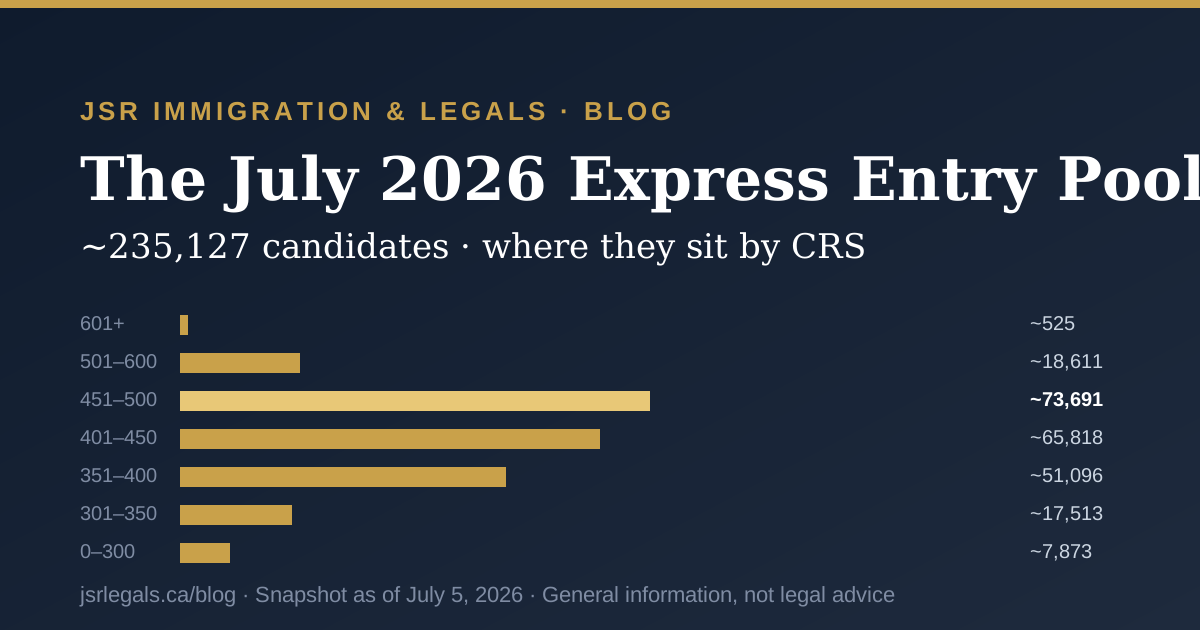
According to the figures IRCC published for July 5, 2026, the pool held roughly 235,127 active profiles — down a few thousand from the previous update in late June. Here is the approximate breakdown by CRS band:
| CRS range | Candidates in the pool |
|---|---|
| 601–1200 | ~525 |
| 501–600 | ~18,611 |
| 451–500 | ~73,691 |
| 401–450 | ~65,818 |
| 351–400 | ~51,096 |
| 301–350 | ~17,513 |
| 0–300 | ~7,873 |
You can see the current distribution yourself on IRCC's official Express Entry rounds of invitations page, which now publishes the pool's CRS breakdown a few days before each round. Treat the numbers above as a snapshot: the pool changes constantly as profiles are created, expire, or receive invitations.
What the shape of the pool tells you
A few patterns stand out, and they matter more than any single figure.
The middle is crowded. The largest single band is 451–500, with more than 73,000 candidates, and the 401–450 band is close behind. Together those two ranges hold well over half the pool. If your score sits in the low-to-mid 400s, you are not unusual — you are in the most competitive stretch, where small score improvements can move you past thousands of people.
Very high scores are rare. Fewer than 20,000 candidates score above 500, and only a few hundred are above 600. Most of those 600-plus scores come from a provincial nomination, which alone adds 600 points. A "normal" high score from human-capital factors usually tops out well below that.
The pool can shrink. July's snapshot was slightly smaller than June's, partly because IRCC has been issuing large rounds. A busy draw month pulls people out of the pool — but new profiles keep flowing in, so don't assume a downward trend will continue.
Why your band isn't your destiny
The pool distribution is a ranking of general CRS scores — but many invitations in 2026 have come through category-based draws (healthcare, trades, education, French-language proficiency and others) and through the Provincial Nominee Program (PNP). Those rounds don't simply take the highest scores overall; they invite candidates who meet specific criteria, often at a lower CRS cutoff than a general round.
So a score that looks middling against the whole pool can be very competitive if you qualify for an active category. The reverse is also true: a decent general score is no guarantee if you don't fit any current category and general rounds stay small.
Turning the snapshot into a plan
Reading where you sit is only useful if it changes what you do next. A few practical moves:
- Improve the highest-leverage factor first. For most people that's
language — reaching a higher test band can add points to both core and skill-transferability scores at once.
- Check whether you fit a category. If your work experience lines up with
healthcare, trades, education, or another active 2026 category, a targeted draw may reach your score even when a general round wouldn't.
- Explore a provincial nomination. A PNP nomination adds 600 points and, in
practice, all but guarantees an invitation — the single biggest jump available.
- Keep your profile clean and current. Accurate work history, valid language
results, and a completed educational credential assessment mean you're actually credited for the points you've earned and ready to act the day your number comes up.
The bottom line
The July 2026 pool snapshot is a mirror, not a verdict. It shows a large, crowded pool concentrated in the 400s, a thin top end, and a system that increasingly invites people by category and nomination rather than raw score alone. Knowing your band tells you which levers are worth pulling — and how much a few extra points could really be worth.
If you'd like a clear read on where your profile realistically sits, which Express Entry categories or provincial streams you may qualify for, and the fastest way to raise your score, that's exactly the review we do at the start of every file. Reach out to JSR Immigration & Legals and we'll look at your profile together.
This article is general information, not legal advice. Pool figures and draw patterns change constantly, so confirm the current numbers and rules with IRCC or a licensed representative before making decisions based on them.

Immigration & paralegal practitioner at JSR Immigration & Legals, helping newcomers and Ontario residents with their cases.
This post is general information about Canadian immigration and Ontario paralegal matters and is not legal advice. Rules change and every case is different — confirm current requirements for your own situation.