New Rules for Immigration Consultants Start July 15, 2026 — and a Fund for Fraud Victims
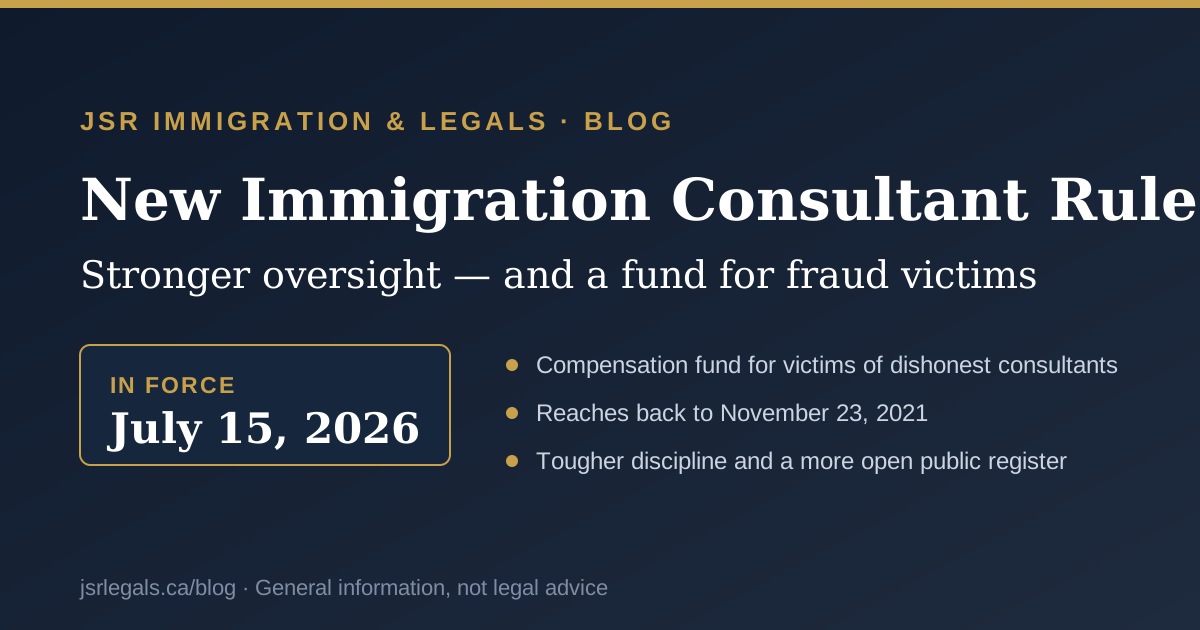
If you're paying someone to help with an immigration or citizenship application, a change announced this spring is worth knowing about. On May 6, 2026, the federal government announced new regulations to strengthen oversight of paid immigration and citizenship consultants. The core measures come into force on July 15, 2026, and they include something newcomers have asked for for years: a fund to compensate people who lose money to a dishonest licensed consultant.
Here's a plain-language look at what's changing and, just as importantly, how to make sure the person helping you is actually allowed to.
Who is allowed to charge for immigration help
In Canada, you can always prepare and submit your own application for free. But if you pay someone to advise you or represent you, that person must be an authorized representative. That means one of:
- a Regulated Canadian Immigration Consultant (RCIC), licensed by the College
of Immigration and Citizenship Consultants (CICC);
- a lawyer (or paralegal in Ontario, within scope) in good standing with a
provincial or territorial law society; or
- a Quebec notary in good standing with the Chambre des notaires du Québec.
Anyone who charges for immigration advice without being in one of these groups is operating illegally — often called a "ghost consultant." The new rules don't change who is authorized; they tighten how the consultant side is policed.
What's actually changing on July 15, 2026
The announcement reinforces the role of the CICC, the body that licenses and disciplines immigration consultants. The headline measures:
- A compensation fund for fraud victims. A new fund will help cover financial
losses caused by a CICC-licensed consultant's dishonest acts — things like theft, fraud or misappropriation of your money, or misrepresentation. Crucially, eligibility reaches back to November 23, 2021, so it isn't limited to brand-new cases. Claims generally flow through the College's complaints and discipline process.
- Stronger discipline and penalties. The College gains a firmer hand to
investigate complaints and penalize consultants who break the rules.
- More federal oversight of the College itself. The government gains the
ability to step in if the College's board isn't protecting the public — including the power to appoint an administrator in serious cases.
- More transparency about consultants. The College's public register is being
expanded so the public can see more about a licensed consultant, including disciplinary history.
immigration application for a fee] --> B{Are they an authorized
representative?} B -- RCIC --> C[Check the CICC public register] B -- Lawyer / paralegal --> D[Check the provincial law society directory] B -- Notary in Quebec --> E[Check the Chambre des notaires] B -- None of these --> F[Walk away — unauthorized 'ghost' rep] C --> G{Licensed and in
good standing?} D --> G E --> G G -- Yes --> H[Sign a written retainer
that names them as your rep] G -- No --> F
Why this matters for newcomers
Immigration fraud isn't rare, and the people targeted are often new to Canada, unsure of the rules, and under pressure to get status sorted out. A bad actor can take your money, file something inaccurate in your name, or simply disappear — and the consequences (a refusal, a misrepresentation finding, even a bar from applying) land on you, not them. A compensation fund and tougher discipline won't undo a damaged application, but they do give honest applicants more recourse and create real consequences for dishonest consultants.
How to protect yourself — a short checklist
You don't need to wait for July 15 to be careful. Whoever you're considering:
- Verify their licence. For a consultant, search the CICC public register.
For a lawyer or paralegal, search the relevant law society directory. Confirm the name matches the person you're actually dealing with.
- Get a written retainer agreement. It should name your representative, list
the services, and set out the fees. On IRCC forms, a paid representative must be declared (Form IMM 5476).
- Watch for red flags. Be wary of guarantees of success, pressure to pay in
cash with no receipt, requests to sign blank forms, anyone telling you to lie or "adjust" facts, or a refusal to give you copies of your own documents.
- Keep control of your own file. Use your own email and account where
possible, and keep copies of everything submitted on your behalf.
A good representative will welcome these questions — transparency is the whole point of the new rules.
The bottom line
From July 15, 2026, Canada's framework for regulating paid immigration consultants gets stronger, with a compensation fund reaching back to November 23, 2021 for victims of dishonest licensed consultants. The single best thing you can do, today, is confirm that anyone you pay is actually authorized. You can read the government's own announcement here: Canada strengthens regulation of immigration and citizenship consultants.
If you'd like help understanding who's authorized to handle your case, or you're worried something has gone wrong with a representative, we're glad to talk it through. This article is general information, not legal advice — your own situation depends on your specific facts and the rules in force when you apply.

Immigration & paralegal practitioner at JSR Immigration & Legals, helping newcomers and Ontario residents with their cases.
This post is general information about Canadian immigration and Ontario paralegal matters and is not legal advice. Rules change and every case is different — confirm current requirements for your own situation.