IRCC's Warning: The Application Mistakes That Can Trigger a 5-Year Ban
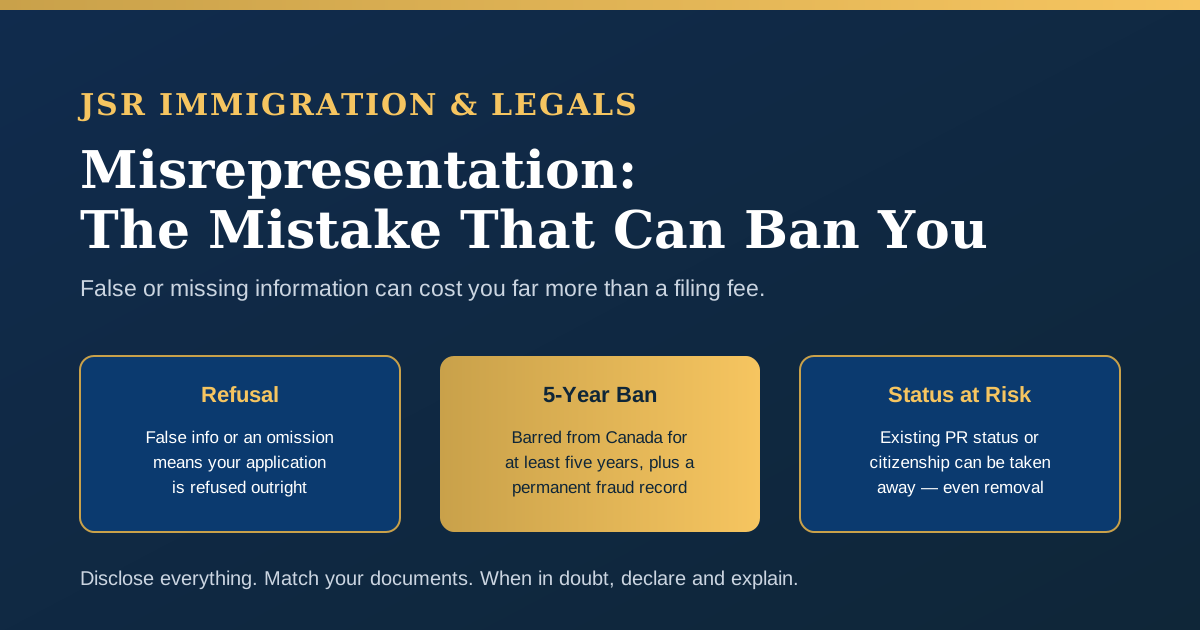
On July 13, 2026, IRCC put out another public reminder about a rule that trips up more applicants than people realise: misrepresentation. The message was blunt — giving false or incomplete information on an immigration or citizenship application can get your file refused and can bar you from Canada for at least five years.
What makes this rule so serious is that it doesn't only catch deliberate fraudsters. A rushed form, a "small" omission, or trusting the wrong helper can all land an honest applicant in the same category. Here's what misrepresentation means, its consequences, and the habits that keep you on the right side of the line.
What misrepresentation means
Under Canada's Immigration and Refugee Protection Act (IRPA), misrepresentation is giving false information — or leaving out relevant information — on a matter that could affect a decision on your application. Two things are worth underlining:
- It includes omissions, not just lies. Failing to disclose a previous refusal, a prior visa application to another country, a past marriage, or a family member can be treated as misrepresentation even if the rest of your form is accurate.
- Intent isn't always the deciding factor. IRCC can find misrepresentation even where an applicant says the error was innocent. That's why "I didn't think it mattered" is not a safe strategy.
Common examples IRCC and officers see include false or altered documents, fake job-offer or employment letters, invented education or language results, undisclosed criminal history, and a marriage of convenience entered into only for immigration purposes.
The consequences are steep
According to IRCC's official page on the consequences of immigration and citizenship fraud, if you send false documents or information:
- Your application will be refused.
- You could be banned from Canada for at least 5 years.
- You could have a permanent record of fraud with IRCC.
- Your temporary or permanent resident status — or your Canadian citizenship — could be taken away.
- You could be banned from applying for citizenship for 5 years.
- You could be removed from Canada.
In other words, one misrepresentation finding doesn't just cost you this application — it can close the door for five years and follow you through future ones. A marriage of convenience can even lead to criminal charges for the citizens or permanent residents involved.
and truthful?} B -->|Yes| C[Assessed on the merits] B -->|No — false info or omission| D{Officer finds
misrepresentation?} D -->|No| C D -->|Yes| E[Application refused] E --> F[5-year ban from Canada +
record of fraud with IRCC] F --> G[Future applications and
status put at risk]
The mistakes honest applicants make
Most misrepresentation findings aren't master forgeries — they're avoidable slips. Watch for these:
- Leaving out a past refusal or visa application. Many forms ask whether you've ever been refused a visa or permit by any country, or been refused entry. Answer for every country, every time.
- Forgetting a family member. Not listing a spouse, common-law partner, or dependent child — even one you're not sponsoring — can be treated as a material omission.
- Copy-pasting old answers. Reusing a previous application without updating jobs, addresses, marital status, or travel history can turn stale information into "false" information.
- Rounding or guessing. Approximate dates, inflated work hours, or a job title that doesn't match your reference letter create mismatches an officer will notice.
- Trusting a "guaranteed result" agent. If someone offers to boost your file with a better letter or a cleaned-up history, that's fraud — and you wear the consequences, not them.
On that last point: IRCC is clear that it is not legal to provide false information even if a representative advises you to do so. You sign the application; you're responsible for what's in it.
How to protect yourself
- Disclose everything, then explain. If you have a past refusal, a gap, or a complication, declare it and add context. Honest disclosure with an explanation is almost always safer than an omission.
- Cross-check your own documents. Make sure dates, names, and job details on your forms match your passport, reference letters, and transcripts exactly.
- Keep your own copy of every form and document you submit, so future applications stay consistent.
- Use only an authorized representative — a lawyer, or an immigration consultant licensed by the College of Immigration and Citizenship Consultants (CICC) — and confirm their licence before you pay.
- Slow down before you click submit. Re-read every "have you ever" question and answer it for your whole life and every country, not just Canada.
The bottom line
Misrepresentation is one of the few mistakes in the immigration system that can cost you years, not just a fee. The good news is that it's almost entirely preventable: complete answers, matching documents, and full disclosure keep you out of trouble even when your history is complicated. When in doubt, it is always better to declare something and explain it than to leave it out and hope no one asks.
If you're unsure how to disclose a past refusal, a gap, or a complicated history on an application, get in touch with JSR Immigration & Legals — we can help you present your file accurately and completely.
This article is general information only and not legal advice. For guidance on your specific situation, please consult a licensed immigration professional. Official source: IRCC — Consequences of immigration and citizenship fraud.

Immigration & paralegal practitioner at JSR Immigration & Legals, helping newcomers and Ontario residents with their cases.
This post is general information about Canadian immigration and Ontario paralegal matters and is not legal advice. Rules change and every case is different — confirm current requirements for your own situation.