Canada's Next Immigration Levels Plan Arrives in the November 5 Budget
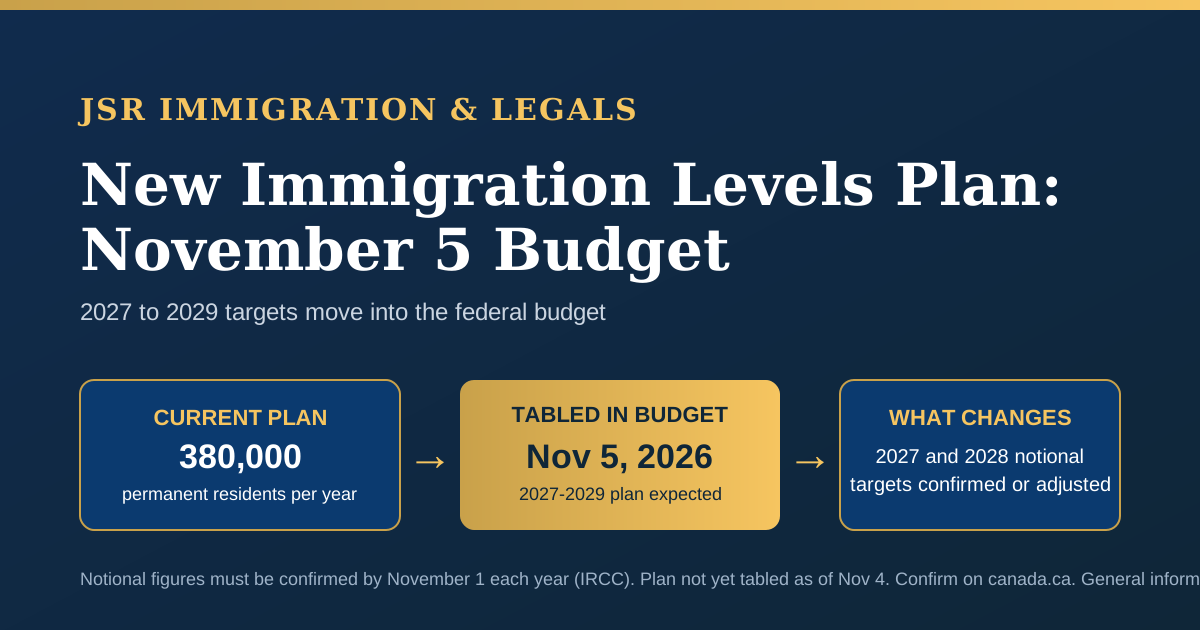
Canada's next three-year immigration targets are now in a holding pattern. The Immigration and Refugee Protection Act requires the immigration minister to table a levels plan in Parliament on or before November 1 each year, or within the next 30 sitting days if the House is not sitting. November 1, 2026 fell on a Sunday. As of November 4, the 2027-2029 plan has not been tabled, and CTV News and The Canadian Press reported on November 3, citing government sources, that the update will instead appear inside the federal budget on Thursday, November 5, 2026. It would be the second year in a row the levels update travels with the budget.
The date matters because the current plan is only partly final. On its official supplementary information page for the 2026-2028 Immigration Levels Plan, IRCC states that notional targets and ranges for 2027 and 2028 will be confirmed or adjusted by November 1 of each year. In plain terms, the 2027 figures everyone has been planning around are still draft numbers until the new plan lands.
What the current plan says
The 2026-2028 plan holds permanent resident admissions at 380,000 a year, within a range of 350,000 to 420,000. New temporary resident arrivals are set at 385,000 in 2026 and 370,000 in 2027 and 2028. The economic class grows to 64% of admissions by 2027 and 2028.
| Line | 2026 | 2027 (notional) | 2028 (notional) |
|---|---|---|---|
| Overall permanent residents | 380,000 | 380,000 | 380,000 |
| Federal High Skilled (Express Entry) | 109,000 | 111,000 | 111,000 |
| Provincial Nominee Program | 91,500 | 92,500 | 92,500 |
| Spouses, partners and children | 69,000 | 66,000 | 66,000 |
| Parents and grandparents | 15,000 | 15,000 | 15,000 |
| New temporary resident arrivals | 385,000 | 370,000 | 370,000 |
| New international student arrivals | 155,000 | 150,000 | 150,000 |
Two one-time measures sit on top of these targets: streamlined permanent residence for about 115,000 protected persons already in Canada, and up to 33,000 work permit holders moving to permanent residence across 2026 and 2027.
What to watch on November 5
When the budget is released, compare each 2027 line against the notional number it replaces:
- Overall admissions: 380,000. A higher number would signal the “controlled increase” the Prime Minister has floated. A lower number would extend the cuts that began in 2024.
- Provincial Nominee Program: 92,500. Provincial and territorial ministers asked in June 2026 for larger and more stable allocations.
- Federal High Skilled: 111,000. This line sets the room available for Express Entry invitations in 2027.
- Parents and grandparents: 15,000, with new intake paused since July 15, 2026. Watch for any word on reopening.
- New temporary resident arrivals: 370,000. This drives study and work permit planning.
- Francophone share outside Quebec: 9.5% for 2027, on the path to 12% by 2029.
What this means for you
If you are in the Express Entry pool, the Federal High Skilled line sets how many invitations IRCC can issue next year. This week the pool is also being recalculated under the new high-wage CRS rules, so your score and the size of the room are both moving at once. Separate the two changes: the points rules changed November 3, while the 2027 admission room changes November 5.
If you are pursuing a provincial nomination, the PNP line is the one to watch, especially in Ontario, where the redesigned Workforce Priority stream is waiting on its first invitation round. Provincial allocations flow from this table.
If you are hoping to sponsor parents or grandparents, the intake pause plus a flat or lower target means the realistic near-term option remains the Super Visa. Do not build a 2027 plan around a reopening that has not been announced.
If you are a student or temporary worker, the temporary resident arrival lines cap how many new permits the system expects to welcome in each of 2027 and 2028. They shape processing pressure and program-level caps, not individual eligibility.
We covered the consultation that fed into this plan in our June 2026 levels consultation post. Use this post for the tabling timeline and the numbers to check on budget day.
If you want an assessment of how the new plan affects an Express Entry profile, a provincial nomination file, or a family sponsorship plan, contact JSR Immigration & Legals through our consultation page or the Express Entry service page.
This article is general information current to November 4, 2026, and is not legal or immigration advice. The 2027-2029 plan had not been published when this was written. Confirm the live tables on Canada.ca before you act.

Immigration & paralegal practitioner at JSR Immigration & Legals, helping newcomers and Ontario residents with their cases.
This post is general information about Canadian immigration and Ontario paralegal matters and is not legal advice. Rules change and every case is different — confirm current requirements for your own situation.