IRCC Tightens C20 Reciprocal Employment Work Permits: Current Employees Only as of July 2026
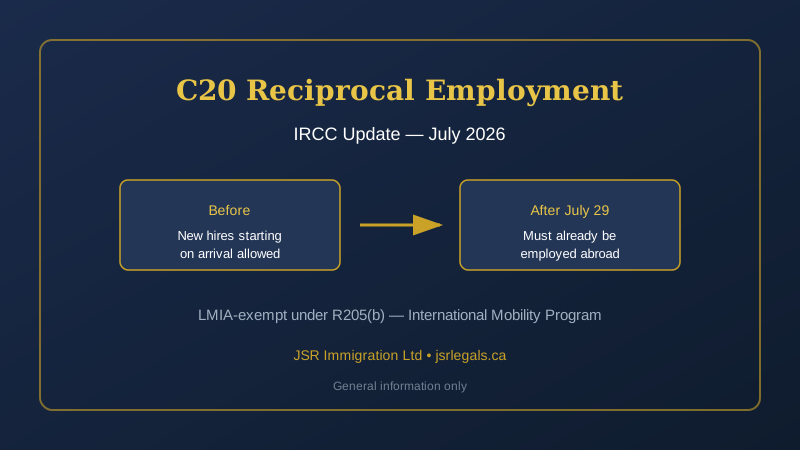
On 29 July 2026 Immigration, Refugees and Citizenship Canada published revised officer instructions for the reciprocal employment exemption under the International Mobility Program. The change is straightforward and consequential: a foreign national must already be employed by the company abroad at the time of the work-permit application. Arrangements in which employment begins only after the person lands in Canada no longer meet the requirements for code C20.
What the C20 exemption is
Paragraph R205(b) of the Immigration and Refugee Protection Regulations allows an employer-specific work permit without a Labour Market Impact Assessment when the Canadian job creates or maintains reciprocal employment opportunities for Canadian citizens or permanent residents in other countries. Multinational transfers, academic exchanges and certain professional rotations have long relied on this pathway.
The earlier version of the program delivery instructions focused on overall neutral labour-market impact. Officers could accept evidence that the broader exchange of talent was balanced even if the individual foreign national had not yet started working for the foreign entity.
The July 2026 clarification
The updated page, titled “Reciprocal employment general guidelines [R205(b) – C20] – Canadian interests – International Mobility Program,” now states that the applicant “must be currently employed by the company abroad.” The rationale is explicit: commencing employment only upon arrival does not give either the foreign national or the Canadian employer the opportunity to benefit from an exchange of knowledge or experience.
In practical terms:
- An employee already on the foreign payroll who is being assigned to the Canadian office continues to qualify, provided reciprocity is demonstrated.
- A person hired abroad solely so that the job can begin in Canada on arrival is no longer eligible under C20.
- Officers must be satisfied that eligibility is met at the time of the decision on the work-permit application.
The neutral-labour-market-impact language that appeared in earlier guidance has been removed. Assessment now centres on genuine two-way mobility.
Who is affected
Employers that used C20 to bring in new international hires without first placing them on the foreign payroll will need a different pathway. Options may include:
- Obtaining a positive Labour Market Impact Assessment under the Temporary Foreign Worker Program.
- Using another International Mobility Program category that still fits the circumstances (for example certain free-trade-agreement professionals or intra-company transfers under different codes).
- Restructuring the assignment so the individual is first employed abroad and then transferred under a genuine reciprocal arrangement.
Existing C20 work permits already issued remain valid for their stated duration. The change applies to new applications assessed after the updated instructions took effect.
Evidence officers expect
Applicants and employers should be prepared to show:
- Proof of current employment with the foreign entity (employment contract, pay records, letter of employment).
- Documentation of the reciprocal arrangement (exchange agreement, corporate mobility policy, letter confirming Canadian opportunities abroad).
- A genuine offer of employment in Canada that aligns with the reciprocal framework.
Incomplete or inconsistent documentation is more likely to result in refusal under the clarified standard.
Practical next steps
If you or your organisation have been relying on C20 for new international recruits, review any pending or planned applications against the revised instructions. Confirm that the individual is already on the foreign payroll and that reciprocity can be documented in the specific country of origin. Where the facts no longer fit C20, explore alternative pathways early so that start dates and business needs are not delayed.
This article provides general information based on the publicly available IRCC program delivery instructions current as of early August 2026. Rules and officer guidance can change. For advice tailored to a specific situation, contact a regulated Canadian immigration consultant or licensed paralegal.
JSR Immigration Ltd is available to review C20 eligibility, prepare supporting documentation, or map alternative work-permit strategies. Reach us at info@jsrimmigration.com or (647) 286-4266.

Immigration & paralegal practitioner at JSR Immigration & Legals, helping newcomers and Ontario residents with their cases.
This post is general information about Canadian immigration and Ontario paralegal matters and is not legal advice. Rules change and every case is different — confirm current requirements for your own situation.