September 10, 2026: High-Wage LMIAs Average 90 Business Days, PR-Support 156
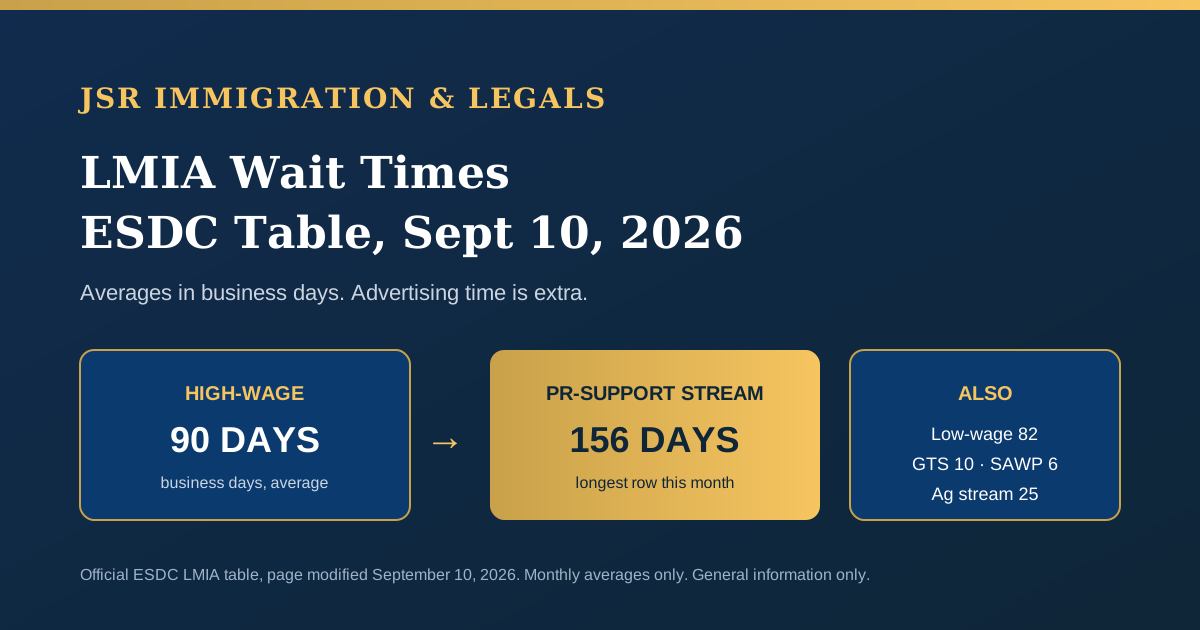
Employment and Social Development Canada published its monthly Labour Market Impact Assessment table on September 10, 2026. On the official LMIA processing times page, last modified September 10, 2026, Service Canada lists average times for LMIAs processed last month. High-wage files sit at 90 business days. The permanent resident stream sits at 156 business days.
Those figures are averages, not a promise. ESDC states they can change a great deal from month to month with volume. They also start only after a complete application is in LMIA Online. Recruitment advertising is not included.
This post is about the September 10 table only. It does not replace stream rules, wage thresholds, or the low-wage cap.
The official September 10 table
ESDC describes these numbers as the average number of business days needed to assess a complete file and issue a decision.
| Stream | Average processing time (business days) |
|---|---|
| Global Talent Stream | 10 |
| Agricultural stream | 25 |
| Seasonal Agricultural Worker Program | 6 |
| High-wage stream | 90 |
| Low-wage stream | 82 |
| Permanent resident stream | 156 |
Three planning facts sit under that table:
- Employers may apply up to 6 months before the expected job start date.
- Minimum advertising must run 14 days to 8 weeks in the 3 months before filing, depending on the stream. That period is not inside the processing clock.
- After a positive LMIA, the worker applies to IRCC for the work permit, or files within 2 weeks of the current permit’s expiry if the file is already in Canada under the help-centre rule ESDC links from this page.
What 90 and 156 business days actually mean
A business-day clock is longer than the same number of calendar days. Weekends and holidays do not count. Ninety business days is already more than a quarter of a year before advertising. One hundred and fifty-six business days is more than seven calendar months of Service Canada time on a typical week.
Processing starts when the employer files a complete LMIA through LMIA Online. Complete means:
- every document required for that stream is attached
- the employer has signed every required document
- the processing fee is paid, if a fee applies
Incomplete files are not processed and the fee is not charged. That is a reset, not a pause.
Quebec files for jobs of more than 30 consecutive days are complete only when they go to Service Canada and Quebec’s Ministère de l’Immigration, de la Francisation et de l’Intégration at the same time, in the format Quebec requires.
The clock ends when the employer receives the decision letter. The letter is either positive or negative. A positive letter is what the worker uses to apply for a work permit.
Who feels this table first
High-wage employers should treat a January start as an early-fall file once advertising is added. Low-wage employers still face a multi-month wait, plus the cap and unemployment-rate rules from earlier 2026 updates. The permanent resident stream is the longest row on this table. Do not treat it as a short add-on to a work permit plan.
Workers already in Canada are on a second clock. ESDC points them to IRCC’s rule that an in-Canada work permit can be filed after a positive LMIA, or within two weeks of expiry in the situation on the IRCC help-centre page. Global Talent and SAWP remain the short end of the table at 10 and 6 business days, if the file is complete.
What this table does not change
The September 10 update is a processing snapshot. It does not rewrite wage medians, the low-wage cap, refusal-to-process rules, or LMIA validity after a positive decision. It also does not set IRCC work permit times. After Service Canada decides the LMIA, IRCC still assesses the worker.
Our August 25 low-wage cap note covers the cap. Use this post for the current averages.
What to do with the September 10 numbers
- Pick the stream that actually matches the wage and the job, not the stream with the shortest row.
- Build the advertising window into the calendar first. Then add the business-day average from the table.
- File only when the package is complete. An incomplete upload does not start the clock.
- If the worker is already in Canada, line up the permit expiry against both the LMIA average and IRCC’s filing window.
- Recheck the ESDC table next month. The department says the figures move with volume.
If you are an employer planning a TFWP hire, or a worker whose next permit depends on a pending LMIA, contact JSR Immigration & Legals through our consultation page or the work permit service page.
This article is general information current to September 10, 2026, and is not legal or immigration advice. Confirm the live ESDC table on Canada.ca before you file or set a start date.

Immigration & paralegal practitioner at JSR Immigration & Legals, helping newcomers and Ontario residents with their cases.
This post is general information about Canadian immigration and Ontario paralegal matters and is not legal advice. Rules change and every case is different — confirm current requirements for your own situation.