IRCC Procedural Fairness Letter: What It Means and How to Respond
A warning is not yet a refusal
An Immigration, Refugees and Citizenship Canada (IRCC) procedural fairness letter usually means an officer has identified a concern that could lead to a negative decision and is giving you an opportunity to respond before deciding the application. IRCC's own description of the immigration processing journey shows that an officer may send a procedural fairness letter when eligibility or admissibility concerns exist or persist.
That opportunity matters, but it is not a guarantee of approval. The safest starting point is to treat the letter as a precise list of issues to answer—not as a general invitation to repeat the original application.
Read the letter line by line
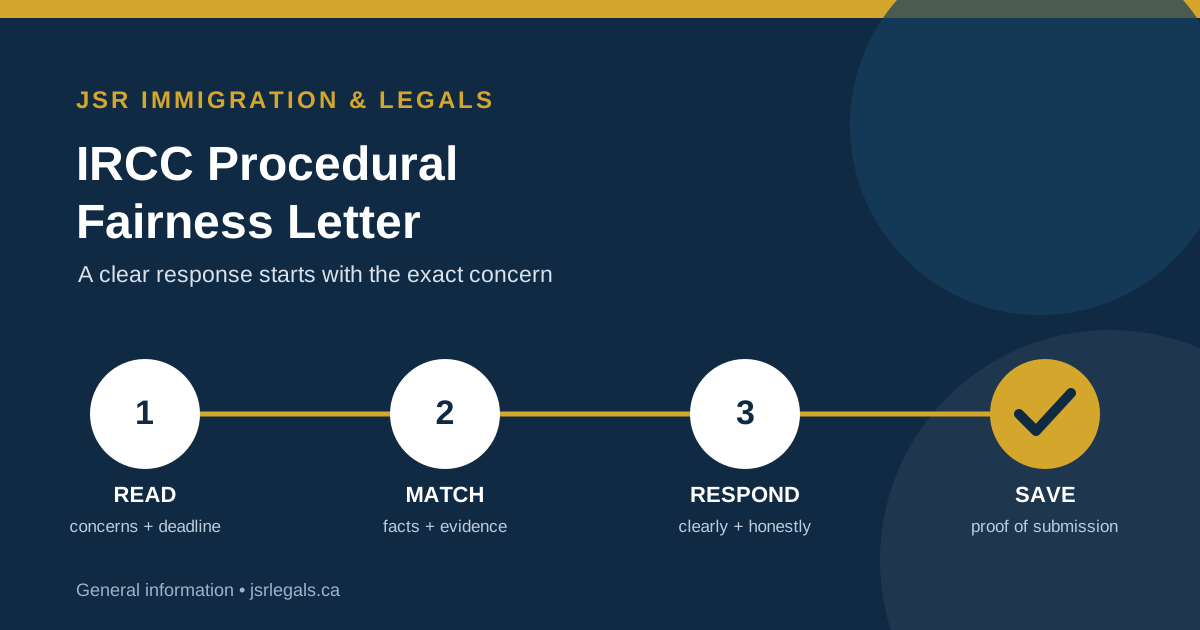
Before drafting, identify four things:
- The exact concern. Is IRCC questioning a document, work history,
relationship, financial information, medical or criminal admissibility, or possible misrepresentation?
- The information behind the concern. Note every fact, date, discrepancy
or document mentioned in the letter.
- The response deadline. Use the date and time stated in your letter.
Deadlines are case-specific, so do not assume that another applicant's timeline applies to you.
- The required submission method. Follow the account, portal, email or
other instructions in the letter.
Check the email address and online account connected to the application, including junk folders. Save the letter, record when it was received, and keep copies of everything submitted.
Build a response around evidence
A useful response is organized so the officer can quickly connect each concern to your answer and supporting proof. A simple structure is:
- application number, unique client identifier and the letter date;
- a short opening that states you are responding to the procedural fairness
letter;
- a separate heading for every concern, using the letter's order;
- a factual explanation under each heading;
- references to clearly labelled documents; and
- a short conclusion requesting that the response and attachments be
considered before a decision.
Accuracy is more important than length. Do not change a date or invent an explanation to make the file appear stronger. If something in the original application was wrong, identify it clearly, explain how the error happened, and provide the correct information with reliable records where possible.
Documents might include employment or education records, financial statements, civil-status documents, correspondence, travel records, declarations, or other material directly relevant to the concern. What is useful depends entirely on the letter. IRCC advises applicants who cannot obtain a required document to provide a letter explaining why and evidence of efforts or circumstances preventing them from getting it; see IRCC's supporting-document guidance.
Submit carefully and prove that you did
Use the method IRCC specifies. When IRCC requests documents through an online account, its document-upload instructions say to complete the upload, signature and transmission steps and look for the submission confirmation. Merely seeing “uploaded” may not mean the documents were transmitted.
If the upload option is missing or a technical problem prevents submission, IRCC directs applicants to use the IRCC web form, provide details, attach the documents and include screenshots of the problem. Do not send repeated web forms for the same issue. Keep the confirmation page, email, screenshots, file names and a complete PDF copy of the response package.
If meeting the stated deadline appears impossible, do not silently let it pass. Follow the contact instructions in the letter and promptly explain the problem and what you have done to obtain the missing material. Whether more time is given is for IRCC to decide.
When professional help may be useful
Some letters raise serious issues, especially an allegation of misrepresentation or inadmissibility. The consequences can extend beyond the current application. You are not required to use a representative, and IRCC states that applicants are treated equally either way. If you choose paid help, confirm that the person is authorized; IRCC provides guidance on choosing an immigration representative.
JSR Immigration & Legals can help you understand the concerns, organize the record and prepare a focused response. Contact us promptly so there is enough time to review the letter and supporting documents before the deadline.
This article provides general information only and is not legal or immigration advice for any specific application.

Immigration & paralegal practitioner at JSR Immigration & Legals, helping newcomers and Ontario residents with their cases.
This post is general information about Canadian immigration and Ontario paralegal matters and is not legal advice. Rules change and every case is different — confirm current requirements for your own situation.