International Students: IRCC Just Tightened the 150-Day 'Authorized Leave' Rule
If you study in Canada and you're thinking about taking a term off — for health reasons, money, a family emergency, or just a break — there's a rule you need to understand first. On June 18, 2026, Immigration, Refugees and Citizenship Canada (IRCC) updated the internal guidance its officers use to decide whether a student is following the conditions of their study permit. The update doesn't create a brand-new law, but it spells out the "authorized leave" rules more clearly and tightens the language — and the details matter, because getting a leave wrong can put your status, your right to work, and your future post-graduation work permit (PGWP) all at risk.
Here's a plain-language explanation of what an authorized leave is, the limits IRCC has now made explicit, and how to take a break the right way.
The condition behind all of this: "actively pursuing studies"
Every study permit comes with a core condition: you must be actively pursuing your studies. That generally means staying enrolled at a Designated Learning Institution (DLI) and making reasonable progress toward completing your program. A leave of absence is the recognized exception — but only if it's a proper, authorized leave.
What the June 2026 update makes clear
The refreshed guidance pins down a few points that students often misunderstand:
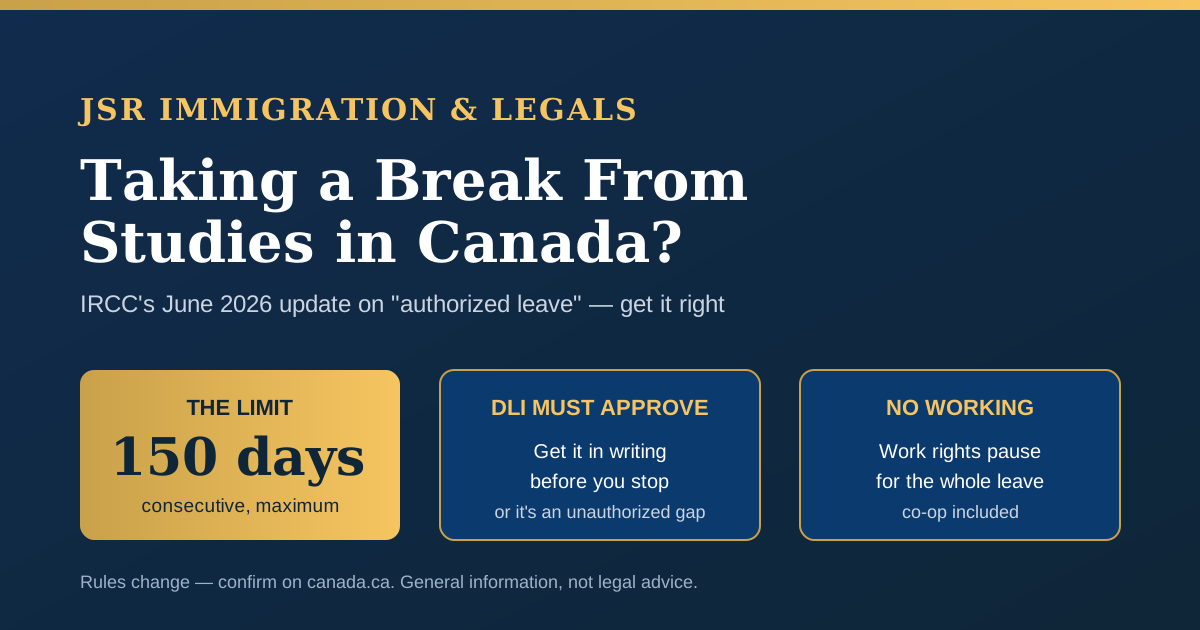
- A leave can't exceed 150 days. Any break from your program should not run longer than 150 consecutive days from the date the leave begins.
- Your DLI has to authorize it. A leave only "counts" if your school approves it. If you simply stop attending or take a term off without your DLI's sign-off, IRCC can treat it as an unauthorized gap in studies — not a leave.
- You can't work during the leave. Even if your study permit lets you work on or off campus, that right is suspended for the entire authorized leave. This includes co-op or internship work permits tied to your program.
- After 150 days, you must act. If you haven't resumed studies within the 150-day window, you generally need to change your status (for example, to a visitor or worker, if you qualify) or leave Canada.
the leave in writing?} B -- No --> C[Treated as an unauthorized gap
— risk to status & PGWP] B -- Yes --> D[Authorized leave begins
max 150 consecutive days] D --> E[No working during the leave,
even if your permit allows it] E --> F{Resumed studies
within 150 days?} F -- Yes --> G[Back to actively pursuing studies] F -- No --> H[Change status or leave Canada
before the window closes]
Why this matters so much
The reason a leave is worth getting right is that the consequences stack up. If IRCC concludes you weren't actively pursuing your studies, it can affect:
- Your status in Canada, including a possible finding that you breached your study-permit conditions.
- Your ability to work, since work authorization is tied to maintaining valid student status.
- Your future PGWP. A post-graduation work permit generally depends on having studied on a valid permit and maintained status throughout — an unauthorized gap can jeopardize that.
In more serious cases, a non-compliance finding can lead to being asked to leave Canada, and a possible waiting period before you can apply for a new study permit. These outcomes depend on the facts, so this is exactly the kind of situation where it's worth getting tailored guidance early.
How to take a leave the right way
- Talk to your DLI first. Ask your international student office how to request an authorized leave and get the approval in writing before you stop attending.
- Watch the 150-day clock. Count from the date your leave starts, and plan to resume studies — or change your status — before it runs out.
- Don't work during the leave. Pause any on-campus, off-campus, or co-op work for the whole break, even if your permit normally allows it.
- Keep records. Save your DLI's leave approval, your enrolment letters, and the dates, in case you ever need to show you stayed compliant.
- If life forces a longer break, get advice about changing to visitor or worker status rather than letting your studies lapse without a plan.
Where to confirm the current rules
This is guidance that can be updated quietly, so always check the official source before you act:
- IRCC's page on your conditions as a study permit holder, which covers actively pursuing studies and authorized leaves.
- IRCC's post-graduation work permit eligibility page, if a leave might affect your PGWP plans.
If a detail you read elsewhere doesn't match canada.ca, trust the official page.
Talk to us
Whether your situation qualifies as an authorized leave, how the 150-day limit applies to your program, and what it could mean for your work rights or a future PGWP all depend on your specific circumstances. If you'd like help thinking it through before you take a break, the team at JSR Immigration & Legals is happy to talk it through — get in touch.
This post is general information only and reflects what was publicly known as of June 21, 2026. It is not legal advice. Immigration rules and guidance change, so confirm current requirements with IRCC or a qualified professional before acting.

Immigration & paralegal practitioner at JSR Immigration & Legals, helping newcomers and Ontario residents with their cases.
This post is general information about Canadian immigration and Ontario paralegal matters and is not legal advice. Rules change and every case is different — confirm current requirements for your own situation.