September 17, 2026: Employers Get 15 Days to Prove a Job Offer Is Genuine
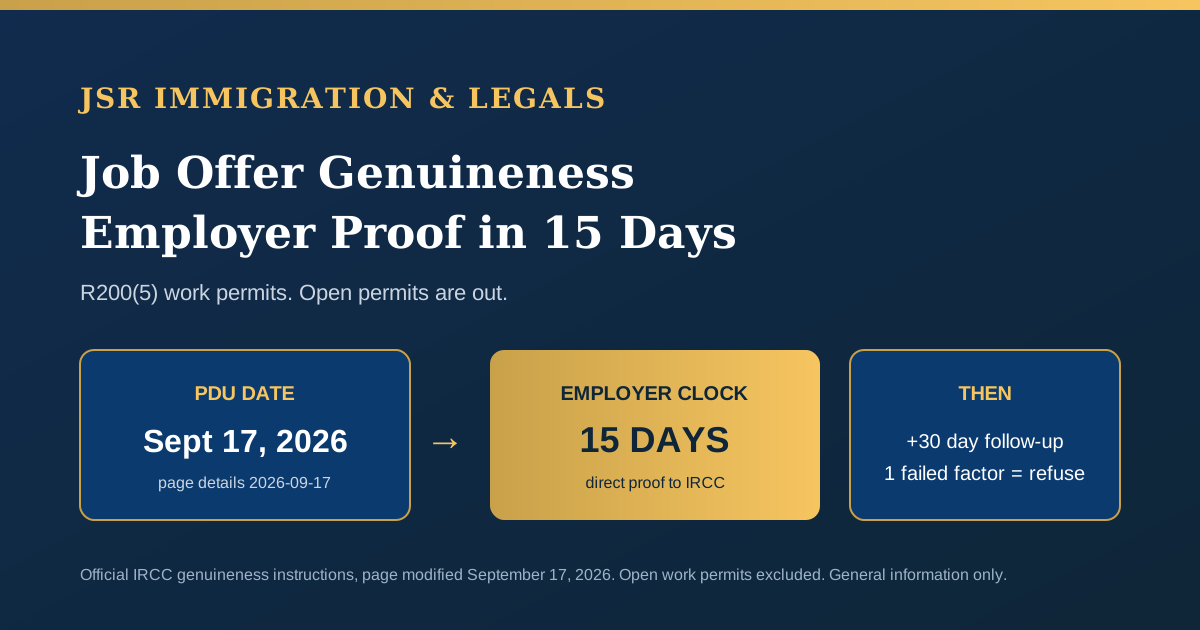
IRCC rewrote its officer instructions on assessing the genuineness of an offer of employment on September 17, 2026. The program delivery update of the same date, page details 2026-09-17, says the page was “extensively updated.” The change that now sits on the public manual is a formal route for the employer to send proof when an officer doubts the job.
The letter to the applicant must tell them that the employer should provide the evidence directly to IRCC within 15 days, or within that office’s own standard. The officer then sets a follow-up date of 30 additional days after that deadline so the webform can be attached to the file. Open work permits are out of this test. There is no specific employer and no job offer to assess.
This is not a new statute. Subsection 200(5) of the Immigration and Refugee Protection Regulations already listed four genuineness factors. What changed on September 17 is how officers collect the answer, how IMP and TFWP files are split, and how extrinsic information is handled.
What the officer must test
Every employer-specific work permit, including a renewal, is assessed against four factors in R200(5):
| Factor | What IRCC is asking |
|---|---|
| Actively engaged | The employer is actually running the business that made the offer. Live-in caregivers are the stated exception. |
| Reasonable employment needs | The role fits what that business would normally hire. |
| Ability to fulfill the terms | The employer can reasonably pay the wage and deliver the conditions on the offer. |
| Past compliance | The employer or authorized recruiter has complied with federal and provincial or territorial employment and recruitment law in the province or territory where the person will work. |
If the offer fails any one of those four factors, the officer is to refuse the work permit because the requirements of section R200 are not met.
IMP files and TFWP files are not the same path
On an International Mobility Program file the employer must submit the offer in the Employer Portal before the worker files, under section R209.11. The genuineness test sits in subparagraph R200(1)(c)(ii.1). IRCC’s own note is blunt: the offer is not reviewed until the work permit application has been submitted.
On a Temporary Foreign Worker Program file the worker files with a positive LMIA, a contract, and the job offer. Genuineness sits in R200(1)(c)(iii) and R203(1)(a). A positive LMIA means ESDC treated the offer as genuine. If an IRCC officer later disagrees, the applicant and the employer are to be told and given a chance to answer.
A later positive LMIA does not lock the IRCC officer out of R200(5). The September 17 page says the LMIA is only one requirement on the file.
What the 15-day letter has to contain
If the officer has concerns, a procedural fairness letter goes to the applicant. It must:
- state that the officer has genuineness concerns after review
- say further information or documents are required
- name which of the four R200(5) factors is in play and why
- tell the applicant that the employer should send the evidence directly to IRCC within 15 days, or the office standard
- give the employer a path: that office’s usual channel, or the IRCC webform if the office has no procedure of its own
The webform path is specific. The employer must put in their own details, the worker’s exact name and date of birth as on the passport, email, country of birth, country at filing, nationality, application number, and a signed acknowledgement. IRCC’s sample comment is: “I am providing information requested by IRCC and would like to have it added to the employee’s application.”
If the employer stays silent, the officer decides on the record that exists. Silence is a path to refusal if the officer is still not satisfied.
What this means if a work permit is already in process
The applicant does not control the employer’s 15-day clock. If a letter arrives, the employer has to move. Documents that never reach GCMS do not count. The page tells officers to upload fax or email material before they decide.
A mismatch between the portal offer and a later contract is now an explicit review point. So is extrinsic information the worker would not reasonably know about, such as an outside search of the business. Those concerns are supposed to go into the letter so the applicant can see the case.
This update does not change LMIA advertising rules, wage floors, or open-work-permit eligibility. It changes how a closed work permit is refused when the job itself is in doubt.
If you are preparing an employer-specific work permit, or a file has drawn a genuineness letter, contact JSR Immigration & Legals through our consultation page or the work permit service page.
This article is general information current to September 24, 2026, and is not legal or immigration advice. Confirm the live IRCC genuineness page and the September 17, 2026 program delivery update before you file, reply, or rely on a deadline.

Immigration & paralegal practitioner at JSR Immigration & Legals, helping newcomers and Ontario residents with their cases.
This post is general information about Canadian immigration and Ontario paralegal matters and is not legal advice. Rules change and every case is different — confirm current requirements for your own situation.