September 21, 2026: Pay Half the Arrears to Raise Issues at an L1
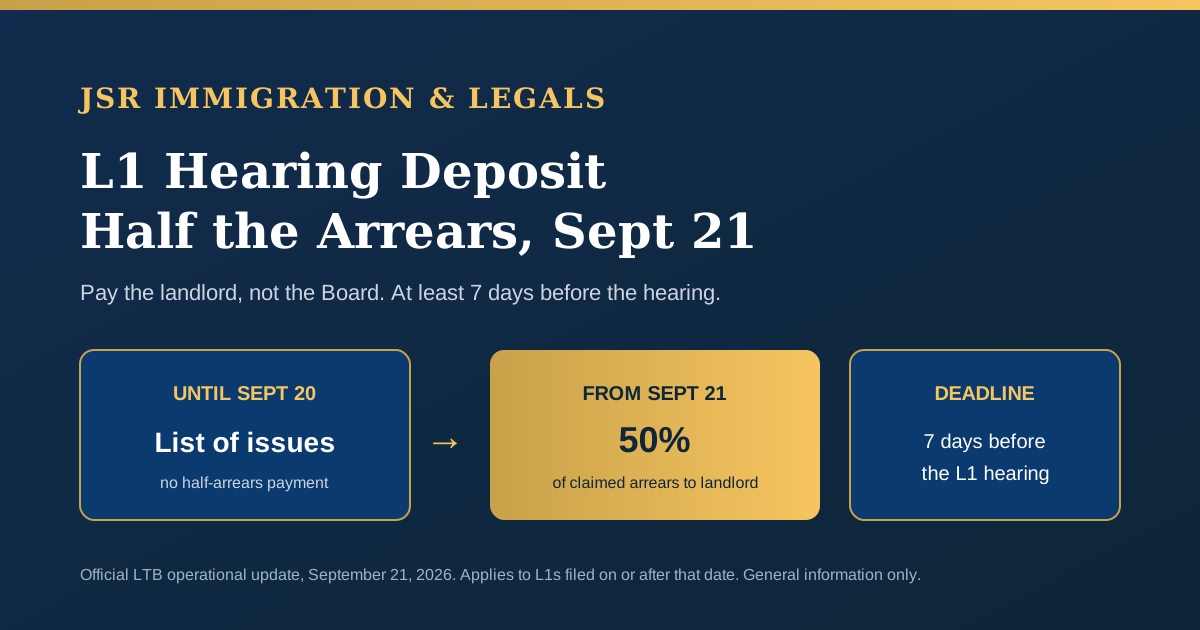
The Landlord and Tenant Board has now confirmed the rest of the September 21 rental package. On its operational update dated September 21, 2026, the Board states that a tenant who wants to raise other issues at a non-payment hearing must pay the landlord half of the rent arrears claimed in the application at least seven days before the hearing. The money goes to the landlord. It cannot be paid to the LTB in trust.
That rule applies if the landlord filed the rent-arrears application on or after September 21, 2026. Our September 13 N4 post covered the 7-day notice clock and flagged this deposit as not named in Order in Council 618/2026. The Board's September 21 page, and O. Reg. 241/26, now treat it as live.
The date that matters is the filing date of the L1, not the date rent first went unpaid.
What the tenant must do, and by when
The existing written-issues rule is unchanged. The tenant still has to give the landlord and the Board a description of every issue they want raised, at least seven days before the hearing. What is new is the money.
| Requirement | Rule in force for L1s filed on or after Sept 21, 2026 |
|---|---|
| Written list of issues | Still due at least 7 days before the hearing |
| Payment | Half of the arrears claimed in the landlord's application |
| When | At least 7 days before the hearing (O. Reg. 241/26, s. 8.3) |
| Who receives it | The landlord, not the Board |
| Proof | Keep a receipt |
If those steps are missed, the hearing stays a rent-arrears hearing. Maintenance, illegal entry, or other tenant claims do not get added that day.
Persistent late payment now has a number
The same Board page sets a working definition. As of September 21, 2026, rent is treated as persistently late when it arrives more than seven days after the due date, at least three times in any six-month period. A payment is not late if the landlord applied it to another amount the tenant already owed, such as earlier arrears. The Board can still find persistent late payment on other facts. Similar wording now applies to non-profit housing co-operatives.
That definition matters on an N8 for persistent late payment. Three late months that each miss the due date by a week, inside six months, now meet the stated test. Paying on the eighth day, three times, is enough.
Own-use notices: 120 days, no compensation
The N12 compensation change named in Order in Council 618/2026 is also live. For an N12 served on or after September 21, 2026, if the termination date is at least 120 days after the notice is given, and that date is the end of a rental period or fixed term, the landlord does not have to pay one month's rent or offer another unit. A shorter N12 still needs compensation. The exemption does not apply to a purchaser's own-use N12.
The intended occupant must normally move in within 60 days of the date on the N12. If they do not, and the tenant files a T5, the Board presumes the notice was given in bad faith. The landlord can try to rebut that at the T5 hearing. That 60-day clock does not apply to purchaser-use notices.
On renovations, a tenant who gives written notice on or after September 21 that they want to move back is entitled to written dates and 60 days to reoccupy after the work is finished. The T5 filing window is now two years after move-out, or six months after the renovations finish, whichever is later.
Old forms die on November 30, 2026
The Board replaced N5, N6, N8, N12, N13, L1, L2, L9, L10, and T5 on September 21. Previous versions will not be accepted after November 30, 2026. Use the current form from the Tribunals Ontario forms page. A stale form after that date can end the application.
What this means this week
If an L1 was filed before September 21, the half-arrears payment does not apply to that file. If it was filed on or after September 21, count back seven days from the hearing before you plan to raise maintenance or other issues. Pay the landlord. Keep the receipt.
If you received an N12 dated September 21 or later, check the termination date. A 120-day notice that lands on the end of a period does not carry the old one-month payment. A 60-day notice still does.
We covered the 7-day N4 clock in the September 13 post. Use that piece for the notice period. Use this one for the hearing deposit, the late-payment test, the N12 compensation trade, and the November 30 form cutoff.
If you have an L1, N12, T5, or other LTB filing in motion, contact JSR Immigration & Legals through our consultation page or the LTB service page.
This article is general information current to September 22, 2026, and is not legal advice. Confirm the live LTB operational update, the current forms, and the statute on e-Laws before you serve, pay, or file.

Immigration & paralegal practitioner at JSR Immigration & Legals, helping newcomers and Ontario residents with their cases.
This post is general information about Canadian immigration and Ontario paralegal matters and is not legal advice. Rules change and every case is different — confirm current requirements for your own situation.