Renting Your First Home in Ontario as a Newcomer: The Tenant Rights You Actually Have
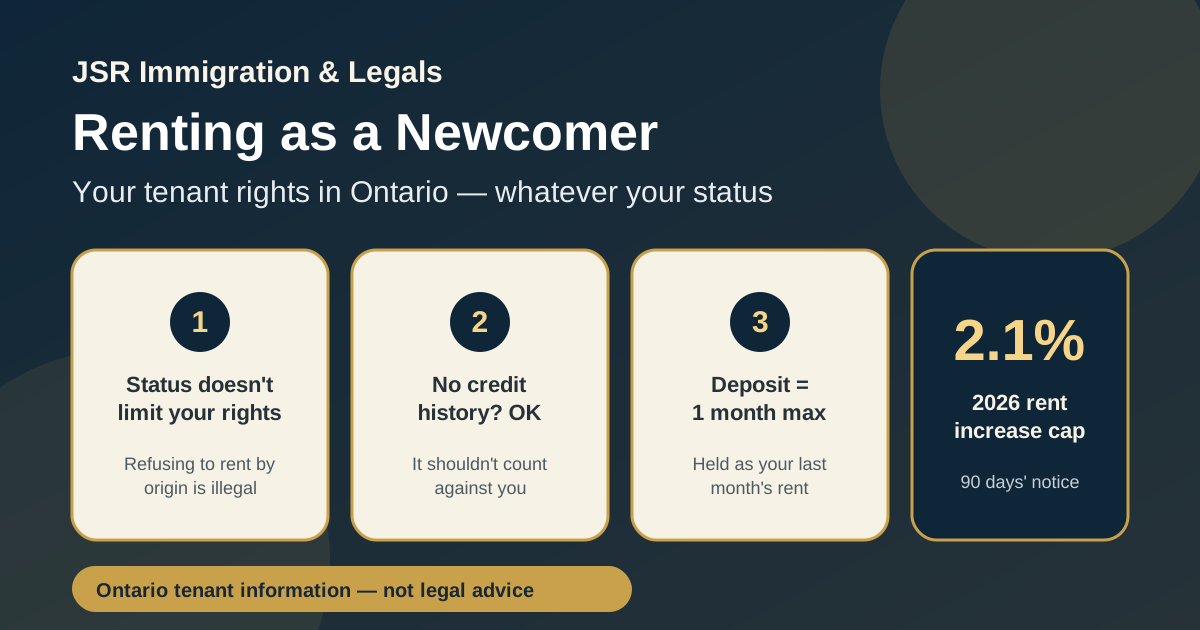
Finding your first place to live is often the most stressful part of arriving in Canada. You may have no local credit history, no Canadian references, and a landlord asking questions that feel intrusive. The good news: Ontario's tenant laws protect you the same as anyone else — your immigration status does not shrink your rights. Here is a plain-language guide to what those rights are, so you can rent your first home with confidence.
This is general information, not legal advice about your specific situation.
Your rights don't depend on your status
Two laws work together to protect renters in Ontario: the Residential Tenancies Act (RTA), which governs the landlord–tenant relationship, and the Ontario Human Rights Code, which bans discrimination in housing.
Under the Human Rights Code, a landlord cannot refuse to rent to you because of your citizenship, place of origin, ethnic background, or because you are a recent immigrant or refugee. The Ontario Human Rights Commission is explicit that these are prohibited grounds of discrimination in housing. Whether you're on a work permit, a study permit, a visitor record, or waiting on permanent residence, your protection as a tenant is the same.
The "no credit history" problem — and how the law handles it
This is the wall most newcomers hit. Landlords often ask for a credit check, and you simply don't have a Canadian credit file yet.
Here's what the rules actually say:
- A lack of credit or rental history should not be held against you. The Human
Rights Commission's guidance is that landlords must look at the whole picture — employment, income, and references — not just a missing credit score.
- A landlord can ask for a guarantor (a co-signer) or additional
references if they have a general policy of doing so — but they cannot demand this only because you are a newcomer or refugee.
- You are not required to provide your Social Insurance Number (SIN). A
landlord can run a credit check with your name, date of birth, and address; a SIN is not needed, and refusing to share it is not a valid reason to reject you.
If income is what a landlord wants to see, offering a job letter, recent pay stubs, or proof of funds is often more useful than any credit score.
Deposits: what's legal and what isn't
Ontario law is strict about deposits, and this trips up many newcomers who are used to different rules abroad:
- A landlord can ask for a rent deposit of up to one month's rent (or one
week for a weekly tenancy). This is applied to your last month — it is not a "damage deposit."
- **Damage deposits, key deposits beyond actual cost, and "first and last plus
extra months" are not allowed.** If someone asks for a large lump sum to "hold" a unit before you've agreed to rent, be cautious.
The paperwork that protects you
Since 2018, most private landlords must use the Ontario Standard Lease — a government form. Insist on it, and keep a signed copy. It sets out the rent, what's included, and the rules in writing, which protects both sides.
Once you're in, rent increases are capped for most older units. The province sets an annual guideline; for 2026 it is 2.1%, and increases generally require 90 days' written notice (Form N1) and can only happen once every 12 months. Newer buildings first occupied after November 15, 2018 are exempt from the cap, so ask about the building's age before you sign.
don't have yet| C[Offer job letter, pay stubs,
references, or a guarantor] B -->|Your SIN| D[You may decline —
it isn't required] B -->|A large deposit| E[Only 1 month's rent is legal
= last month's rent] C --> F[Sign the Ontario Standard Lease] D --> F E --> F F --> G[Rent increases capped at 2.1%
for 2026, 90 days' notice] G --> H{A problem later?} H -->|Yes| I[Landlord and Tenant Board]
If something goes wrong
Disputes — an illegal rent increase, a landlord refusing repairs, or an eviction you think is unfair — go to the Landlord and Tenant Board (LTB), not the police or a regular court. You have the right to stay in your home unless the LTB issues an eviction order; a landlord cannot lock you out or force you out on their own. For discrimination in the rental process, you can also apply to the Human Rights Tribunal of Ontario.
Trusted free resources include the Ontario Human Rights Commission's policy on rental housing, the province's rent increase page, and Steps to Justice for step-by-step guides.
A settled home makes everything else easier
Stable housing is the foundation newcomers build the rest of their life in Canada on — work, school, and eventually permanent residence or citizenship. Knowing your rights before you sign helps you avoid the scams and pressure that too often target new arrivals.
If a housing issue overlaps with your immigration situation, or you're unsure how a lease or landlord's request affects your status, we're glad to help you think it through. Get in touch with JSR Immigration & Legals and we'll point you in the right direction.
This article is general information about Ontario tenant rights for newcomers, not legal advice for any specific person or case. Confirm current rules with the official sources above or a licensed representative before acting.

Immigration & paralegal practitioner at JSR Immigration & Legals, helping newcomers and Ontario residents with their cases.
This post is general information about Canadian immigration and Ontario paralegal matters and is not legal advice. Rules change and every case is different — confirm current requirements for your own situation.