Newfoundland and Labrador Joins Canada's Rural Work-Permit Measures on June 11, 2026
Canada is quietly reshaping how rural communities fill hard-to-staff jobs, and the latest province to opt in is Newfoundland and Labrador. Starting June 11, 2026, eligible rural employers in the province can use a set of temporary federal measures that make it easier to hire and keep temporary foreign workers (TFWs) in lower-paid positions. If you run a business in a small NL community — or you're a worker hoping to land or extend a job there — here's a plain-language look at what's changing and who it helps.
What's actually changing
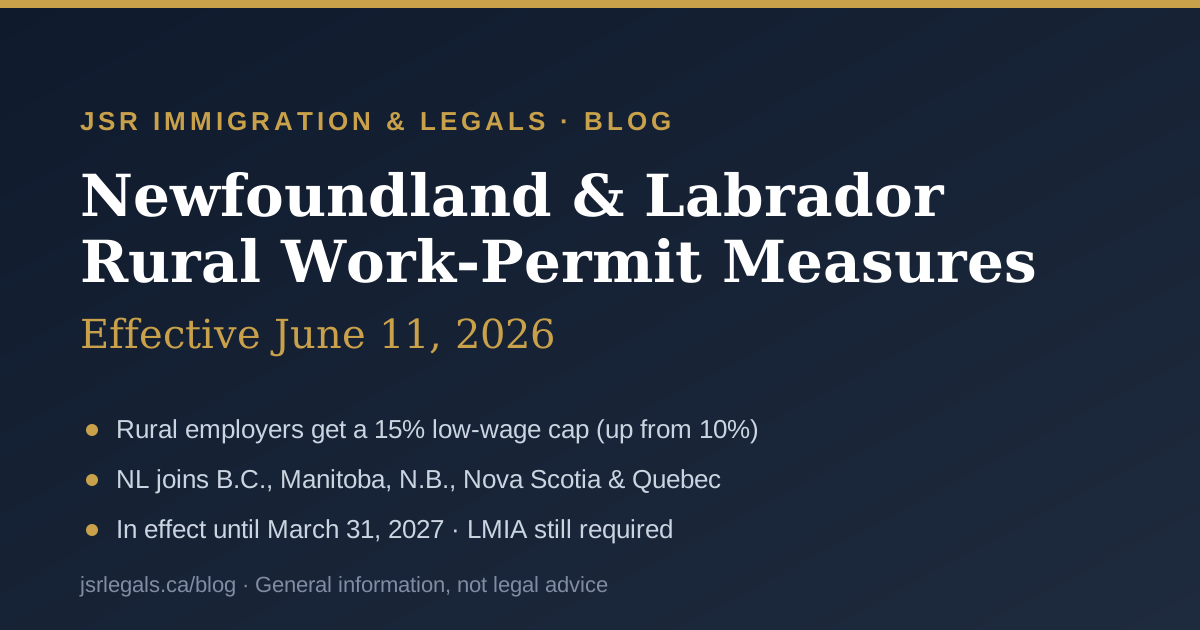
The change isn't a brand-new program. It's Newfoundland and Labrador opting into an existing temporary policy under the federal Temporary Foreign Worker Program (TFWP). The province is adopting both available measures:
- A higher cap on low-wage workers. Most employers face a cap on the share of
their workforce that can be temporary foreign workers in low-wage positions — generally 10%. Under these measures, eligible rural employers can use a 15% cap instead.
- Keeping workers they already have. Rural employers who are already above the
standard 10% can, in effect, retain their current low-wage TFW levels rather than being forced to cut back.
These measures take effect in NL on June 11, 2026 and are expected to remain in place until March 31, 2027.
census metropolitan area?} B -- No --> C[Standard TFWP rules apply
10% low-wage cap] B -- Yes --> D{Meets all regular
TFWP requirements?} D -- No --> C D -- "Yes · recruited locally first" --> E[Submit a new LMIA
on or after June 11, 2026] E --> F[Access 15% low-wage cap
and retention measure] F --> G[Worker applies for a
work permit with the LMIA]
Who counts as a "rural" employer
The measures are aimed at communities outside Canada's biggest urban centres. "Rural" here generally means located outside a census metropolitan area as defined by Statistics Canada. Employers in NL that aren't in a rural area won't be able to use these measures — so the first step is confirming whether your specific location qualifies.
Important: this isn't a free pass
It's easy to read "higher cap" as "easier approvals across the board." It isn't. To use these measures, an employer still has to meet all the regular TFWP requirements, including the most important one: proving genuine efforts to recruit Canadian citizens and permanent residents first. The measures change the caps, not the core obligation to try to hire locally before turning to foreign workers.
A few other practical points worth knowing:
- An LMIA is still required. A Labour Market Impact Assessment (LMIA) is the
federal assessment that lets an employer hire a foreign worker for a given role. These measures shape how a low-wage LMIA is assessed for rural employers, but they don't remove the LMIA step.
- Timing matters. The measures generally apply to a **new LMIA submitted on or
after June 11, 2026**. An application filed before that date typically won't get the benefit, so employers planning around this should mind the calendar.
- It's temporary. With an expected end date of March 31, 2027, this is a
time-limited window, not a permanent rule change.
How Newfoundland and Labrador fits the bigger picture
NL is not acting alone. This rural TFW policy is a federal framework that provinces opt into, and several already have — including British Columbia, Manitoba, New Brunswick, Nova Scotia, and Quebec. Nova Scotia and Quebec were among the first to opt in earlier in 2026. The common thread is a recognition that small and remote communities often struggle to fill essential roles, from food processing and hospitality to caregiving and retail, even after genuine local recruitment.
For Newfoundland and Labrador specifically, the move is about helping rural employers stabilize their workforces during a stretch when federal immigration levels overall are tightening.
What it means for workers
If you're a temporary foreign worker — or hoping to become one — these measures don't change your eligibility or the work-permit process directly. What they do is make it more feasible for a rural NL employer to get an LMIA for a low-wage role, which is the document you'd then use to apply for an employer-specific work permit. In other words, the measures act on the employer's side of the equation, but a smoother LMIA path for rural employers can mean more legitimate job opportunities in smaller communities.
A word of caution that always applies: be wary of anyone who promises a guaranteed LMIA or asks you to pay for a job offer. The LMIA is the employer's responsibility, and the recruit-locally-first rule still governs the whole process.
How to confirm the details
Because these are technical federal measures with specific eligibility rules and dates, always verify against the official source before you act. You can read the federal government's description of the temporary TFWP measures on the Employment and Social Development Canada page: Temporary measures under the Temporary Foreign Worker Program.
We're here to help
Whether you're a rural Newfoundland and Labrador employer trying to figure out whether your business and your roles qualify, or a worker weighing a job offer in a smaller community, we can help you read the rules against your real situation and plan your next step. Get in touch with JSR Immigration & Legals for a clear, no-pressure assessment.
This article is general information about Canadian immigration and is not legal advice. Program details, caps, and dates can change, so please confirm the current requirements on Canada.ca or with a qualified representative before you act.

Immigration & paralegal practitioner at JSR Immigration & Legals, helping newcomers and Ontario residents with their cases.
This post is general information about Canadian immigration and Ontario paralegal matters and is not legal advice. Rules change and every case is different — confirm current requirements for your own situation.