Ontario's New Late-Rent Rule: When Repeated Delays May Support an LTB Case
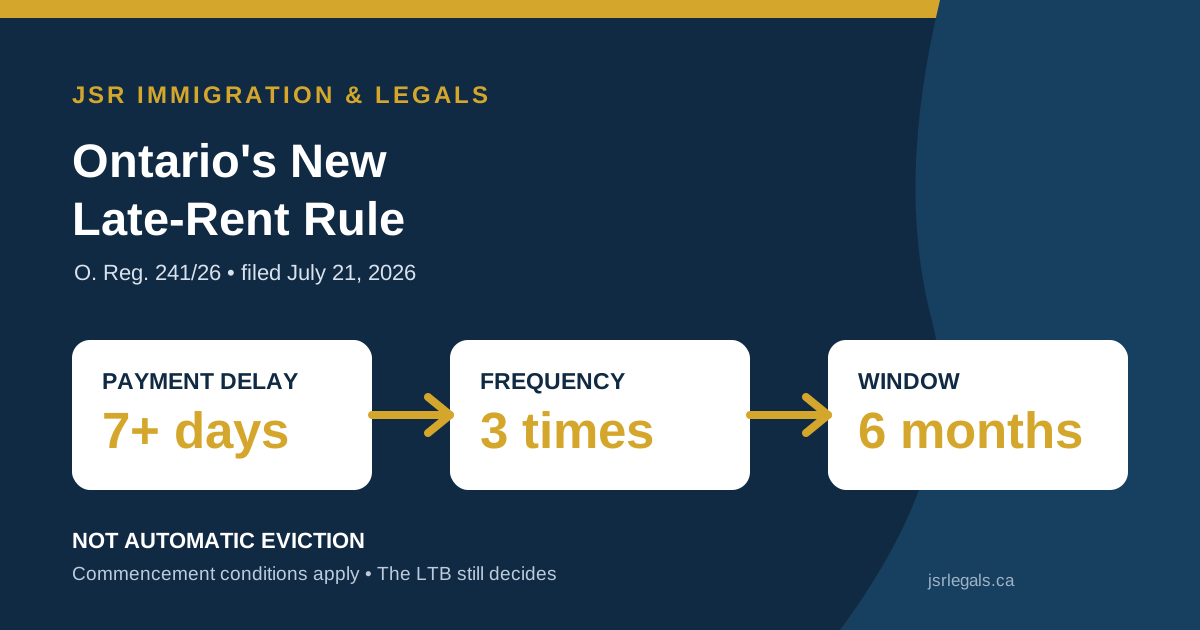
Ontario has added a clearer late-payment benchmark
Ontario filed O. Reg. 241/26 under the Residential Tenancies Act, 2006 on July 21, 2026. Among several Landlord and Tenant Board (LTB) changes, the regulation defines one set of circumstances that can amount to persistently failing to pay rent when it is due.
The new wording matters to both tenants and landlords, but two cautions come first. It is not yet in force as of July 30, 2026, and it does not create an automatic eviction. A landlord must still use the legal notice and LTB process, and the Board must decide the application.
What pattern does the regulation describe?
New section 8.1 of Ontario Regulation 516/06 will say that persistent late payment includes circumstances where all of the following occur:
- the tenant does not pay rent within seven days after it becomes due;
- this happens at least three times during any six-month period; and
- on each occasion, the delay was not solely caused by the landlord applying a
rent payment to another amount owing, including earlier rent arrears.
The wording is broader than a simple “three strikes” rule. The regulation also says that other circumstances may still amount to persistent late payment. In other words, the listed pattern is one included example, not the only possible pattern the LTB may consider.
The underlying authority appears in section 58 of the Residential Tenancies Act, 2006, which deals with termination where a tenant has persistently failed to pay rent on the date it becomes due. The new regulation adds detail to that concept; it does not replace the Act or the Board's role.
When does it start?
The commencement clause is important. The persistent-late-payment provision comes into force on the latest of:
- September 21, 2026;
- the day the related provision of Schedule 12 to the *Fighting Delays,
Building Faster Act, 2025* comes into force; and
- the day O. Reg. 241/26 was filed.
That means September 21 is the earliest possible date, not a promise that the rule will necessarily operate that day. Tenants and landlords should confirm the current version of the regulation and the Act before relying on it.
O. Reg. 241/26 also contains related rules on setting aside certain ex parte orders, raising tenant issues at some rent-arrears hearings, postponing enforcement of eviction orders, and non-profit housing co-operatives. Those provisions have their own wording and commencement conditions and should be reviewed separately.
What tenants should do now
Pay the full rent by the due date whenever possible. If a payment will be late, communicate in writing and keep proof of the date, amount and method of every payment. Save receipts, bank records, e-transfers, texts and emails.
If you believe the landlord applied a payment to another balance instead of the current rent, ask for a clear rent ledger and keep your own calculation. That allocation issue is expressly relevant under the new wording.
Do not ignore an N-form, LTB application or hearing notice. A pattern of late payment is different from a single unpaid balance, and the response will depend on the notice, payment history and evidence. Getting help early may preserve options that become harder to use close to a hearing.
What landlords should do now
Maintain a complete ledger showing each rent due date, payment date, amount and how the payment was applied. Avoid informal records that make it impossible to tell whether a payment was more than seven days late or whether allocation created the apparent shortfall.
The new benchmark does not authorize locks to be changed, services to be cut off, belongings to be removed, or any other self-help eviction. Use the prescribed notice and LTB application process. A landlord must prove the case, and the tenant has an opportunity to respond.
JSR Immigration & Legals can help landlords and tenants understand an LTB notice, organize a payment record and prepare for the Board process. Contact us before taking action so the current law and the facts can be reviewed.
This article is general information only and is not legal advice for a specific tenancy or LTB matter.

Immigration & paralegal practitioner at JSR Immigration & Legals, helping newcomers and Ontario residents with their cases.
This post is general information about Canadian immigration and Ontario paralegal matters and is not legal advice. Rules change and every case is different — confirm current requirements for your own situation.