Stay Ahead of the Curve: Key IRCC Updates for April 2026
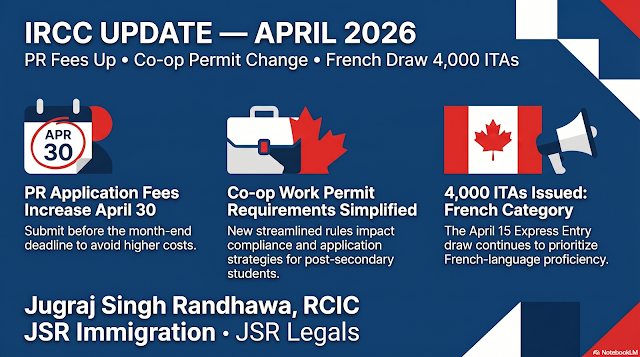
Introduction: A Busy Month for Canadian Immigration
The Canadian immigration landscape remains in a state of rapid evolution as we move through April 2026. While formal notices from IRCC have stabilized over the last 48 hours, this should not be mistaken for a period of inactivity. We are currently in a critical window where major policy shifts—particularly those affecting international students, French-speaking candidates, and permanent residence applicants—are either going live or approaching a hard deadline.
As a senior consultant, I recommend an immediate audit of all pending and active files to mitigate the impact of upcoming fee hikes and to capitalize on new, simplified work authorizations. Proactive compliance is your most effective tool in this environment.
The Countdown to April 30: Essential Fee and Financial Updates
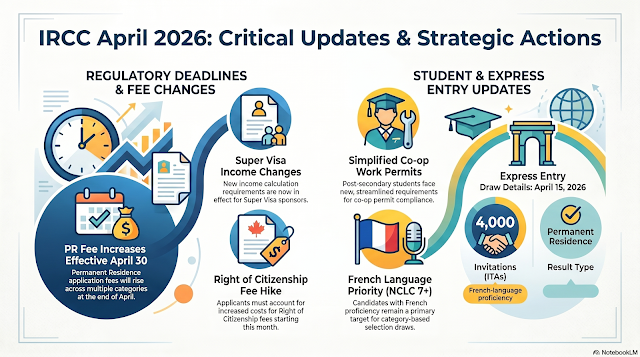
The window to lock in current pricing is closing. Significant fee increases are scheduled for the end of the month, while other financial requirements have already shifted. Practitioners must distinguish between upcoming deadlines and changes already in force.
Checklist for Action
- Review PR Fee Schedule: All Permanent Residence (PR) application fees increase on April 30, 2026. Ensure all complete applications are submitted before this date to save costs for your clients.
- Audit Citizenship Submissions: The Right of Citizenship fee is also set for an increase on April 30.
- Update Super Visa Files (Immediate): Unlike the PR fees, the new Super Visa income calculation changes are already in effect. Ensure all current and future Super Visa filings align with these updated financial criteria.
Note: Practitioners and applicants must monitor the IRCC News and Notices page daily as we approach the April 30 cutoff to ensure no last-minute ministerial instructions are missed.
Simplifying the Path for International Students: Co-op Work Permits
On April 9, 2026, IRCC announced a significant simplification of the co-op work permit requirement for post-secondary international students. The core of this change addresses the necessity—or lack thereof—of a separate co-op work permit. This is a major shift in how and when students are authorized to work as part of their academic curriculum, moving away from the previous, more cumbersome dual-permit requirement.
Practical Impact and Compliance
- Active Term Compliance: This policy affects how students currently enrolled in co-op terms maintain their legal status.
- Filing Strategy: New study permit applications must be tailored to these simplified rules, potentially removing the need for a separate work permit application entirely, thus reducing administrative friction.
Pro-Tip for RCICs and Education Agents: Conduct an immediate sweep of your active student roster. Flag all clients currently in co-op terms or those with upcoming work placements to ensure their files align with the April 9 simplified requirements. Updating intake checklists now will prevent unnecessary Requests for Information (RFIs) later.
Express Entry Spotlight: The French-Language Advantage
The Express Entry draw on April 15, 2026, reinforces a massive strategic directive from IRCC: the prioritization of Francophone immigration outside of Quebec.
Detail
Information
Round Type
Category-based selection
Category
Invitations Issued (ITAs)
4,000
Strategic Priority
Francophone Minority Communities
Language Requirement
NCLC 7 or higher in all four abilities
Strategic Analysis
An issuance of 4,000 ITAs in a single category-based round is a significant volume that signals more than just a "preference"—it is a clear mandate. For candidates, this remains the most accessible pathway to Permanent Residence. I advise all candidates with NCLC 7+ results to confirm their profile accuracy immediately.
Conclusion & Strategic Takeaways
The shifts we are seeing this month require a move from passive monitoring to active file management. To stay ahead, prioritize the following actions:
Next Steps
- Submit PR Applications by April 29: Do not wait for the April 30 deadline. Submit all finalized PR applications now to avoid the fee hike.
- Conduct a Co-op Audit: For all student clients, verify if a separate co-op work permit is still required under the April 9 simplification rules.
- Validate French Profile Data: French-speaking clients must confirm that their NCLC 7 (or higher) results are correctly entered in the Express Entry portal to remain eligible for high-volume targeted draws.
- Update Financial Documentation: Ensure all Super Visa applications reflect the new income calculation standards that are currently in effect.
Navigating the complexities of Canadian immigration requires precision and foresight. By taking these steps today, you ensure that your path—or your clients' path—to Canada remains secure and cost-effective.

Immigration & paralegal practitioner at JSR Immigration & Legals, helping newcomers and Ontario residents with their cases.
This post is general information about Canadian immigration and Ontario paralegal matters and is not legal advice. Rules change and every case is different — confirm current requirements for your own situation.