Proof of Funds for a Canadian Study Permit in 2026: How Much You Need to Show
One of the most common reasons a Canadian study permit gets refused has nothing to do with grades or school choice — it's money. To approve a study permit, an officer has to be satisfied that you can pay for tuition, your living costs, and your return transportation without relying on unauthorized work. That "living costs" number went up sharply over the past two years, so if you're planning to apply, it's worth knowing where the bar sits now.
Here's a plain-language guide to proof of funds for a study permit in 2026 — what the requirement is, what counts as acceptable proof, and the parts people most often get wrong.
What the financial requirement actually covers
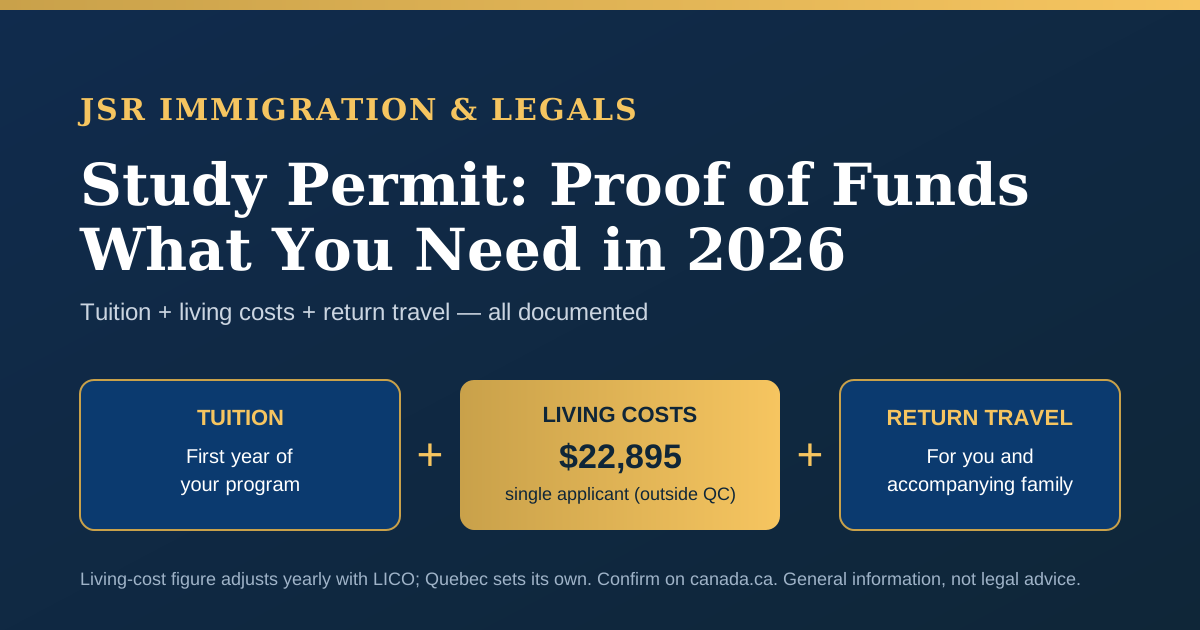
When you apply for a study permit, you generally need to show enough money for three things:
- Tuition for your first year of study.
- Living expenses for you (and any family members coming with you).
- Return transportation for you and accompanying family members.
The living-expenses portion is the one that changed. For applications submitted on or after September 1, 2025, a single applicant (outside Quebec) generally needs to show CAD $22,895 in available funds for living costs — and that's separate from and on top of tuition and travel. The figure is higher for each additional family member.
Importantly, this number is adjusted each year. Immigration, Refugees and Citizenship Canada (IRCC) ties it to Statistics Canada's low-income cut-off (LICO), so it can rise again. Always confirm the current amount on canada.ca before you gather your documents.
Quebec is different. Quebec sets its own financial thresholds for students it selects, and those amounts were increased significantly for 2026. If you're studying in Quebec, check Quebec's requirements rather than the federal figure.
What counts as acceptable proof of funds
IRCC wants to see that the money is available to you — not just that it exists somewhere on paper. Commonly accepted forms of proof include:
- A Guaranteed Investment Certificate (GIC) from a participating Canadian financial institution.
- Bank statements for the past several months showing your funds.
- Proof of a student or education loan from a bank.
- Your bank account in Canada if money has already been transferred.
- Proof that tuition and housing fees have been paid.
- A letter from a person or institution providing you money.
- Proof of funding from within Canada, such as a scholarship or a paid Canadian education program.
Strong applications often combine more than one type — for example, a GIC plus recent bank statements plus a scholarship letter. The goal is to remove doubt that the funds are real, accessible, and yours to use.
The mistakes that sink applications
A few patterns come up again and again. In general terms:
- Funds that appear suddenly. A large deposit that lands days before you apply, with no explanation, invites questions. Officers look for funds that are settled and traceable.
- Money you can't actually touch. Property value or investments that can't be readily converted may not satisfy the requirement the way liquid funds do.
- Forgetting the "extras." Remember the living-costs figure is on top of tuition and travel — not a replacement for them.
- Using last year's number. Because the requirement adjusts annually, an old figure can leave you short. Confirm the current amount before applying.
- Family members not counted. If a spouse or children are coming with you, the required total goes up.
Meeting the dollar threshold doesn't guarantee approval — an officer weighs your whole application, including study plan and ties — but falling short of it is a very common, very avoidable reason for refusal.
Where to confirm the current numbers
Financial requirements change, so verify the figures against the official source before you act:
- IRCC's Study permit: Get the right documents page on canada.ca, which lists the current proof-of-funds amounts.
- For Quebec, the Quebec immigration (MIFI) website for that province's separate thresholds.
If a number you read elsewhere doesn't match canada.ca, trust the official page.
Talk to us
How much you need to show, what proof works best for your situation, and how to present funds clearly all depend on where you'll study, who's coming with you, and your finances. If you'd like help getting your study permit application in order, the team at JSR Immigration & Legals is happy to talk it through — get in touch.
This post is general information only and reflects what was publicly known as of June 15, 2026. It is not legal advice. Program details and dollar amounts change, so confirm current requirements with IRCC or a qualified professional before acting.

Immigration & paralegal practitioner at JSR Immigration & Legals, helping newcomers and Ontario residents with their cases.
This post is general information about Canadian immigration and Ontario paralegal matters and is not legal advice. Rules change and every case is different — confirm current requirements for your own situation.