Canada's Immigration Contraction in 2026: PR Admissions Down 20% and What It Means
Canada has moved from rapid immigration expansion to a deliberate contraction. The first-quarter numbers for 2026 make the shift concrete.
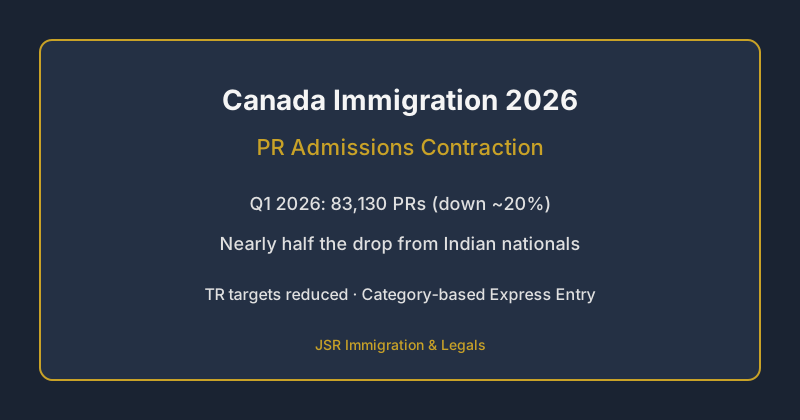
Between January and March 2026, Canada admitted 83,130 new permanent residents. That is roughly a 20 percent drop from the 104,320 admitted in the same period of 2025. Nearly half of the national decline came from Indian nationals alone. Admissions of Indian citizens fell from 31,690 to 21,565 — a reduction of 10,125 people that accounted for 48 percent of the overall drop.
Later data covering January to May shows the pattern continuing. Total permanent resident admissions reached about 147,260, down roughly 12.5 percent year over year, with Indian admissions accounting for more than 57 percent of the broader decline.
These figures line up with the 2026–2028 Immigration Levels Plan. Permanent resident targets are stabilized at 380,000 per year. Temporary resident new arrivals are set at 385,000 for 2026 (and lower in the following years), with the explicit goal of bringing the temporary resident population below 5 percent of Canada's total population by the end of 2027.
Temporary resident targets cut sharply
The temporary side of the plan is the more dramatic change:
- International students: 155,000 new arrivals targeted for 2026 (nearly half the prior year's level).
- Temporary workers: 230,000 overall (a substantial reduction from previous volumes under both the Temporary Foreign Worker Program and the International Mobility Program).
Fewer study and work permits mean a smaller pipeline of candidates who later become eligible for the Canadian Experience Class or provincial nominee programs.
Express Entry stays category-focused
IRCC continues to emphasize category-based selection rather than general all-program draws. Recent rounds have featured large French-language proficiency invitations (often at lower CRS cutoffs), steady Canadian Experience Class draws, Provincial Nominee Program rounds, and targeted occupational or experience-based categories such as healthcare, trades, STEM, physicians with Canadian experience, and senior managers.
Candidates without French-language ability, Canadian work experience, or a provincial nomination face a narrower path under the current system.
What this means for applicants
The contraction hits hardest where volumes were previously highest. Indian applicants, who formed a large share of both student and permanent resident numbers in prior years, have absorbed a disproportionate share of the reductions. Study-permit issuances for Indian students have also fallen sharply in recent years.
For those already in Canada, the emphasis on the Canadian Experience Class and limited in-Canada worker transition measures offers some continuity. One-time initiatives are converting certain protected persons and temporary workers already contributing in Canada into permanent residents outside the main levels targets.
Provincial programs remain important. Ontario's redesigned Workforce Priority Stream, for example, now ties nominations more tightly to job offers and demonstrated Ontario experience. Candidates who can show strong local labour-market attachment, higher wages, or French-language skills gain a clearer advantage.
Practical next steps
Applicants should focus on the factors the current system rewards:
- French-language proficiency (NCLC 7 in all four abilities opens large category draws).
- Canadian work experience that qualifies for the Canadian Experience Class.
- A valid job offer that supports a provincial nomination, particularly under Ontario's new streams.
- Accurate National Occupational Classification coding and clean evidence of language, education, and work history.
Profiles that relied primarily on high CRS scores from education and overseas experience, without Canadian ties or French ability, face steeper competition. Timing also matters. Processing inventories remain substantial, and annual targets create natural constraints on how many applications can be finalized each year.
If you would like a confidential review of your profile against the current levels plan and Express Entry categories, contact JSR Immigration & Legals. We will walk through your options together.
This article is general information only, current to July 2026, and is not legal advice. Admission numbers, targets, and selection rules change — always confirm the current requirements with IRCC or a licensed representative before making decisions.

Immigration & paralegal practitioner at JSR Immigration & Legals, helping newcomers and Ontario residents with their cases.
This post is general information about Canadian immigration and Ontario paralegal matters and is not legal advice. Rules change and every case is different — confirm current requirements for your own situation.