OHIP for Newcomers in 2026: There's No Longer a 3-Month Wait
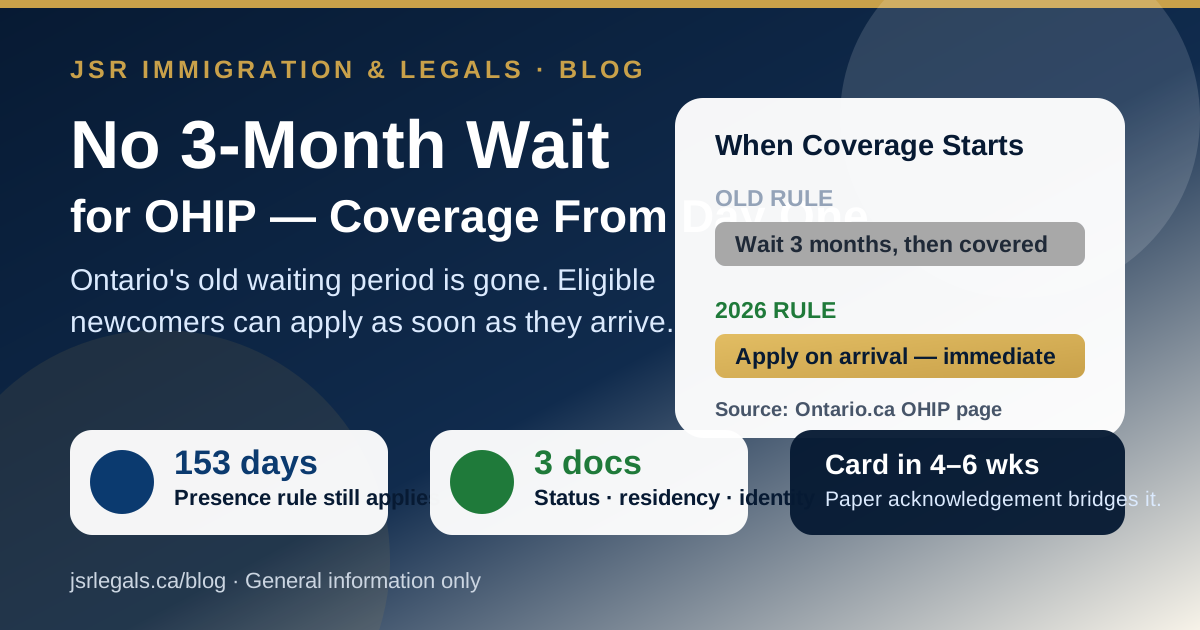
One of the most stubborn myths newcomers hear is that you have to live in Ontario for three months before the province's health plan will cover you. For decades that was true — but it isn't anymore. If you're new to Ontario in 2026, you can apply for the Ontario Health Insurance Plan (OHIP) and, if you're eligible, have coverage that starts immediately.
This is general information, not legal or medical advice. Always confirm the current rules on the official Ontario OHIP page before you rely on them.
What changed: the waiting period is gone
Ontario used to make most new residents wait three months from the day they arrived before OHIP coverage kicked in. That waiting period was suspended in March 2020 as part of the province's pandemic response, then extended again and again — and it has since become the operating standard.
Ontario's own apply page now states it plainly: "There is no longer a waiting period for OHIP coverage. If you are eligible, you will have immediate health insurance coverage." The page also tells newcomers they can apply as soon as they arrive in Ontario.
For a new permanent resident or an eligible work permit holder, that's a meaningful difference. Instead of paying out of pocket — or scrambling for private insurance — for your first three months, you can walk into a ServiceOntario centre and start the process right away.
Who qualifies for OHIP
Removing the waiting period didn't remove the eligibility rules. To get OHIP, you generally need to meet all of the minimum residency qualifications plus at least one immigration-status requirement.
The minimum residency rules are about actually living in Ontario:
- Make Ontario your primary home, and
- Be physically present in Ontario for at least 153 days in any 12-month period, and
- Be physically present for at least 153 days of your first 183 days after you arrive.
On top of that, you need to fall into an eligible status category, such as:
- Canadian citizen or person registered as an Indigenous person;
- Permanent resident (or "applying from within Canada" in certain categories);
- A work permit holder working full-time for an Ontario employer for at least six months — eligibility can extend to your spouse and dependent children;
- A Convention refugee or protected person.
That work-permit pathway surprises a lot of people: you don't have to be a permanent resident to get provincial health coverage. If you have a qualifying full-time job in Ontario, you and your family may already be eligible.
PR, citizen, qualifying
work permit, refugee} B -- No --> C[Get private/travel
insurance for now] B -- Yes --> D{Ontario is your primary home
and you meet the 153-day
presence rules?} D -- Not yet --> E[Apply once you can show
residency; keep documents] D -- Yes --> F[Apply at ServiceOntario
with 3 documents] F --> G[Coverage starts immediately
no 3-month wait] G --> H[Use the paper acknowledgement
until the card arrives]
What to bring when you apply
OHIP applications are done in person at a ServiceOntario centre, and you'll need to bring three separate original documents (photocopies aren't accepted):
- A document proving your citizenship or OHIP-eligible immigration status (for example, a PR card or confirmation of permanent residence, or a valid work permit).
- A document proving your Ontario residency (such as a lease, utility bill, or bank statement showing your Ontario address).
- A document proving your identity (typically a passport or other government-issued photo ID).
It's worth checking the official document list before you go, because one item often satisfies more than one category and the accepted-document lists are specific. Going prepared saves you a second trip.
Bridging the gap before your card arrives
Here's the practical wrinkle: even though coverage can start the day you apply, the physical health card takes longer to arrive in the mail — often around four to six weeks. That gap worries new arrivals, but it's manageable.
When you apply, you'll receive a printed acknowledgement / registration document with your OHIP number. Clinics, pharmacies, and hospitals can verify your active OHIP number electronically, so keep that paper safe and bring it to appointments until your card shows up. If a provider asks for your card and you don't have it yet, give them the acknowledgement and your number.
A few more tips for your first weeks:
- Register every family member who's eligible at the same time, including children.
- Find a family doctor or nurse practitioner early — Health Care Connect can help, and walk-in clinics cover you in the meantime.
- Know what OHIP doesn't cover — most prescription drugs (unless you're on a provincial drug program), dental, and most vision care for adults usually need separate coverage, often through an employer plan.
The bottom line
If someone tells you to budget for three months of private health insurance before OHIP starts, that advice is out of date. In 2026, eligible newcomers in Ontario can apply for OHIP as soon as they arrive and get immediate coverage — the main things to sort out are proving your status, your Ontario residency, and the 153-day presence rules, then bridging the short wait for the physical card.
If you're navigating a work permit, permanent residence, or sponsoring family and want to understand how your status affects health coverage and other newcomer essentials, get in touch with JSR Immigration & Legals — we're happy to help you plan your landing.
This article is general information about settling in Ontario, not legal or medical advice. Eligibility rules and documents change; confirm current requirements with ServiceOntario or a licensed representative for your specific situation.

Immigration & paralegal practitioner at JSR Immigration & Legals, helping newcomers and Ontario residents with their cases.
This post is general information about Canadian immigration and Ontario paralegal matters and is not legal advice. Rules change and every case is different — confirm current requirements for your own situation.