Bill 105 and Your WSIB Claim: Ontario's 2026 Worker Benefit Changes Explained
If you get hurt on the job in Ontario, the Workplace Safety and Insurance Board (WSIB) is the system that is supposed to replace part of your lost income while you recover. The rules governing those benefits are about to see their most significant update in decades. On April 20, 2026, the Ontario government introduced Bill 105, the Protecting Ontario's Workers and Economic Resilience Act, 2026 — nicknamed the "POWER Act" — which proposes changes to several workplace laws, including the Workplace Safety and Insurance Act, 1997.
Here is the important caveat up front: Bill 105 is still a proposed bill. As of June 2026 it is making its way through the Legislative Assembly and has not yet become law. The WSIB changes below would come into force on a day to be proclaimed later — and the details can still change before the bill passes. With that in mind, here is what is on the table and why it matters.
The headline: loss-of-earnings benefits rising to 90%
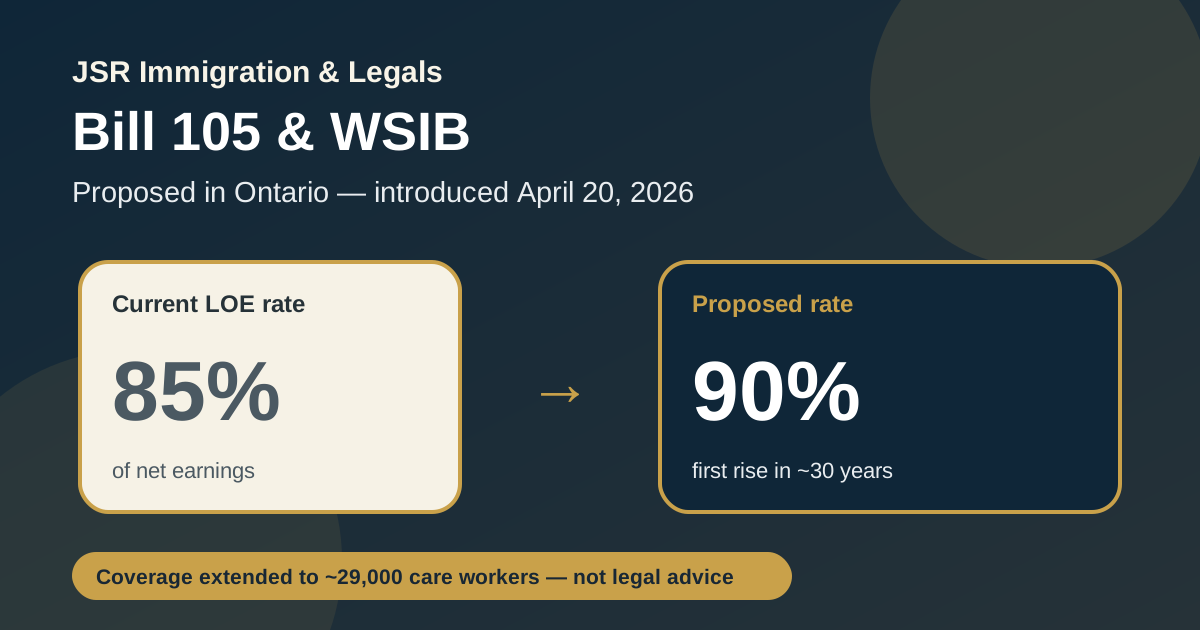
The change getting the most attention is the loss-of-earnings (LOE) benefit rate. Today, the WSIB generally pays 85% of the difference between your pre-injury take-home pay and what you can earn after the injury. Bill 105 would raise that to 90%.
That may sound like a small bump, but it would be the first increase to the income-replacement rate in almost 30 years. For a worker off the job for months, five extra percentage points of net earnings can make a real difference to keeping up with rent and bills.
Coverage extended to care workers
Bill 105 would also bring privately operated residential care facilities, retirement homes, and group homes into mandatory WSIB coverage. The government estimates this would extend protection to roughly 29,000 frontline care workers — personal support workers, nurses, and social workers — who do physically demanding work but were not all covered before.
If passed, it means more of these workers would have a clear path to benefits if they are injured, rather than being left to fight over whether the workplace should have been insured at all.
Benefits past age 65 and reviewable claims
Two more changes are worth knowing about:
- Benefits beyond age 65. Right now, LOE benefits generally stop at 65. Bill
105 would give the WSIB discretion to continue paying eligible workers who can show they intended to keep working past that age. This reflects the reality that many people now work well into their late sixties.
- Reviewable benefits. The bill would let the WSIB **review a worker's LOE
benefits at any point** during the life of a claim (subject to limits on how often), rather than locking the amount in after the current 72-month window. This cuts both ways — a review can adjust a benefit up or down.
There is also a proposed income-offset rule: the WSIB would reduce LOE benefits if your combined income from the WSIB plus certain other sources adds up to more than 100% of your pre-injury net earnings. The idea is that the system tops you up to — but not beyond — what you were earning before.
How a WSIB loss-of-earnings claim generally works
85% now / 90% proposed] E -- No --> G[Request reconsideration, then appeal to WSIAT] F --> H[WSIB reviews recovery and return-to-work] H --> I[Benefits adjusted, continued, or ended]
What this means for you right now
Because the WSIB parts of Bill 105 are not yet in force, your current claim still runs under the existing rules — including the 85% rate. Nothing about the proposal changes what you should do today if you are hurt at work:
- Report the injury to your employer promptly, and make sure it gets to the
WSIB. Employers are required to report a workplace injury to the WSIB within three business days of learning about it.
- Get medical attention and keep records — diagnoses, time off, and any
restrictions on what you can do.
- Watch your deadlines. There are time limits to file a claim and to object
to a WSIB decision, and missing them can cost you the right to benefits.
- If your claim is denied, you can ask the WSIB to reconsider and, if needed,
appeal to the Workplace Safety and Insurance Appeals Tribunal (WSIAT).
Where to confirm the details
- The official bill text and its progress through the legislature are on the
Legislative Assembly of Ontario site: Bill 105 — Protecting Ontario's Workers and Economic Resilience Act, 2026.
- For how claims and benefits work today, see the
WSIB: wsib.ca.
- Appeals are handled by WSIAT: wsiat.on.ca.
Get in touch
WSIB claims can be confusing even before a major reform, and a denial or a benefit cut can be stressful when you are already off work. If you have been hurt on the job, had a claim denied, or are unsure how these proposed changes might affect you, JSR Legals can help you understand your options. Reach us at info@jsrlegals.ca.
This article is general information about Ontario law, current as of June 2026, and is not legal advice for any specific situation. Bill 105 is a proposed bill that has not yet become law; its details and timing can change — confirm the current rules before you act.

Immigration & paralegal practitioner at JSR Immigration & Legals, helping newcomers and Ontario residents with their cases.
This post is general information about Canadian immigration and Ontario paralegal matters and is not legal advice. Rules change and every case is different — confirm current requirements for your own situation.