Proof of Canadian Citizenship Now Takes 15 Months: What Bill C-3 Families Should Know
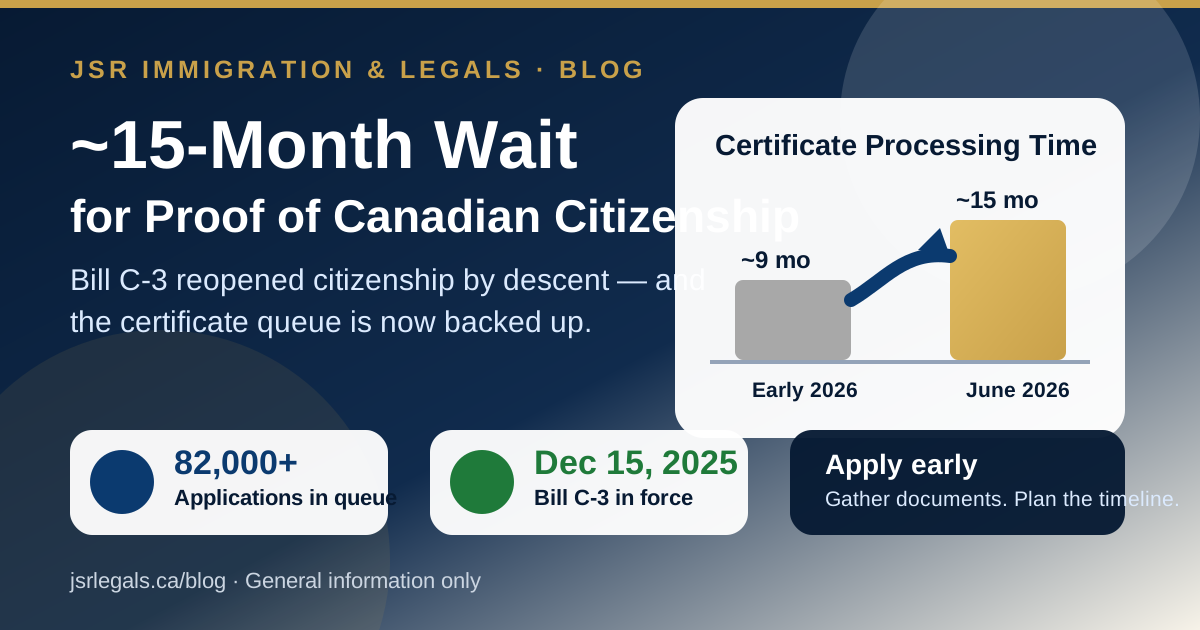
If you've been waiting on a Canadian citizenship certificate — the official document that proves you are a citizen — the line just got a lot longer. As of June 2026, Immigration, Refugees and Citizenship Canada (IRCC) is reporting a processing time of about 15 months for proof of citizenship, up from roughly nine months earlier in the year. The queue has swelled past 82,000 applications, with more than 11,000 joining in a single month.
This isn't a random slowdown. It's the direct result of a major change to who counts as a Canadian. Here's what's happening, why, and what it means if you or your family are affected. This is general information, not legal advice — always confirm current figures on the official IRCC processing-times tool.
What a citizenship certificate actually is
A citizenship certificate (sometimes called "proof of citizenship") is not the same as applying to become a citizen through naturalization. It's a document confirming that you already are a Canadian citizen. People use it to apply for a Canadian passport, to register a child, to access services, or simply to have documented proof of their status.
That distinction matters here, because the surge isn't coming from newcomers naturalizing. It's coming from people who became citizens automatically — many of them without realizing it until recently.
Why the wait suddenly jumped: Bill C-3
On December 15, 2025, Bill C-3 came into force and removed the first-generation limit on citizenship by descent.
Under the old rules, a Canadian citizen who was themselves born or naturalized abroad generally could not pass citizenship to a child also born outside Canada. That cut-off created a group of people — often called "Lost Canadians" — with clear family ties to Canada but no recognized status.
Bill C-3 changed that. For people born before December 15, 2025, the first-generation limit is gone, so many who descend from a Canadian — even several generations removed — are now considered citizens. Going forward, citizenship by descent beyond the first generation is tied to a parent meeting a substantial-connection test (a period of physical presence in Canada).
The practical effect: a large number of people who were already citizens the moment the law changed are now applying for the certificate that documents it. That demand is what pushed the processing time to about 15 months.
before Dec 15, 2025?} B -- No, born in Canada --> C[You are a citizen
by birth on soil] B -- Yes --> D{Is a parent Canadian by
birth or naturalization?} D -- Yes --> E[Likely a citizen under Bill C-3
first-generation limit removed] D -- Not sure --> F[Trace your family line
and gather documents] E --> G[Apply for a citizenship certificate
to document existing status] F --> G G --> H[Plan around the ~15-month wait]
What this means if you're affected
You don't "lose" citizenship by waiting — but you do wait longer. If you qualify under Bill C-3, you are already a citizen; the certificate just documents it. The catch is timing. Because the queue keeps growing, delaying your application is likely to mean a longer wait, not a shorter one. If you need proof of status for a passport, a job, school, or travel, build the 15-month estimate into your planning now.
Gather your paper trail early. Citizenship-by-descent applications often turn on documents linking you to a Canadian ancestor — birth certificates, marriage records, and your parent's or grandparent's proof of Canadian citizenship. These can take time to locate, especially across borders and older records. Starting that search before you file can save weeks of back-and-forth later.
Be realistic about the estimate. IRCC's published times are forward-looking averages: they reflect how many files are already in the queue, current staffing, and expected new applications. Your own file could move faster or slower. Treat 15 months as a planning figure, not a promise, and check the official tool periodically — it updates regularly.
Don't confuse this with a passport delay. A citizenship certificate is usually a prerequisite for a first Canadian passport if you were born abroad. If a passport is your end goal, factor in both the certificate wait and the separate passport processing time afterward.
The bottom line
The 15-month wait for proof of citizenship is a side effect of good news for many families: Bill C-3 restored a path for people with genuine Canadian roots. But the volume is real, and the smart move is to apply early, document carefully, and plan around the timeline rather than wait for it to shrink.
If you're trying to figure out whether you or your children became citizens under the new rules, or you want help assembling a clean citizenship-certificate application, get in touch with JSR Immigration & Legals — we're glad to help you sort out where you stand.
This article is general information about Canadian immigration and citizenship, not legal advice. Rules and processing times change; confirm current requirements with IRCC or a licensed representative for your specific situation.

Immigration & paralegal practitioner at JSR Immigration & Legals, helping newcomers and Ontario residents with their cases.
This post is general information about Canadian immigration and Ontario paralegal matters and is not legal advice. Rules change and every case is different — confirm current requirements for your own situation.