October 14, 2026: Study Permit Waits Rise to 7 Weeks from India
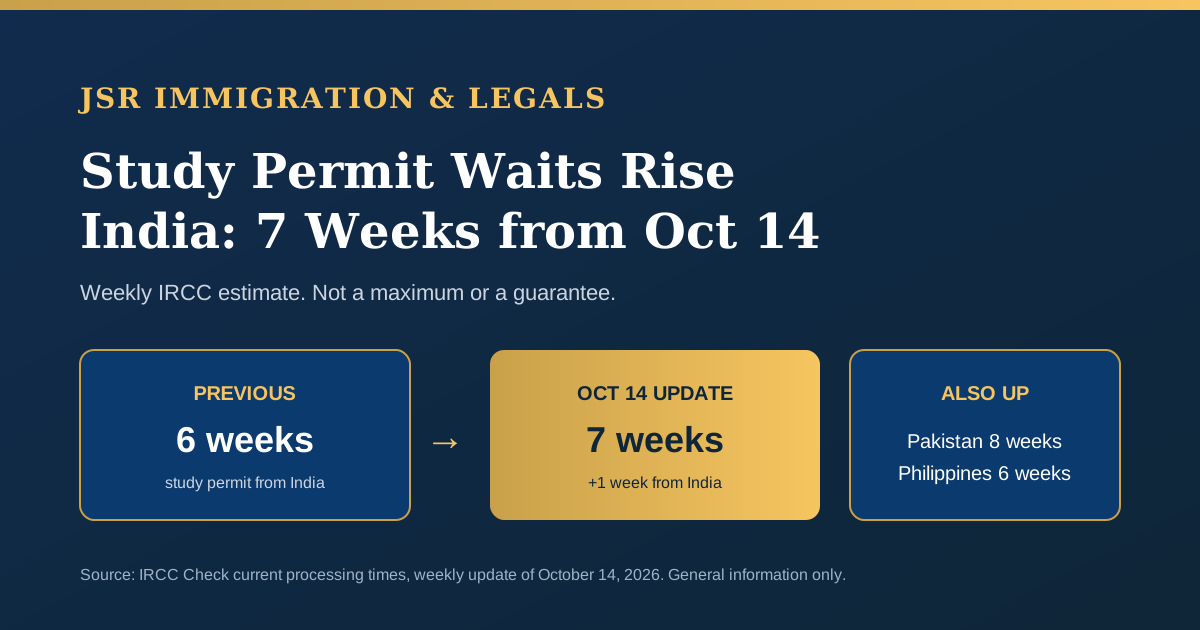
IRCC's weekly processing-times refresh of October 14, 2026 moved several temporary residence waits up at the same time. The line most applicants watch first, a study permit filed from India, rose from 6 weeks to 7 weeks. Pakistan moved to 8 weeks, its longest figure in more than four months, and the Philippines moved to 6 weeks. Nigeria held at 10 weeks. Two lines moved down: study permits inside Canada fell to 7 weeks, and study permits from the United States fell to 5 weeks.
These numbers sit on the official Check current IRCC processing times tool, which IRCC refreshes every week for temporary residence categories. The page states the times are estimates, not a maximum or a guarantee. Your file can take longer.
What the October 14 update shows
Study permits, measured in weeks for a complete application filed today
| Where you apply from | Previous estimate | October 14 estimate |
|---|---|---|
| India | 6 | 7 |
| Pakistan | 7 | 8 |
| Philippines | 5 | 6 |
| Nigeria | 10 | 10 |
| Inside Canada | 8 | 7 |
| United States | 6 | 5 |
Other lines that moved
| Application line | October 14 figure |
|---|---|
| Work permit from India | 11 weeks, unchanged |
| Work permit inside Canada | 15 weeks, up from 14 |
| Work permit extension in Canada | 13 weeks, about 205,400 waiting |
| Study permit extension in Canada | 8 weeks, about 27,700 waiting |
| Visitor record | 357 days |
| Super visa, Philippines | 103 days, up 13 |
| Visitor visa, Nigeria | 103 days |
Some figures moved the other way. Super visa waits fell for Nigeria, from 37 to 35 days. Visitor visa estimates shortened for India (29 days), Pakistan (65), and the Philippines (24).
Our October 5 extensions post recorded the work permit extension line at 12 weeks with about 202,900 waiting against the September 26 data stamp. On October 14 data that line sits at 13 weeks and about 205,400 waiting, a one-week rise and a queue about 2,500 larger.
How IRCC builds these numbers
The tool runs two clocks. For temporary residence, the forward-looking estimate is rebuilt each week from the applications on hand and the volume IRCC expects to finalize per week. For other categories, IRCC uses a historical method: the time it took to finish 80 percent of similar past applications. The weekly lines therefore move up and down as inventory and capacity change. A rise in study permit weeks lands in filing season for winter term starts, when volumes normally run hot.
Filing date versus data stamp
The October 14, 2026 date is a data stamp, not a deadline and not a rule change. The clock on your file starts on the day IRCC receives a complete application, not on the day you check the tool. If you file today, the figure you saw is this week's estimate, and next week's refresh can move it in either direction.
The estimate also does not bind your program start date. If 7 weeks runs past the start of your term, IRCC does not owe you a decision by that date. That is a reason to file early, not a reason to wait for a shorter week.
What this means if you are filing for a winter start
- Do not time your file to the estimate. File when your documents are complete. An incomplete file is delayed or returned, and that costs more than any weekly change.
- Book biometrics early. IRCC states the estimate includes biometrics time, so a late appointment eats the whole margin.
- Keep the PAL, funds, and letters airtight. A study permit refusal turns on documents far more often than on processing speed. Our proof of funds post sets out the money table in force now.
- Do not book travel off the tool. Estimates move weekly, and the tool is not a status update. Your account remains the record of your file.
- Check the country notice. The tool states IRCC is not finalizing applications from the Democratic Republic of the Congo, Uganda, or South Sudan, so a file with one of those as the last country of residence may take longer than the posted time.
What can push a file past the estimate
IRCC lists the same reasons every week: an incomplete application, a complex file, extra security checks, or a cap that has been reached. Calling IRCC does not move the file. Filing early and complete is the only lever the applicant controls.
If you are planning a study permit, a visitor visa, or an extension and want the timing checked against the current figures, contact JSR Immigration & Legals through our consultation page, the study permit service page, or the work permit service page.
This article is general information current to October 25, 2026, and is not legal or immigration advice. Processing times change weekly. Confirm the live tool on Canada.ca before you plan.

Immigration & paralegal practitioner at JSR Immigration & Legals, helping newcomers and Ontario residents with their cases.
This post is general information about Canadian immigration and Ontario paralegal matters and is not legal advice. Rules change and every case is different — confirm current requirements for your own situation.