What Counts as Discrimination in Ontario? A Practical HRTO Guide
Being treated badly can be upsetting and damaging, but the Human Rights Tribunal of Ontario (HRTO) does not decide every unfair workplace, housing or service dispute. An HRTO application must connect what happened to Ontario's Human Rights Code.
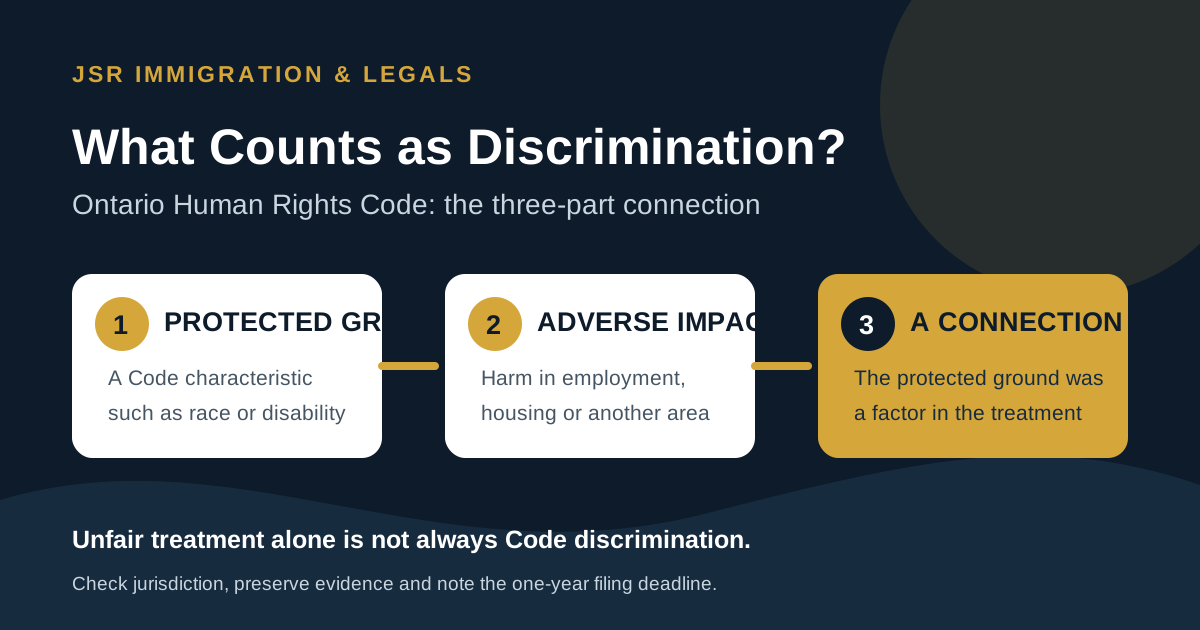
That usually means identifying a protected personal characteristic, an adverse impact in an area covered by the Code, and facts showing that the characteristic was a factor in the treatment. You do not need to prove that discrimination was the only reason, but a personal conflict or an unfair decision with no Code connection is generally not enough.
The three-part practical test
The Ontario Human Rights Commission explains that a claimant must show:
- they have a characteristic protected by the Code;
- they experienced adverse treatment or impact in a protected social area; and
- the protected characteristic was a factor in that treatment or impact.
For example, being refused a promotion is adverse treatment in employment. It may become a Code issue if evidence connects the refusal to disability, race, sex, age or another protected ground. A disagreement about work quality, without that connection, may belong in a different process.
The Commission's official guide to freedom from discrimination describes this test and gives examples.
Where the Code applies
The Code protects five main social areas:
- employment, including hiring, working conditions, discipline and dismissal;
- housing, including applying to rent and treatment during a tenancy;
- services, goods and facilities, such as schools, stores, health care and many public services;
- contracts; and
- membership in trade, occupational or professional associations.
The protected grounds include race, colour, ancestry, place of origin, ethnic origin, citizenship, creed, sex, sexual orientation, gender identity, gender expression, disability, age, marital status and family status. Some grounds apply only in particular areas: receipt of public assistance is protected in housing, while record of offences has specific protection in employment.
The Ontario Human Rights Commission's Code card provides a concise official list. Because the applicable grounds can vary by social area, check the current Code instead of relying on a general list.
Discrimination can be indirect
Discrimination does not always involve an insult or an openly biased statement. A neutral-looking rule may create a serious disadvantage for people identified by a protected ground. An employer's scheduling rule, for example, could conflict with disability-related needs or religious observance.
The Code may require accommodation to the point of undue hardship. In Ontario, the recognized undue-hardship factors are cost, outside sources of funding, and health and safety. The exact accommodation depends on the facts, and both sides generally need to participate in the process.
Harassment is also a form of discrimination when unwelcome comments or conduct are connected to a Code ground. Reprisal—punishing or threatening someone for asserting Code rights, participating in a proceeding or refusing to infringe another person's rights—is separately prohibited.
Build the factual connection
Direct admissions are uncommon. Useful evidence may include:
- emails, texts, policies, job postings or rental advertisements;
- the dates, words and actions involved;
- how comparable people were treated;
- accommodation requests and responses;
- witness names; and
- records showing the practical impact, such as lost shifts or denied access.
Keep original records and write a factual timeline while events are fresh. Avoid secretly recording conversations without first understanding the legal and workplace consequences. Evidence should help explain who did what, where it happened, the protected ground involved and why you believe there is a connection.
Deadline and jurisdiction matter
The HRTO generally requires an application within one year of the alleged discrimination, or within one year of the last event in a connected series. Late applications face a legal test and should not be assumed to proceed. The official HRTO application and hearing process explains the deadline, filing steps, response, mediation and hearing stages.
The events normally need a connection to Ontario. The HRTO also does not handle federally regulated organizations such as chartered banks, airlines and interprovincial transportation businesses; a federal human rights process may apply instead. Other court or tribunal proceedings about the same events can also affect an application.
Before you file
Identify the social area, protected ground, adverse impact and facts linking them. Check the deadline and the correct respondent. The HRTO encourages potential applicants to use the Human Rights Legal Support Centre's screening resources and to consider legal help.
If you want help organizing an Ontario human-rights claim or understanding which process may apply, contact JSR Immigration & Legals.
This article provides general information about Ontario human-rights law, not legal advice for a specific situation. Limitation periods and jurisdiction issues can be decisive; confirm current rules and obtain advice promptly.

Immigration & paralegal practitioner at JSR Immigration & Legals, helping newcomers and Ontario residents with their cases.
This post is general information about Canadian immigration and Ontario paralegal matters and is not legal advice. Rules change and every case is different — confirm current requirements for your own situation.