September 7, 2026: IRB Bars AI-Written Claim Narratives and Affidavits
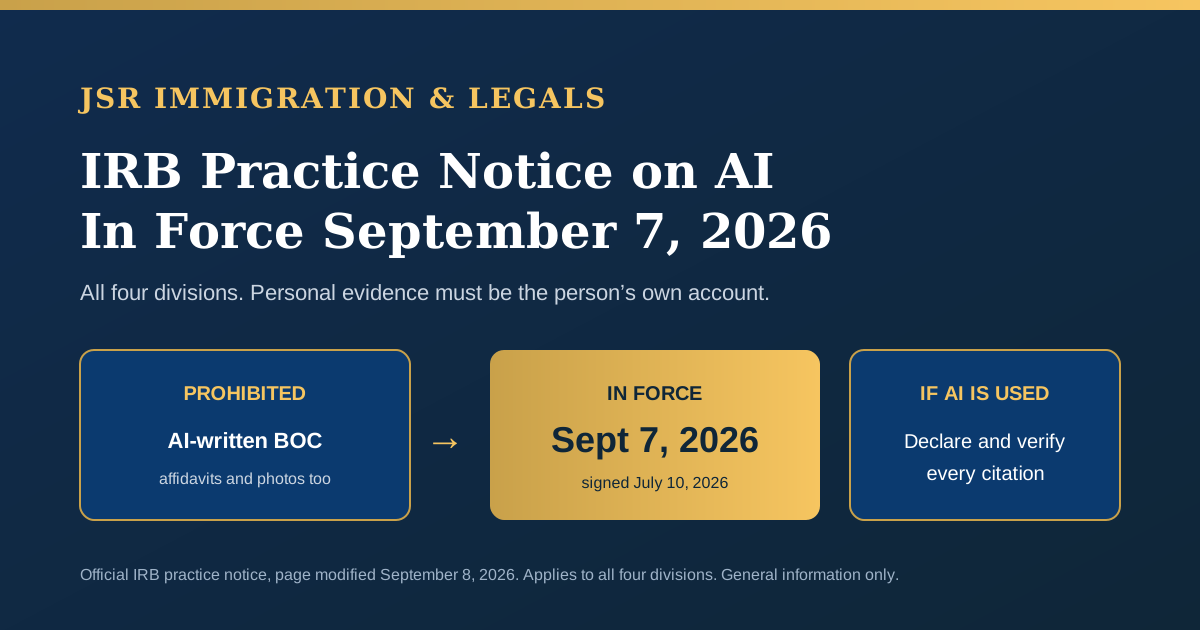
The Immigration and Refugee Board of Canada has put a practice notice in force on the use of artificial intelligence in its proceedings. The official practice notice, last modified September 8, 2026, was signed by Chairperson Manon Brassard on July 10, 2026. It applies to all four divisions. It comes into effect on September 7, 2026.
This is not a new statute. It is a filing and evidence rule. The date that matters is the date you submit a document to the Board, not the date your claim was referred.
What the Board now forbids
Parties must not use AI to generate or materially change content that reports or reflects a person's evidence. The notice names basis of claim narratives, affidavits, and witness statements. Those documents must be based on the person's own knowledge and experience.
The official examples of prohibited use are:
- using an AI tool to draft a basis of claim narrative, affidavit, or witness statement
- using an AI tool to rewrite a person's story
- using an AI tool to create or alter photographs, videos, screenshots, or other corroborative evidence
Spellcheck, grammar correction, and formatting assistance remain allowed if those tools do not generate the evidence or make material changes to it.
The declaration the Board requires
If a party uses AI to generate or materially change content in a document submitted to the IRB, the document must include this statement:
Artificial intelligence (AI) was used to create or materially change text in this document. All content generated by AI, and the authenticity of any cited case law or other legal authorities, has been reviewed and verified by [name].
Parties may add the software name, the purpose, and whether AI touched the whole document or only some paragraphs.
Use of AI for transcription or translation must always be disclosed. The Rules in all divisions still require a declaration from a human translator. That translator must declare whenever AI assisted the translation. An AI translation without a human translator declaration does not meet the rule.
What the Board expects from every party
The notice states that parties are always responsible and accountable for what they present. If AI is used to build a case, the content must be accurate, verifiable, and trustworthy. Legal principles and case citations must be checked against reliable sources. The Board's note lists legal databases, official government websites, commonly referenced commercial publishers, and trusted public services such as CanLII. It excludes AI-generated summaries even when those summaries appear inside those sources.
Parties should be ready to answer questions about any AI use. When asked, they must be able to establish authenticity and accuracy. The notice also warns against padding submissions with AI text that does not relate to the facts. Longer is not better. The Board cites Messa c. Canada (Citoyenneté et Immigration), 2025 CF 1557 at paragraph 11.
Privacy is a separate risk. Some AI tools do not protect confidential information. Do not paste a claimant's narrative, medical records, or identity documents into a public tool.
Consequences if the notice is ignored
If a party does not follow the practice notice, the IRB may:
| Step the Board may take | What that means in the file |
|---|---|
| Refuse the document | It is not accepted for filing, or the Board declines to rely on it |
| Draw a negative inference | Credibility of the evidence can be discounted |
| Report counsel | Information can go to the representative's regulatory body |
| Restrict or prohibit counsel | Counsel may be limited or barred from appearing |
| Take any other necessary action | Residual power sits with the Board |
The IRB's news notice states that people working at the Board are prohibited from using AI when preparing and deciding cases. That is a staff rule. It does not change the filing duties on parties.
What this means if you have a live IRB file
If you are writing a Basis of Claim form this week, write it from the claimant's own account. Do not prompt a chatbot to produce the story and then edit it. Do not generate supporting photographs or screenshots.
Legal research tools may still be used on a Refugee Appeal Division memorandum. Any text AI generated or materially changed needs the declaration, and every citation needs a human check against CanLII or another source the Board accepts. If a document was translated, keep the human translator's declaration and disclose any AI assistance.
This practice notice does not change the 15-day Basis of Claim clock after a Refugee Protection Division referral, and it does not change the 15-day Refugee Appeal Division appeal clock. Those deadlines still run from the dates in the existing Rules.
If you are preparing an RPD claim, a RAD appeal, or a related affidavit, contact JSR Immigration & Legals through our consultation page or the refugee claims and appeals service page.
This article is general information current to September 8, 2026, and is not legal or immigration advice. Confirm the live practice notice on irb-cisr.gc.ca before you file.

Immigration & paralegal practitioner at JSR Immigration & Legals, helping newcomers and Ontario residents with their cases.
This post is general information about Canadian immigration and Ontario paralegal matters and is not legal advice. Rules change and every case is different — confirm current requirements for your own situation.