November 5, 2026: Federal High Skilled Target Falls to 100,000 in the New Levels Plan
IRCC published the 2027-2029 Immigration Levels Plan on November 5, 2026. The supplementary information page and the backgrounder were both issued and last modified that day. Overall permanent resident admissions stay at 380,000 in each of 2027, 2028, and 2029. The number that changed sits inside that cap.
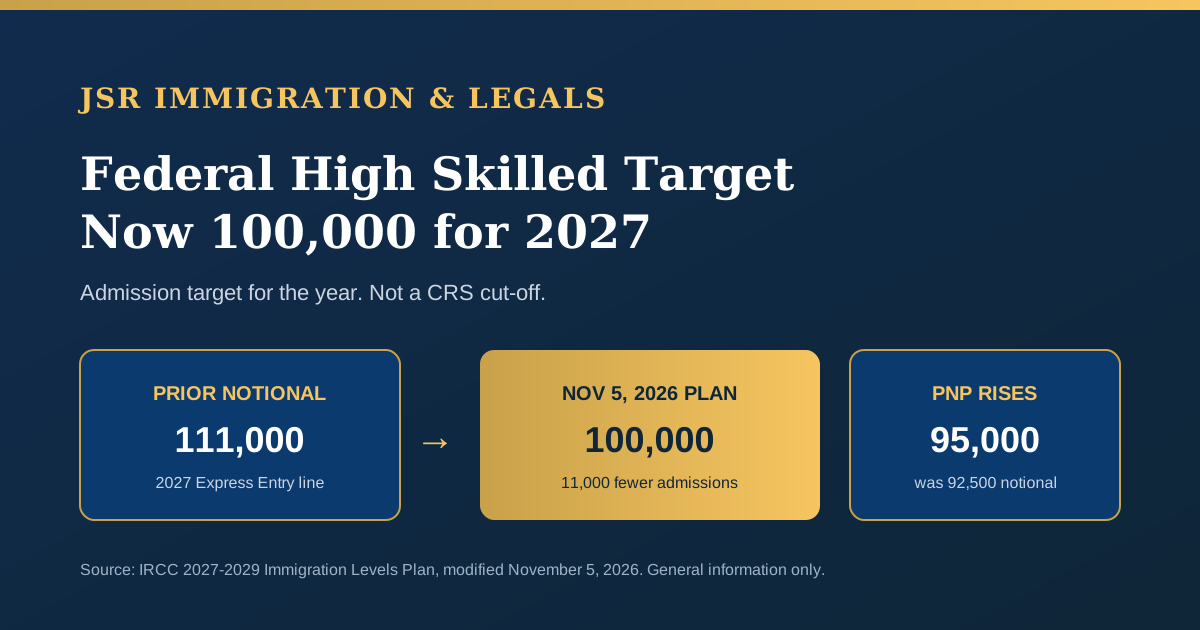
Federal High Skilled is now 100,000. IRCC's footnote says that line includes the Federal Skilled Worker Program, the Federal Skilled Trades Program, and the Canadian Experience Class. On the previous 2026-2028 plan, modified October 13, 2026, the notional 2027 and 2028 figures were 111,000. That is 11,000 fewer planned admissions in those Express Entry programs. The economic class target stays at 244,700 (64.4% of admissions).
Publication date and admission year are not the same
November 5, 2026 is the publication date, not a filing deadline. The tables count admissions in a calendar year, so a 2026 application can still land in the 2027 count, and you do not wait until January 2027 to apply.
2027 is the confirmed year on the permanent resident table. The footnote marks 2028 and 2029 as notional, to be confirmed or adjusted each year. On the temporary resident table, those two years are notional until November 1 of next year.
What moved inside the 380,000
This table compares the 2027 column of the new plan with the 2027 notional column of the 2026-2028 plan.
| 2027 line | Previous notional target | New target | New range |
|---|---|---|---|
| Overall permanent residents | 380,000 | 380,000 | 352,500 to 422,000 |
| Federal High Skilled | 111,000 | 100,000 | 87,000 to 123,000 |
| Provincial Nominee Program | 92,500 | 95,000 | 83,000 to 106,000 |
| Atlantic Immigration Program | 4,000 | 6,000 | 5,000 to 8,500 |
| Total economic | 244,700 | 244,700 | 230,000 to 270,000 |
The same 100,000, 95,000, and 6,000 targets are also written for 2028 and 2029. The overall range is now 352,500 to 422,000, compared with 350,000 to 420,000 on the old plan. The PNP increase is 2,500 and the Atlantic increase is 2,000. Rural community immigration is now its own row: 5,500 in 2027, 6,000 in 2028, and 6,500 in 2029. That is admission space, not a change to the filing rules already in force. Quebec skilled workers and business remain TBD.
Lines that held, and the separate in-Canada measure
New temporary resident arrivals stay at 370,000 for 2027. The range is now 355,000 to 385,000, wider than the old notional range of 360,000 to 380,000. The split matches the previous notional year: 220,000 workers and 150,000 students. Workers are 170,000 under the International Mobility Program and 50,000 under the Temporary Foreign Worker Program. The footnote still leaves post-graduation work permits out of the IMP target, because IRCC treats them as a change of status, not a new arrival.
Family class stays at 81,000, including 66,000 for spouses, partners, and children and 15,000 for parents and grandparents. French-speaking admissions outside Quebec stay at 9.5% (31,825) in 2027, then reach 12% (40,200) in 2029.
The backgrounder describes a time-limited measure, separate from this year's levels plan, to help up to 200,000 people already in Canada become permanent residents through extra 2027 admissions space. The workers cohort is up to 100,000 people, plus their families. The humanitarian cohort is up to 100,000, covering remaining Hong Kong pathways, the Ukraine Family Reunification Pathway, and files already found eligible on humanitarian and compassionate grounds. IRCC says this should help bring spouse and common-law partner wait times closer to 12 months outside Quebec. That is a goal for files already in the inventory, not a new intake or a guaranteed timeline.
What this means for you
If you are in the Express Entry pool, 100,000 is the admission room for the three federal programs. It is not a CRS cut-off and it does not set the next draw. See the Express Entry page.
If you want a provincial nomination, the PNP target is 95,000, and provinces still choose who to nominate. See the PNP page and Ontario's streams.
If you hold a study or work permit, the 2027 arrival split matches the old notional figures, and a post-graduation work permit is not a new arrival. See study permits and work permits. The 200,000 figure is only for people already in Canada. It is not a new intake. Spouse and partner files are on the spousal sponsorship page. Rural dates are on the rural pilots page. The parents and grandparents target stays at 15,000, with no new intake in this plan.
The November 4 post listed the notional figures before these tables existed. For help reading a 2027 plan against an Express Entry profile, a nomination, or a family file, contact JSR Immigration & Legals through the consultation page.
This article is general information current to November 6, 2026, and is not legal or immigration advice. Admission targets are planning figures, not a decision on any application. Confirm the live tables on Canada.ca before you act.

Immigration & paralegal practitioner at JSR Immigration & Legals, helping newcomers and Ontario residents with their cases.
This post is general information about Canadian immigration and Ontario paralegal matters and is not legal advice. Rules change and every case is different — confirm current requirements for your own situation.