How an LTB Hearing Actually Works in Ontario, Step by Step (2026)
If you have ever received a notice with the Landlord and Tenant Board (LTB) letterhead, or filed an application against your landlord, the process can feel opaque. What actually happens between filing a form and getting an order? This is a plain-language walkthrough of how an Ontario LTB hearing works, step by step — and a few changes that took effect on July 1, 2026 that make some deadlines tighter than they used to be.
This is general information about the process, not advice about any specific case.
Step 1 — Before you file: try to resolve it
The Board expects parties to try to sort things out first. If you are a tenant with a maintenance problem, the LTB suggests you write to your landlord asking them to fix it, and keep a copy. A paper trail helps either side — because if the matter does reach a hearing, that correspondence becomes evidence.
Step 2 — Filing the application
Most applications are filed through the Tribunals Ontario Portal, where you can submit forms, pay the fee, check your file status, and upload evidence. You are responsible for choosing the right form (an L-form for landlord applications, a T-form for tenant applications) and filling it out completely and correctly. An incomplete or wrong form can delay your file or get it dismissed.
Step 3 — Notice of hearing
Once the application is accepted, the Board schedules a hearing and sends a Notice of Hearing telling you the date, time, and format. Read it carefully: it tells you how to connect and what to bring. Missing your hearing can mean an order is made without your side being heard, so put the date somewhere you will not forget it.
Step 4 — Prepare and exchange your evidence
Anything you want to rely on — documents, photos, texts, emails, receipts, video, or audio — is evidence, and you generally have to share it with the other side and the Board before the hearing, not spring it on the day.
One rule catches many tenants out: if you are a tenant who wants to raise your own issues (for example, maintenance problems under section 82 of the Residential Tenancies Act) during your landlord's rent-arrears hearing, you must give the landlord and the Board a written description of each issue plus your evidence at least 7 days before the hearing. Miss that window and the member may not let you raise those issues.
Step 5 — The hearing itself
The LTB holds several formats of hearing:
- an oral (in-person) hearing before a Board member;
- a video conference hearing;
- a telephone hearing; or
- a written hearing, where parties file documents instead of appearing.
Many hearings today are held by video or phone. At the hearing, the person who made the application goes first and tries to show why it should be granted; the other side responds and tries to show why it should not. The member (the adjudicator) asks questions, weighs the evidence, and applies the law.
Before or during the process, the Board also offers mediation for most application types. A dispute resolution officer helps the parties try to reach an agreement. If you settle everything, no adjudicated hearing is needed — and any repayment arrangement now has to be recorded on the Board's approved Payment Agreement form, a requirement that became mandatory on July 1, 2026.
Step 6 — The order
After the hearing, the member issues a written decision called an order. The Board's service target is to issue most orders within about 30 days of the hearing. The order sets out what was decided and what each party must do — pay an amount, complete a repair, vacate by a date, and so on.
Step 7 — If the order does not go your way
You are not necessarily stuck with the result:
- Request a review. This is the Board's internal second look, for a serious
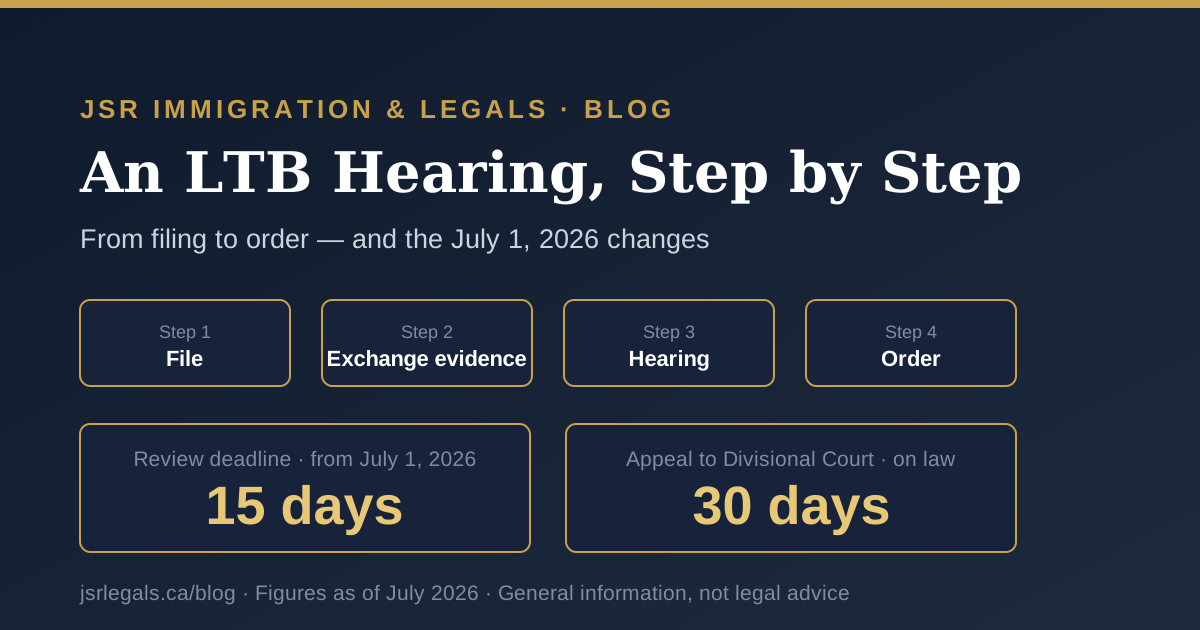
error or where you were not reasonably able to take part. As of July 1, 2026, the deadline to request a review is 15 days from the order (down from 30). The grounds for reviewing a final order were also narrowed. Treat 15 days as a hard line.
- Appeal to the Divisional Court. An appeal is limited to a **question of
law and has its own 30-day** deadline and process. It is a different forum from a review.
Bill 60 also raised the maximum RTA fines sharply — up to $100,000 for an individual and $500,000 for a corporation. But for most everyday tenants and small landlords, the practical takeaway of the July 1, 2026 changes is simpler: the timelines are shorter, so act quickly.
Where to confirm the process
- The LTB's own Application and hearing process page.
- The LTB operational update on the July 1, 2026 legislative changes.
- The Residential Tenancies Act, 2006 on Ontario's e-Laws.
Get in touch
A hearing is far less intimidating when you know the order of events and prepare your evidence early. If you have a hearing coming up — as a tenant or a landlord — or you have just received an order you think is wrong, JSR Legals can help you understand your options and meet the deadlines. Reach us at info@jsrlegals.ca.
This article is general information about Ontario's LTB process, current as of July 2026, and is not legal advice for any specific situation. Rules, forms, and in-force dates can change — confirm the current requirements with the LTB or a licensed professional before you act.

Immigration & paralegal practitioner at JSR Immigration & Legals, helping newcomers and Ontario residents with their cases.
This post is general information about Canadian immigration and Ontario paralegal matters and is not legal advice. Rules change and every case is different — confirm current requirements for your own situation.