Ontario Doubled the Fines for Renting Offences on July 1, 2026 — What That Means for Tenants and Landlords
Buried in the wave of Ontario rental-law changes that took effect on July 1, 2026 is one that does not get the attention the eviction rules do — but it matters a great deal if a landlord or tenant crosses a legal line. As of that date, the maximum fines for offences under the Residential Tenancies Act (RTA) doubled. This is a plain-language look at what changed, what counts as an "offence," and why the fine is only one of two very different things that can happen when the rules are broken.
What actually changed
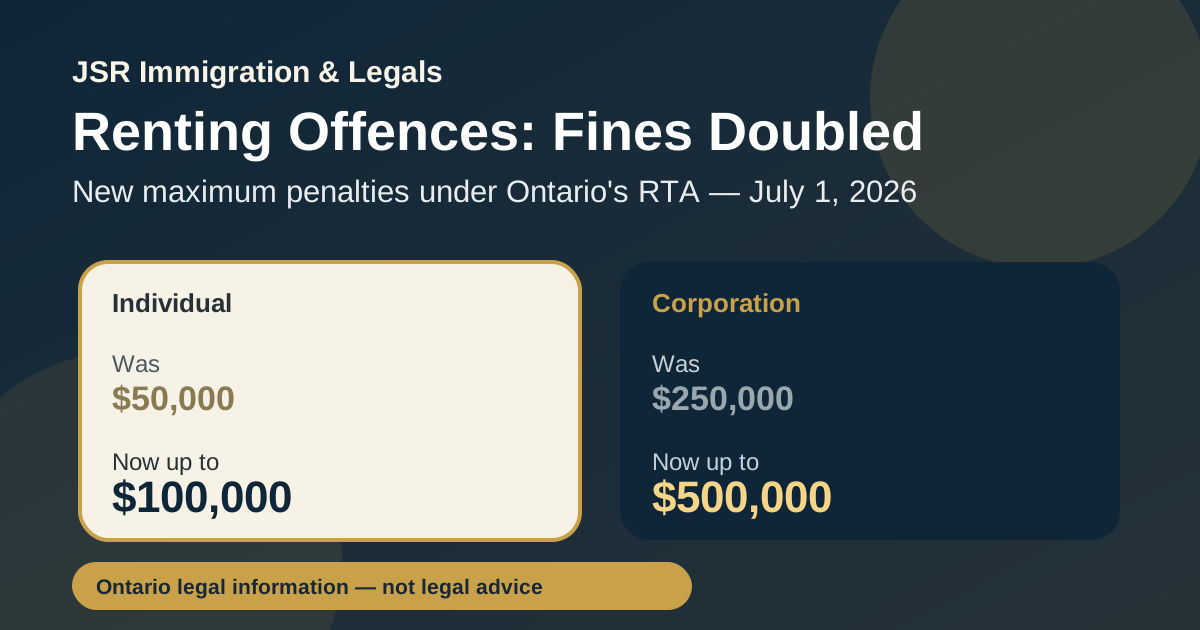
Ontario has long made certain conduct under the RTA an offence — something a person or company can be prosecuted and fined for, separate from anything the Landlord and Tenant Board does. On July 1, 2026, the ceilings on those fines went up sharply:
- For an individual, the maximum fine rose from $50,000 to $100,000.
- For a corporation, the maximum rose from $250,000 to $500,000.
Tribunals Ontario confirmed the increase in its operational update on the legislative changes. One important clarification in that update: these higher ceilings apply to offence prosecutions, not to the administrative fines, costs, or compensation that the LTB itself can order in a case. Those are two separate tracks, and the difference is the single most useful thing to understand here.
Two different tracks — and where the money goes
When a landlord breaks the rules, a tenant often assumes there is one process. There are really two, and they lead to very different outcomes.
breaks an RTA rule] --> B{Which path?} B -- "Tenant files an application
(e.g. T2 or T5) at the LTB" --> C[LTB hearing] C --> D[LTB can order compensation,
rent abatement, or an
administrative fine] D --> E[Remedies can go to the tenant] B -- "Complaint to the Rental Housing
Enforcement Unit (RHEU)" --> F[Possible prosecution in
Provincial Offences Court] F --> G[Conviction can bring a fine —
now up to $100k person /
$500k corporation] G --> H[Fine is paid to the government,
not to the tenant]
Track one — the LTB. If you file an application such as a T2 (tenant rights) or a T5 (bad-faith eviction), the Board can order a landlord to pay you compensation, abate your rent, or in some cases pay an administrative fine. This is the route most tenants use, because it can put money back in your pocket.
Track two — prosecution. Some conduct is also a provincial offence. A complaint goes to the Rental Housing Enforcement Unit (RHEU), part of the Ministry of Municipal Affairs and Housing, which can investigate and prosecute in the Ontario Court of Justice. A conviction there can bring the fines described above — but that money is a penalty paid to the government, not compensation to the tenant. The two tracks are not mutually exclusive; the same bad conduct can lead to both an LTB order and a prosecution.
What counts as an "offence"
The RTA lists conduct that can be prosecuted. Without turning this into a legal catalogue, the kinds of things that can qualify include:
- Illegally locking a tenant out or entering the unit without proper notice or
legal grounds.
- Harassing, threatening, or interfering with a tenant's reasonable enjoyment.
- Cutting off or deliberately interfering with a vital service — heat, water,
electricity, or fuel.
- Evicting in bad faith — for example, using an N12 "own use" notice as a
pretext to re-rent at a higher price.
- Charging illegal rent or an unlawful deposit, or collecting more than the
law allows.
- Failing to comply with an LTB order or with maintenance obligations.
A fine at the new maximum is not automatic — it is a ceiling, and the actual penalty is set by the court based on the seriousness of the case. But doubling the ceiling signals that the province wants these penalties to sting, and it gives prosecutors more room in the worst cases.
What this means for you
If you are a tenant: know that the two tracks exist and do different jobs. If you want to be compensated, the LTB application (T2, T5, and others) is usually your route, and there are deadlines — a bad-faith eviction claim, for example, generally has to be filed within a year of moving out. If you want a landlord's conduct investigated and possibly prosecuted, that is the RHEU's job. Keep records: dates, photos, texts, and copies of notices all help either track.
If you are a landlord — especially a small one — the message is simpler. The cost of getting it wrong just went up. An honest mistake on a form is one thing; an illegal lockout, a service shut-off, or a pretextual eviction is now exposed to a six-figure fine on top of whatever the LTB orders. When in doubt, use the correct form, follow the notice periods, and get the process right the first time.
Where to confirm the current rules
- Tribunals Ontario — LTB legislative-changes update:
tribunalsontario.ca/2026/06/30/....
- Ontario's guide to rental-housing offences and the RHEU:
ontario.ca/page/rental-housing-offences.
- The Residential Tenancies Act, 2006 on e-Laws:
ontario.ca/laws/statute/06r17.
Get in touch
Whether you have been locked out, faced a bad-faith eviction, or you are a landlord trying to stay on the right side of the rules as they tighten, JSR Legals can help you understand which track fits your situation and how to act in time. Reach us at info@jsrlegals.ca.
This article is general information about Ontario law, current as of July 2026, and is not legal advice for any specific situation. Offence provisions, fine amounts, and deadlines can change — confirm the current requirements with the LTB, the RHEU, or a licensed professional before you act.

Immigration & paralegal practitioner at JSR Immigration & Legals, helping newcomers and Ontario residents with their cases.
This post is general information about Canadian immigration and Ontario paralegal matters and is not legal advice. Rules change and every case is different — confirm current requirements for your own situation.