Bank of Canada Raises Its Rate to 2.50%: What the October 28 Hike Means for You
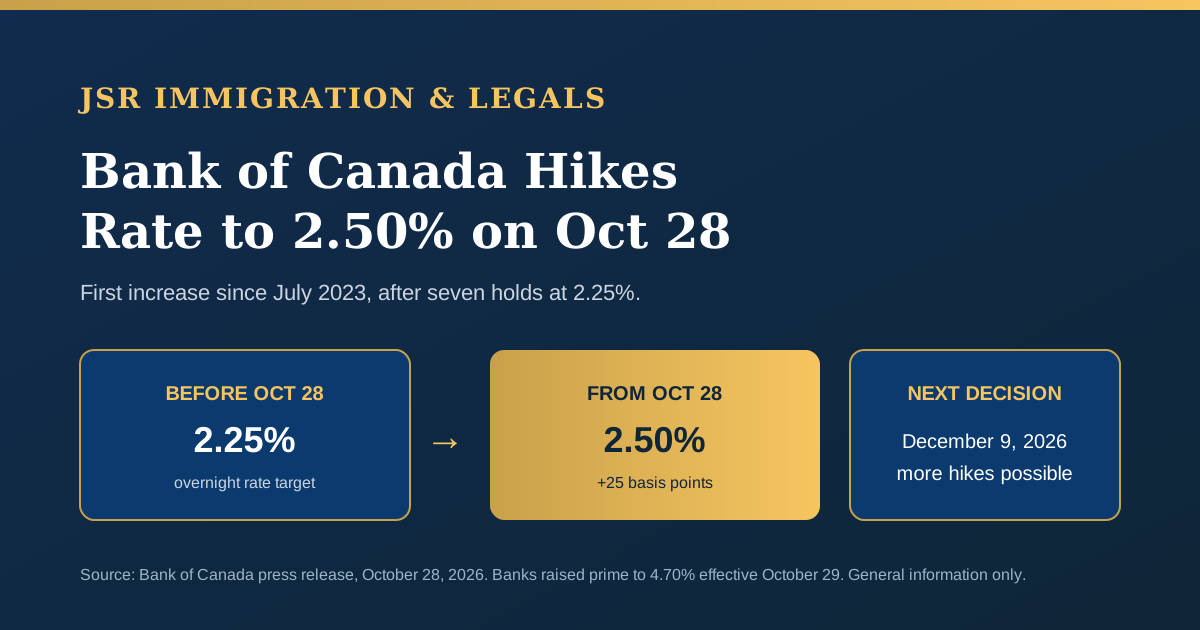
The Bank of Canada has raised its target for the overnight rate by 25 basis points to 2.5%. The decision was published in the October 28, 2026 press release. The Bank Rate is now 2.75% and the deposit rate is 2.45%.
This is the first increase since July 2023. It ends a run of seven consecutive holds that kept the policy rate at 2.25% through the past year, the level we covered in our December 2025 rate decision post. For households, the direction of travel has changed: the Bank is now raising, not holding, and it has said more increases could follow.
Why the Bank raised the rate
The Bank's stated reason is energy. Consumer Price Index (CPI) inflation has been around 3% since April, driven by persistently high oil prices. The Bank expects inflation to rise to about 3.5% by the end of 2026, average 3% in 2027, and return to 2% by the middle of 2028. Excluding gasoline, inflation was 2.2% in September.
Governing Council decided to increase the policy rate, in its words, "to reduce the risk that continuing high energy prices spread broadly to the prices of other goods and services." The Council added that "there could be a need to increase the policy rate further," but that it agreed to proceed carefully.
The economy gave the Bank room to move. Gross domestic product grew 3.3% in the second quarter, with recent indicators pointing to about 2% growth in the third quarter. The Bank now projects growth of 1% in 2026 and 2% in 2027 and 2028. The unemployment rate has been around 6.5% for several months.
| Figure | Value |
|---|---|
| Overnight rate target | 2.5% (up 25 basis points) |
| Bank Rate | 2.75% |
| Deposit rate | 2.45% |
| CPI inflation, expected end of 2026 | About 3.5% |
| CPI excluding gasoline, September 2026 | 2.2% |
| Expected GDP growth, 2026 | 1% |
| Next rate announcement | December 9, 2026 |
What changes for your household
Variable-rate borrowers feel this first. Canada's major banks announced matching increases to their prime lending rate, from 4.45% to 4.70%, effective October 29, 2026. If your mortgage, home equity line of credit, or personal line of credit is priced off prime, your rate rises in step, though the payment effect depends on your lender's contract terms. Variable borrowers with fixed payments may instead see more of each payment go to interest.
Fixed-rate mortgages do not change on renewal day terms. A fixed rate is locked for its term. Fixed rates on new mortgages and renewals reflect what lenders expect the Bank to do next, and the Bank has signalled that further increases are possible. If you are renewing in the coming months, ask your lender for the renewal offer early and compare it against other lenders.
Savings products move too. High-interest savings accounts and guaranteed investment certificates usually follow the policy rate upward. Newcomers building savings should compare rates across institutions rather than leaving funds in a low-interest account. We covered the basics in our first-week banking guide for newcomers.
Renters are not directly exposed, but pressure builds. Higher borrowing costs and weak housing activity can slow new construction, and the Bank expects housing to remain relatively weak. Ontario tenants facing rent increases should know their rights under the Residential Tenancies Act before agreeing to anything, including above-guideline increases.
The dates that matter
The announcement date is October 28, 2026. The effective date for most bank prime rates is October 29, 2026. The next scheduled announcement of the overnight rate target is December 9, 2026, and the next Monetary Policy Report is due January 27, 2027. Nothing in the October decision changes your existing contract; it changes what the next one costs.
The Bank also noted that the Canadian dollar has recovered to around 71 cents US, the same as assumed in its July report. A weaker dollar can add to imported costs, which is one of the cost pressures the Bank flagged alongside fuel prices.
What to do before December 9
- If you hold a variable-rate mortgage or line of credit, recalculate your monthly payment at the new prime rate of 4.70% and confirm how your lender applies changes.
- If your mortgage renews before mid-2027, request your renewal terms now and compare offers.
- If you are shopping for a home, qualify at current rates and leave room for the December decision.
- Move savings to accounts that actually pass on the higher policy rate.
- Watch the December 9 announcement before making any large borrowing decision.
If a rate increase has made a housing or tenancy situation uncertain, contact JSR Immigration & Legals through our consultation page. Ontario tenants dealing with rent disputes can also review our Landlord and Tenant Board service page.
This article is general information current to November 1, 2026, and is not legal, financial, or immigration advice. Confirm the live rates and terms with the Bank of Canada and your lender before you act.

Immigration & paralegal practitioner at JSR Immigration & Legals, helping newcomers and Ontario residents with their cases.
This post is general information about Canadian immigration and Ontario paralegal matters and is not legal advice. Rules change and every case is different — confirm current requirements for your own situation.